Ubud Decoded in Bali
Part of the Bali travel guide — see every topic in All Bali Guides.
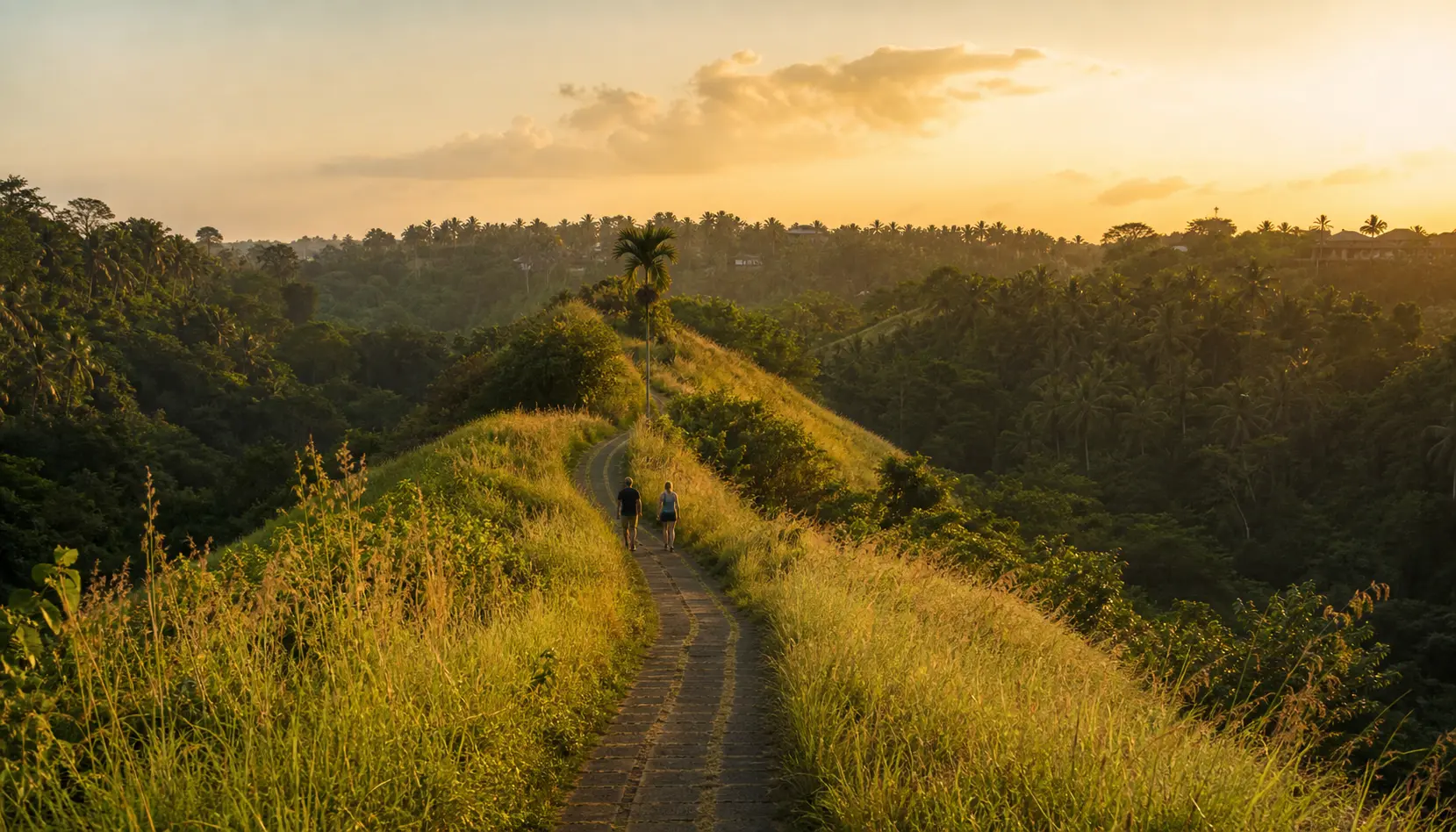
Ubud is not the village people expect. It is a busy town of about thirty thousand, built along a ridge between the Wos river gorges, with a single congested main road running through the middle of it. But walk five minutes off Jalan Raya in almost any direction and you are in paddy, forest or a family compound. It is Bali's centre for dance, carving, painting and, latterly, yoga and wellness, and it is the base most visitors use for the island's interior. Two nights is the minimum; four is where it starts to make sense.
The layout
Jalan Raya Ubud is the spine, with the market and the palace at the junction with Monkey Forest Road. South of that is the tourist core — restaurants, spas, the Monkey Forest itself. West across the Campuhan bridge is where the ridge walk starts and where the quieter, prettier hotels are. North up Jalan Suweta takes you through Sambahan and Sakti into working villages within twenty minutes. East towards Peliatan and Nyuh Kuning is quieter still. The famous rice-terrace views at Tegallalang are twenty minutes north; the ones at Sari Organik are a fifteen-minute walk.
Culture that is actually happening
Ubud's traditional arts are living rather than staged, and the dance performances are the easiest way in: legong, barong and kecak are performed most evenings at the palace, at Pura Taman Saraswati and in surrounding villages, with tickets around 100,000–150,000 rupiah. Kecak — a chanting circle of dozens of men rather than a gamelan — is the one to see if you only see one. The Neka and Puri Lukisan museums hold the painting collections that document the 1930s European-Balinese exchange that made Ubud an art town. The Ubud Writers and Readers Festival every October is genuinely international.
Wellness, and how much of it to do
Ubud is the global centre of yoga tourism outside India. The Yoga Barn is the institution — dozens of classes a day, sound healing, ecstatic dance on Sundays — and Radiantly Alive is the smaller, more technical alternative. Drop-in classes run 130,000–180,000 rupiah. Around that has grown an enormous ecosystem of retreats, cleanses, breathwork and healers, of very variable quality. The genuinely traditional end — a balian, a Balinese healer — is a real practice, not a tourist one, and is best approached through a local rather than a booking site.
Practical Ubud
Traffic on Jalan Raya is bad from ten to seven and walking is often faster. There are no ride-hail pickups from inside the central streets by long-standing agreement with the local transport cooperative — you walk to the edge or use a local driver. It rains more here than on the coast, being at 200 metres and inland, and evenings are noticeably cooler. Almost everything closes by ten. And it is the best base on the island for day trips north and east, which is the real argument for staying here rather than the coast.
Ubud Decoded at a glance
| Altitude | ~200 m — cooler and wetter than the coast |
|---|---|
| Best free walk | Campuhan Ridge, from the Campuhan bridge |
| Dance ticket | IDR 100,000–150,000; kecak is the one to see |
| Yoga drop-in | IDR 130,000–180,000 |
| Ride-hail | Restricted in the centre — use local drivers |
| Stay | Minimum 2 nights; 4 to use it as a base |