Uluwatu and the Bukit in Bali
Part of the Bali travel guide — see every topic in All Bali Guides.
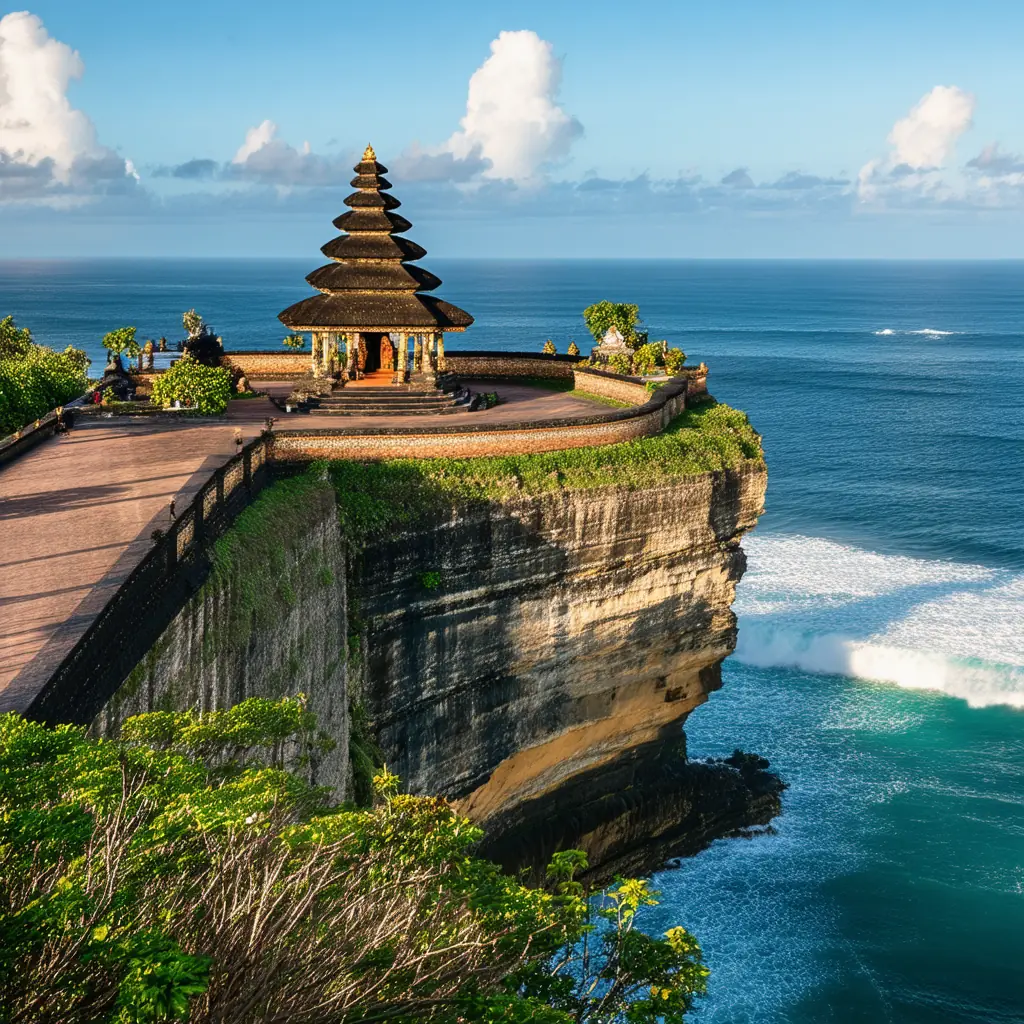
The Bukit is a raised limestone plateau hanging off the bottom of Bali, joined to the rest of the island by the narrow neck at Jimbaran. It is geologically and visually a different place: dry scrub instead of paddy, cliffs seventy metres high instead of beaches, and white sand instead of volcanic grey. It holds the island's best surf, its most dramatic hotels and its most photographed sunsets, and it has developed fast enough in the last five years that the single road down is now the limiting factor on everything.
The beaches
Almost every Bukit beach is reached by a staircase down a cliff, which is what keeps them good. Bingin is the pick — a descent through a stack of cliff-face warungs to a small white cove that mostly disappears at high tide. Padang Padang is squeezed through a gap in the rock and is tiny. Balangan is longer and has the best warung row. Melasti has a spectacular switchback road cut through white limestone and, consequently, crowds. Nyang Nyang and Green Bowl are the long walks down that stay empty. Suluban, below Single Fin, is the cave entrance to the Uluwatu surf break.
Surf and cliff clubs
Uluwatu is one of the world's recognised left-hand reef breaks and the reason the Bukit developed at all; Padang Padang, Impossibles, Bingin and Balangan run along the same coast within a few kilometres. All are reef, all are tide-dependent, and none are beginner waves. Above them sit the cliff bars: Single Fin for the view and the Sunday session, El Kabron for the infinity pool, Omnia and Savaya for the production. The temple at Uluwatu itself sits on the cliff edge and hosts a kecak fire dance at sunset — the setting does most of the work.
Where to stay
The Bukit has Bali's most spectacular hotels — the cliff-edge resorts above Uluwatu and Ungasan — and also a long tail of surf guesthouses at Bingin and Padang Padang where a room is 400,000–800,000 rupiah. There is very little in the middle. What there is almost none of is walkability: the Bukit is spread out, has no pavements and no public transport, so you need a scooter or a driver for everything, including dinner. Jimbaran, at the neck of the peninsula, is the compromise — calm swimming beach, seafood grills, and twenty minutes from the airport.
The practicalities
It is hot and shadeless. The Bukit is limestone scrub with a fraction of Bali's tree cover, and midday on a cliff staircase in October is genuinely punishing — go early or after four. Water is trucked in and expensive, which is why some cheap guesthouses ration it. The road down from Jimbaran is a single lane in each direction and jams badly from about four-thirty as everyone heads to sunset, so allow ninety minutes from Seminyak in the afternoon against fifty in the morning. There are ATMs at Padang Padang and Uluwatu but bring cash for the beach warungs.
Uluwatu and the Bukit at a glance
| Geology | Raised limestone plateau — white sand, no paddy |
|---|---|
| Best beach | Bingin; Balangan for the warung row |
| Surf | Uluwatu, Padang Padang, Impossibles — reef, not beginner |
| Sunset | Single Fin, El Kabron, Omnia; kecak at the temple |
| Guesthouse | IDR 400,000–800,000 at Bingin |
| Traffic | Allow 90 min from Seminyak after 4.30pm |