Warung Culture in Bali
Part of the Bali travel guide — see every topic in All Bali Guides.
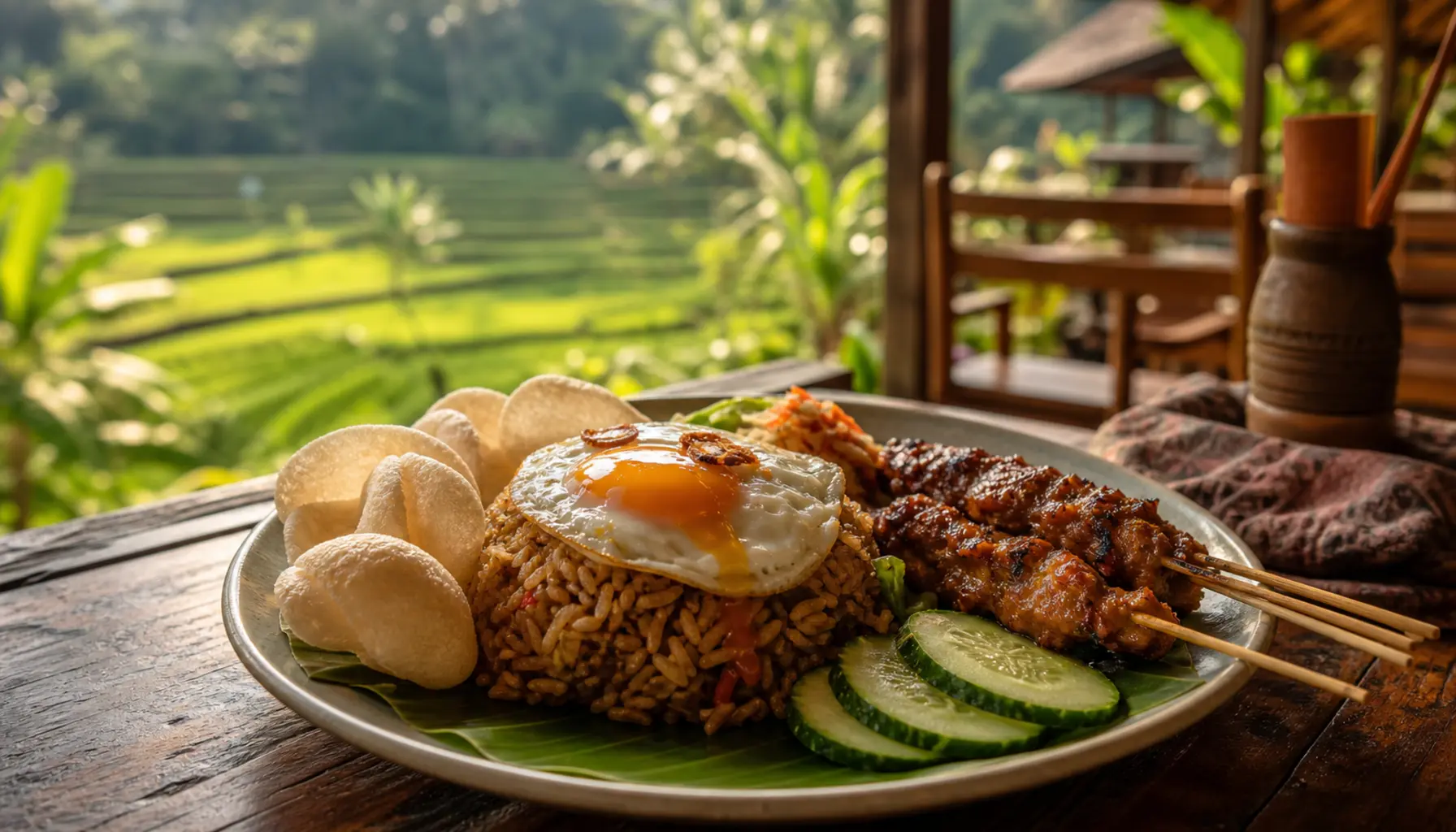
A warung is a small family-run eatery — often literally the front room of a house, open to the street, with a glass cabinet holding that morning's cooking. It is the backbone of eating in Indonesia and the single best-value thing on Bali: a full plate of rice with three or four dishes costs 25,000–45,000 rupiah, roughly what a flat white costs three hundred metres away in a Canggu cafe. Learning to use one properly changes both your food budget and what you actually eat.
How it works
You walk in, look at the cabinet, and point. Nasi campur — mixed rice — means a scoop of rice with whatever you indicate: fried chicken, tempeh, egg, long beans, a curry, a spoonful of sambal. The food was cooked once that morning and is served at room temperature, which is normal, traditional and perfectly safe where turnover is high. Payment is at the end and often approximate. Nasi bungkus means the same thing wrapped in paper to take away, and is even cheaper.
The words that matter
Pedas is spicy and tidak pedas is not — Balinese sambal is genuinely hot and the default assumption for a visitor is usually mild, so say so if you want it properly. Tanpa terasi means without shrimp paste, which matters for vegetarians because it goes into almost everything. Bungkus is takeaway, makan sini is eating in. Es teh is iced tea and air putih is plain water. Enak means delicious and is worth saying, because it is nearly always true and always appreciated.
Finding a good one
Busy at noon, empty by three — that is a good warung, because it means the morning's cooking sold. Look for local customers rather than a menu in English. Warungs near markets, offices and schools are reliable. In Ubud, the lanes off Jalan Hanoman and Jalan Gootama; in Canggu, the small places on the back roads rather than the strip; in Denpasar, essentially anywhere. Some warungs specialise — warung babi guling for suckling pig, warung sate, warung nasi Padang for the West Sumatran format where dishes are stacked in the window.
Eating safely
Room-temperature food at a busy warung is fine; the same food at a warung with no customers at three in the afternoon is a different proposition. Prefer places with turnover, avoid anything that looks like it has been sitting, and be a little more careful with raw sambal where there is no refrigeration. Use bottled water and refill stations, never the tap, including for teeth. Commercially made ice with a hole through it is fine. And a warung is not a restaurant — a stomach upset is far more often from a mid-range tourist kitchen than a busy family one.
Warung Culture at a glance
| Full plate | Nasi campur, IDR 25,000–45,000 |
|---|---|
| How to order | Point at the cabinet; pay at the end |
| Key words | Pedas / tidak pedas; tanpa terasi; bungkus |
| Good sign | Busy at noon, sold out by three |
| Best areas | Back lanes of Ubud and Canggu; anywhere in Denpasar |
| Water | Bottled or refill station only — never the tap |