Waterfalls in Bali
Part of the Bali travel guide — see every topic in All Bali Guides.
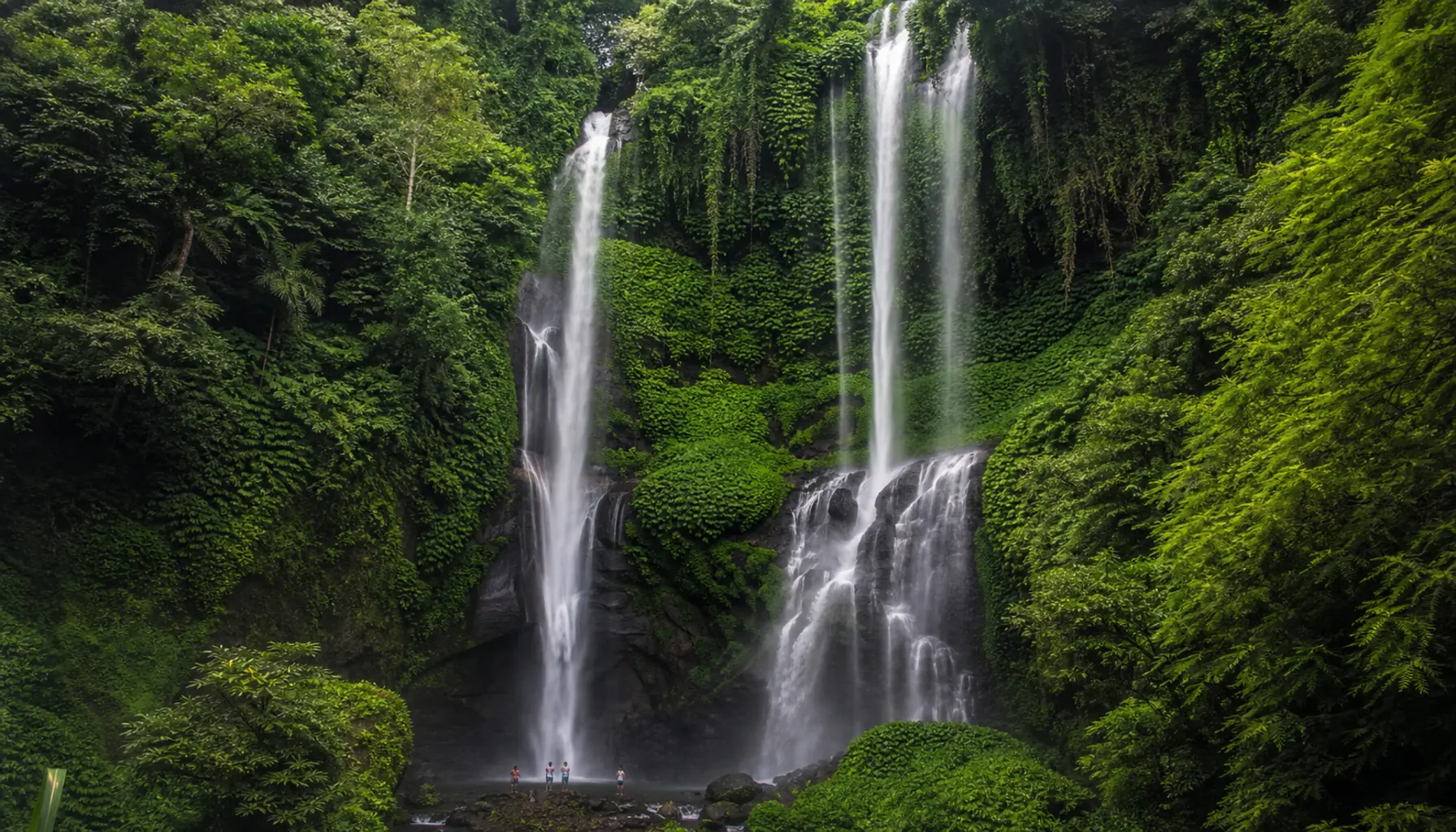
Bali's waterfalls sit in a belt across the volcanic centre and north of the island, where the rivers cut through soft volcanic rock into steep gorges. The best of them are in the north around Singaraja and Munduk — a two-to-three-hour drive from the south, which is exactly why they are quieter. The famous ones near Ubud are impressive and twenty minutes away, and are correspondingly busy by nine in the morning. Almost all charge a small entrance fee and almost all involve a real staircase down and, unavoidably, back up.
The north: Sekumpul and Munduk
Sekumpul is the one worth the drive. Several falls drop into the same jungle amphitheatre, the tallest around eighty metres, and the sound inside the bowl is genuinely loud. The walk in is a long descent, a river crossing and a climb back that takes most people an hour and a half round trip; local guides are effectively compulsory and are worth having. Nearby Fiji and Aling-Aling belong to the same river system, and Aling-Aling is the jumping one — guided slides and drops of up to fifteen metres. Around Munduk the falls are smaller, closer together and set among clove and coffee plantations.
Close to Ubud
Tegenungan is the accessible one: wide, powerful, twenty minutes from Ubud, with a car park, cafes and a solid staircase. It is also crowded from about nine and the water is not clean enough to want to swim after rain. Tibumana and Kanto Lampo are better. Tibumana is a single soft curtain into a round pool with a gentle walk in; Kanto Lampo is a fan of water spilling down a stepped rock face that photographs far better than it swims. Tukad Cepung is the cave one — a shaft of light falling through a slot in the rock, which only works between about nine and eleven on a sunny morning.
Practical detail
Entrance fees run 15,000–50,000 rupiah, cash only, sometimes with a second fee at a second gate. Go early: before nine for the Ubud falls, and remember Tukad Cepung specifically needs mid-morning sun. Water volume peaks in and just after the wet season, roughly December to April, when the falls are at their most dramatic and the paths at their most slippery; the dry season gives you safer footing and clearer pools. Flash floods are a real hazard in narrow canyons — if the water turns brown or the guide says leave, leave immediately.
What to bring
Proper shoes with grip, not sandals: the stone steps are wet, mossy and steep. A dry bag for anything electronic, because the spray reaches further than it looks. Swimwear under your clothes, since changing facilities are usually a shed. Cash in small notes for the layered fees, parking and the guide. And plan on being wet for the rest of the day — the sensible itinerary pairs two or three falls in the same valley with a late lunch rather than trying to combine a waterfall morning with anything that requires dry clothes.
Waterfalls at a glance
| Biggest | Sekumpul, north Bali — guide effectively required |
|---|---|
| Closest to Ubud | Tegenungan (20 min), Tibumana, Kanto Lampo |
| Best light | Tukad Cepung, 9–11am on a sunny day |
| Entrance fee | IDR 15,000–50,000, cash only |
| Highest flow | December–April (wet season) |
| Bring | Grip shoes, dry bag, small notes, swimwear |