Nusa Penida Guide in Bali
Part of the Bali travel guide — see every topic in All Bali Guides.
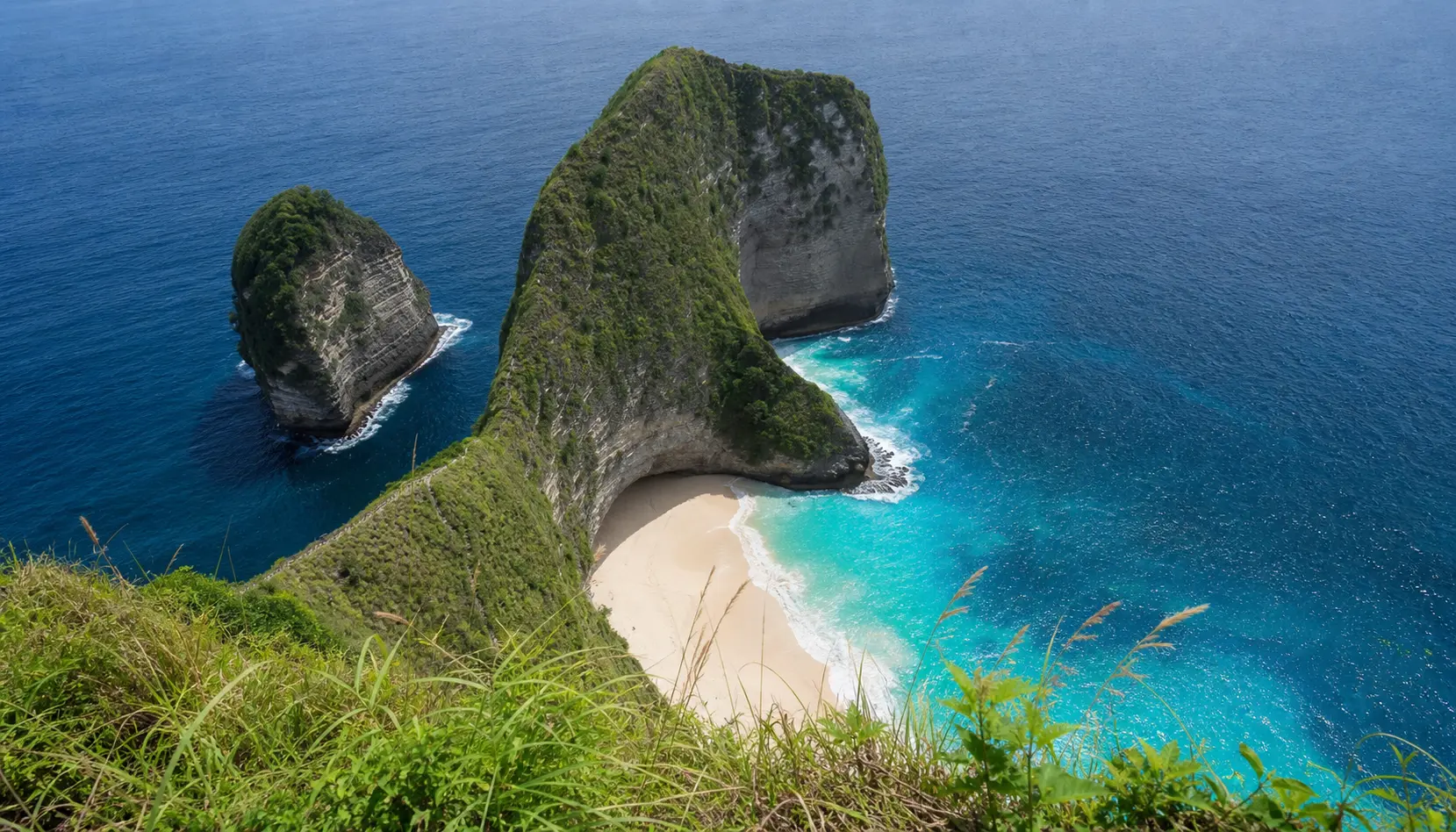
Nusa Penida is twenty kilometres across, made of raised limestone, and ringed by cliffs that drop two hundred metres straight into the Lombok Strait. It has the most dramatic coastline in Indonesia and, until about 2015, almost no visitors at all. The infrastructure has not caught up: the roads are steep broken concrete, water is scarce, and the island cannot comfortably absorb the day boats that now arrive every morning. It rewards two or three days far more than it rewards one.
The west coast
Kelingking is the one everyone comes for: a headland shaped like a dinosaur's head, with a white beach at the bottom. The clifftop viewpoint is five minutes from the car park. The descent to the beach is a steep, exposed scramble on bamboo handrails taking about an hour down and considerably longer up, and people are injured on it regularly. Broken Beach is a collapsed sea cave forming a natural arch over a circular bay; Angel's Billabong next to it is a tidal rock pool that becomes lethal on a rising swell and has killed visitors. Crystal Bay is the sunset stop.
The east coast
Quieter, arguably better, and skipped by most day trips. Diamond Beach and Atuh sit next to each other at the bottom of a cliff staircase that has been substantially improved, with white sand and rock stacks offshore. Thousand Islands viewpoint looks north along a coastline of limestone outcrops. Rumah Pohon, the tree house on the cliff edge at Molenteng, is the photograph; you can stay in it if you book far enough ahead. The drive across the island from the west takes an hour on poor roads, which is exactly why the east stays empty.
Diving and snorkelling
Manta Point on the south coast is a cleaning station where reef mantas queue over a bommie, with sightings above eighty per cent year-round, and it works for snorkellers as well as divers. Crystal Bay and Blue Corner are the mola-mola sites — the enormous sunfish rise from deep water roughly July to October in cold, fast-moving conditions with serious downcurrents. Gamat Bay and SD Point are the gentler drift dives. Penida's diving is advanced: the currents that bring the animals are the same currents that make it demanding.
Practicalities
Fast boats from Sanur take about forty-five minutes and cost 200,000–400,000 rupiah each way; book the return in advance in high season. Hire a car with driver for 700,000–900,000 rupiah a day rather than a scooter — the roads are steep broken concrete and the accident rate among visitors on scooters here is the worst in Bali. There are ATMs in Toyapakeh and Ped and they run out. Water is trucked and expensive, so cheap guesthouses ration it. Accommodation runs 300,000–900,000, with a few cliff-edge properties well above.
Nusa Penida Guide at a glance
| Crossing | Sanur to Penida ~45 min, IDR 200,000–400,000 |
|---|---|
| Kelingking descent | ~1 h down, longer up — steep, exposed, injuries common |
| Quieter side | East coast — Diamond Beach, Atuh, Thousand Islands |
| Mantas | Manta Point — year-round, snorkelable |
| Getting around | Car with driver IDR 700,000–900,000 — not a scooter |
| Warning | Angel's Billabong is lethal on a rising swell |