Malioboro Street in Yogyakarta
Part of the Yogyakarta travel guide — see every topic in All Yogyakarta Guides.
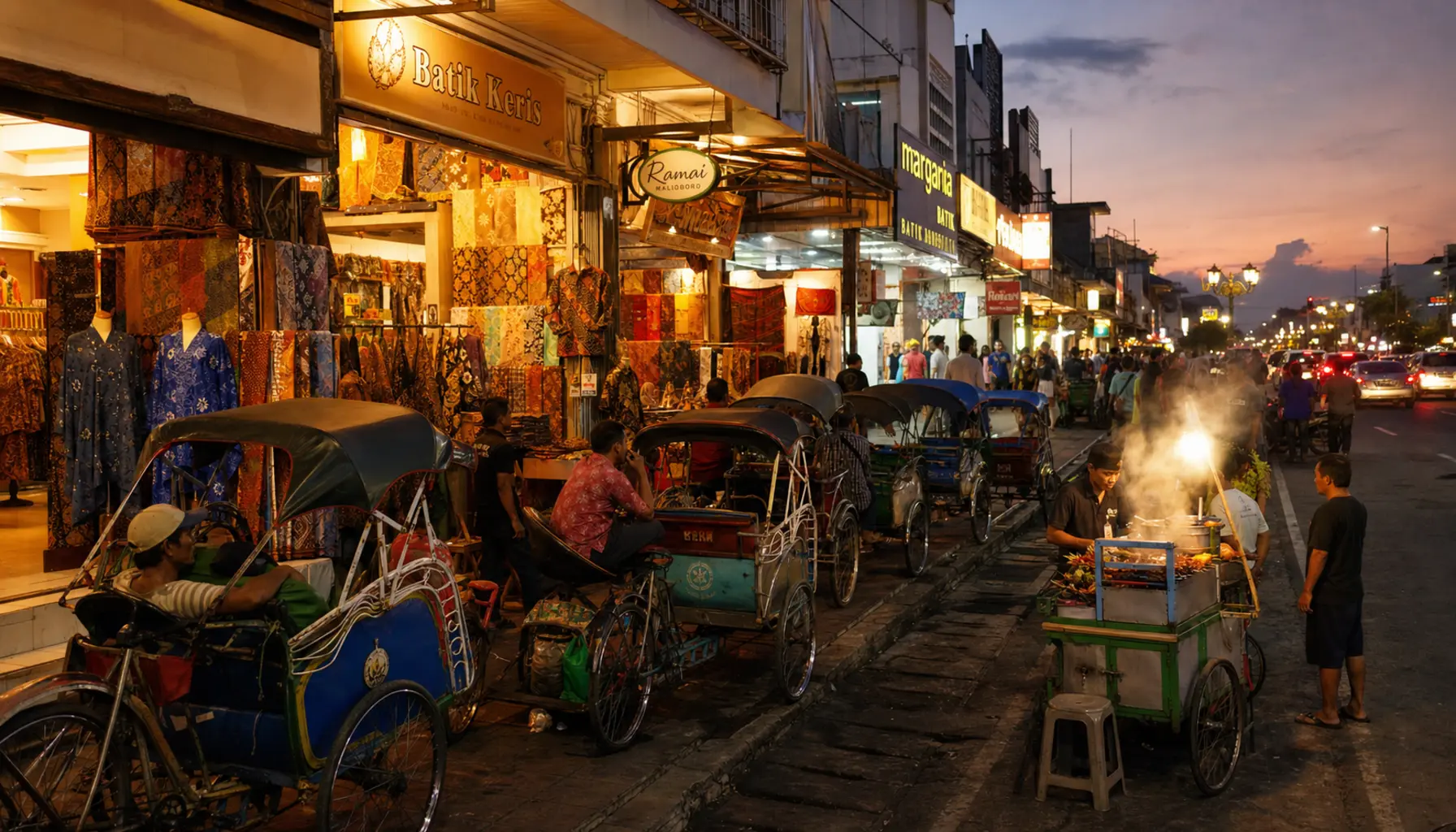
Malioboro is the ceremonial and commercial spine of Yogyakarta — a two-kilometre straight line running south from the Tugu monument to the Kraton, the Sultan's palace, aligned on the cosmological axis between Mount Merapi to the north and the Indian Ocean to the south. It is the street every visitor walks, and it changed substantially in 2022 when the street vendors were relocated and much of it was pedestrianised, which made it considerably more pleasant and, some argue, less characterful.
Walking it
Start at the Tugu Pal Putih monument at the north end, a white obelisk that is the city's symbol and one of the most photographed spots in Java, particularly at night. Walk south past the shophouses, the Malioboro Mall and the covered arcades. Pasar Beringharjo, the city's main market, is on the left about two-thirds of the way down — batik on the ground floor, food and spices upstairs, and a genuinely working market rather than a tourist one. Continue to the Vredeburg fort and the northern square of the Kraton at the southern end. Allow two hours with stops.
Shopping on the street
Malioboro is where you buy batik, leather bags, silver from Kotagede, wayang puppets, T-shirts and sandals. The relocated vendors now occupy two purpose-built markets, Teras Malioboro 1 and 2, at the southern end, which concentrates the bargaining in one place. Prices start high for visitors: open at around forty per cent and expect to settle near sixty. Pasar Beringharjo is cheaper for the same goods and better for batik by the metre. For fixed prices and better quality, the batik houses off the street — Hamzah and the workshops in Kampung Batik — are worth the extra.
After dark
Malioboro is an evening street. From about six the pavement fills, buskers and street musicians set up, and the lesehan mat-and-low-table stalls appear along the pedestrian sections serving gudeg and fried chicken. The lighting on the colonial-era shopfronts is genuinely attractive. Agree a price before you sit down at a lesehan stall — unlisted prices for visitors have been a persistent complaint and the city has run campaigns against it. The Tugu monument at the north end is at its best after ten, when the traffic thins and people photograph it from the middle of the junction.
Getting there and around
Yogyakarta's Tugu railway station sits directly on Malioboro, which makes arriving by train from Jakarta, Bandung or Surabaya remarkably convenient. Becak — cycle rickshaws — and andong horse carts wait along the street; agree the fare first, typically 20,000–50,000 rupiah for a short hop, and be aware that the very cheap offers usually include a stop at a batik shop that pays commission. The Trans Jogja bus runs the corridor, and Gojek and Grab both work in the city, though pickups on the pedestrianised section are restricted.
Malioboro Street at a glance
| Length | ~2 km, Tugu monument to the Kraton |
|---|---|
| Pedestrianised | Since 2022; vendors moved to Teras Malioboro 1 and 2 |
| Main market | Pasar Beringharjo — batik downstairs, food upstairs |
| Best time | After 6pm; Tugu monument after 10pm |
| Becak fare | IDR 20,000–50,000 — agree before boarding |
| Station | Tugu, directly on the street |