Prambanan Day Trip in Yogyakarta
Part of the Yogyakarta travel guide — see every topic in All Yogyakarta Guides.
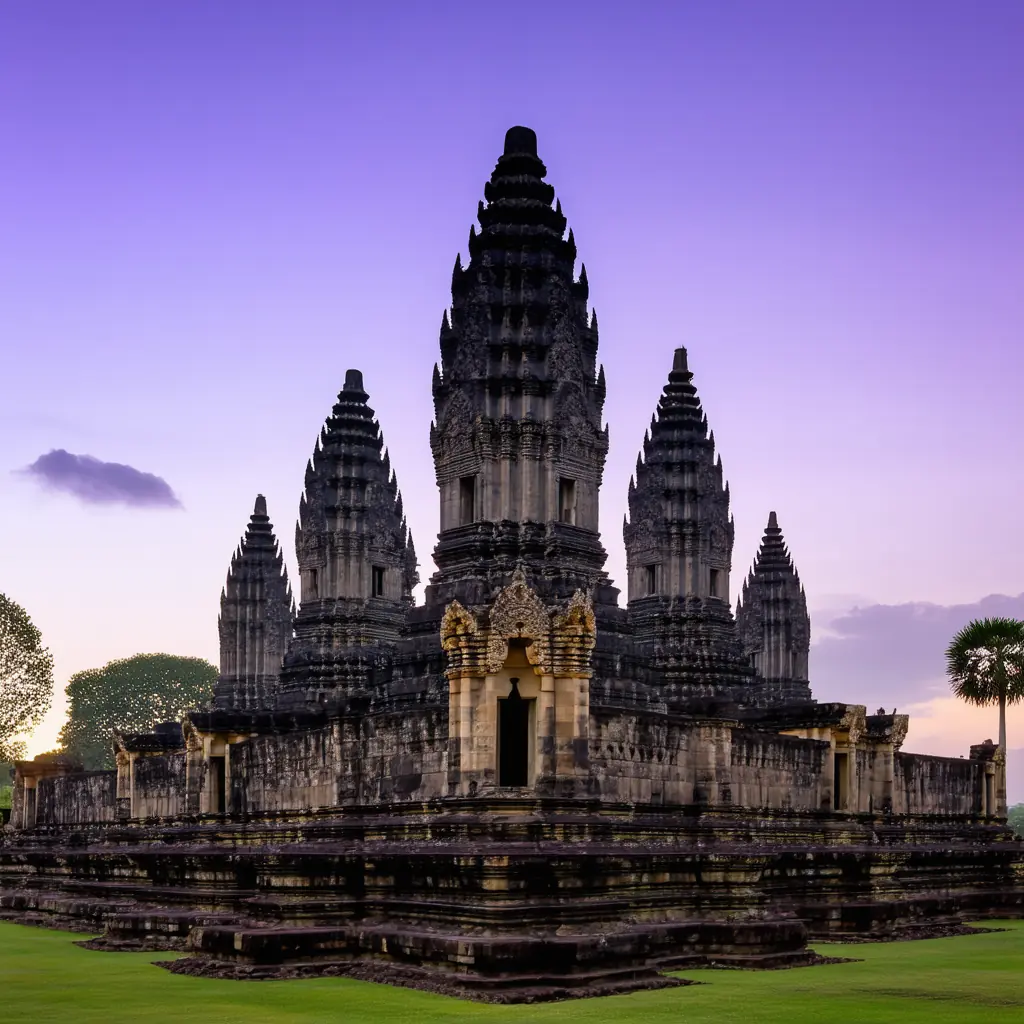
Prambanan was built in the ninth century, roughly contemporary with Borobudur but Hindu rather than Buddhist — the two coexisting on the Kedu plain is one of the more interesting facts about early Javanese history. The central compound holds three towering shrines to Shiva, Vishnu and Brahma, the tallest reaching 47 metres, surrounded by the foundations of over two hundred smaller temples, most of them still fields of numbered stone awaiting reconstruction. It is a twenty-five minute drive east of Yogyakarta, which makes it the easier of the two great temple trips.
The complex
The three main shrines stand in a row facing three smaller vahana temples for the mounts of each god — Nandi the bull, Garuda and the swan. The Shiva temple in the centre is the tallest and holds four chambers with statues of Shiva, Durga, Agastya and Ganesha; the Durga figure is locally known as Roro Jonggrang, the slender maiden of the founding legend. The inner walls of the Shiva and Brahma temples carry the Ramayana in relief, read clockwise, and continued on the Vishnu temple. The 2006 earthquake did significant damage and restoration is ongoing, so some chambers may be closed.
The Ramayana ballet
Prambanan stages a Ramayana ballet — Javanese dance with a full gamelan orchestra telling the epic across four episodes — on an open-air stage with the illuminated temples as the backdrop. It runs on the outdoor stage in the dry season, roughly May to October, and moves to the indoor Trimurti theatre otherwise. Tickets run 125,000–450,000 rupiah depending on seating, and the outdoor version with the floodlit spires behind the dancers is genuinely spectacular. Book ahead for the dry-season performances, which sell out.
The temples nearby
The Prambanan area holds far more than the main compound and almost nobody visits the rest. Sewu, a large Buddhist complex, is a fifteen-minute walk north and is included in the ticket; it is nearly as impressive and usually empty. Ratu Boko, on a hill four kilometres south, is a ruined palace or monastery site with a monumental gateway and the best sunset view in the region — a combined ticket exists. Plaosan, Sambisari and Kalasan are smaller and scattered around the plain, and a driver will cover three or four in an afternoon.
Practical detail
Foreign-visitor entry is substantially higher than domestic and combined tickets with Borobudur or Ratu Boko save money if you are doing both. Open roughly six-thirty to five, and the last two hours are the best of the day — softer light on the dark andesite, fewer people, and the option of continuing to Ratu Boko for sunset. It is 17 kilometres from the city; a car with driver costs 350,000–500,000 for a half day, and the Trans Jogja 1A bus goes there cheaply and slowly. There is no shade in the compound and the stone radiates heat.
Prambanan Day Trip at a glance
| Built | 9th century, Hindu; tallest shrine 47 m |
|---|---|
| Distance | 17 km east, ~25–40 minutes |
| Best time | Last two hours before closing (~5pm) |
| Ramayana ballet | Outdoor stage May–Oct; IDR 125,000–450,000 |
| Included nearby | Candi Sewu, a 15-minute walk and usually empty |
| Best sunset | Ratu Boko, 4 km south — combined ticket available |