Must Try Local Dishes in Bali
Part of the Bali travel guide — see every topic in All Bali Guides.
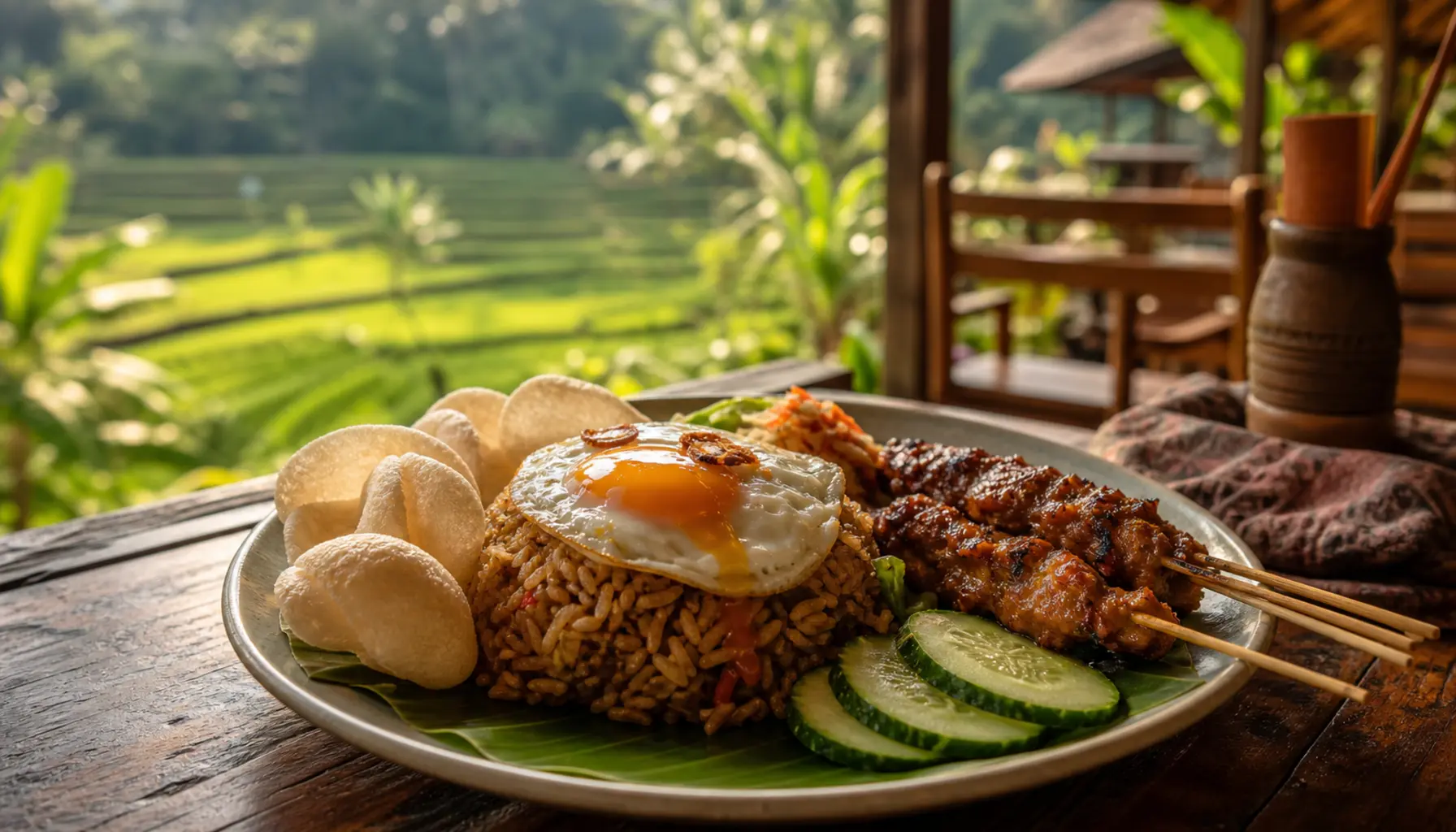
Balinese cooking is distinct from the rest of Indonesia, and the differences are worth knowing. It is Hindu rather than Muslim, so pork is central rather than absent. It is built on base genep, a wet spice paste of shallot, garlic, galangal, turmeric, ginger, candlenut and chilli that goes into almost everything. And the best of it is a lunchtime food — the famous suckling pig warungs open at eleven and sell out by two, which catches out visitors expecting to eat it at dinner.
The two great pork dishes
Babi guling is a whole pig, stuffed with base genep and turmeric, spit-roasted over coconut husk until the skin shatters. A plate brings you crackling, several cuts of meat, a spoonful of blood sausage, lawar and rice. Ibu Oka in Ubud is the famous one; Warung Babi Guling Pak Malen in Seminyak and Bu Dobiel in Denpasar are the ones people who live here argue about. Betutu is the other: a whole duck or chicken packed with spice paste, wrapped in banana leaf and betel bark, and slow-cooked for six to twelve hours until it falls apart. Bebek betutu needs ordering ahead almost everywhere.
Sambal matah and the side dishes
Sambal matah is Bali's contribution to the world's condiments — raw, not cooked: sliced shallot, lemongrass, bird's eye chilli, kaffir lime leaf and a splash of hot coconut oil, sharp and fragrant rather than heavy. Order it with anything grilled. Lawar is a mix of minced meat, grated coconut, long beans and spice; the red version contains fresh pig's blood and is not for everyone. Sate lilit is minced fish or pork with coconut and spice moulded onto a lemongrass stalk and grilled, which is far better than the skewered satay tourists usually meet.
Everyday eating
Nasi campur — rice with a scatter of whatever the warung cooked that morning — is the default meal, costs 25,000–45,000 rupiah, and is how you should eat most lunches. Point at what you want. Nasi goreng and mie goreng are the pan-Indonesian standards. Bakso meatball soup arrives by cart with a distinctive bell. On the coast, ikan bakar is whole fish rubbed with spice and grilled over coconut husk, best at the Jimbaran beach grills where you choose the fish by weight and eat it with your feet in the sand.
Sweet things and drinks
Pisang goreng — fried banana — is everywhere and best from a cart. Dadar gulung is a pandan crepe rolled around palm-sugar coconut. Es campur and es cendol are shaved-ice desserts with jelly, coconut milk and palm sugar. Klepon are rice balls filled with molten palm sugar that burst when you bite them. To drink: Bali's arak is a distilled palm or rice spirit, traditionally rough and, in the form of home-distilled arak, occasionally dangerous — stick to reputable bottled brands. Kopi Bali is served thick and unfiltered, grounds and all; let it settle.
Must Try Local Dishes at a glance
| Signature dish | Babi guling — suckling pig, lunchtime only |
|---|---|
| Order ahead | Bebek betutu — 6–12 hours of cooking |
| The condiment | Sambal matah — raw shallot, lemongrass, chilli |
| Everyday meal | Nasi campur, IDR 25,000–45,000 |
| Best seafood | Jimbaran beach grills, priced by weight |
| Caution | Home-distilled arak — buy reputable bottled brands only |