New Year Traditions in Kyoto
A visual guide from the Kyoto travel guide — see all posters in Visual Guides.
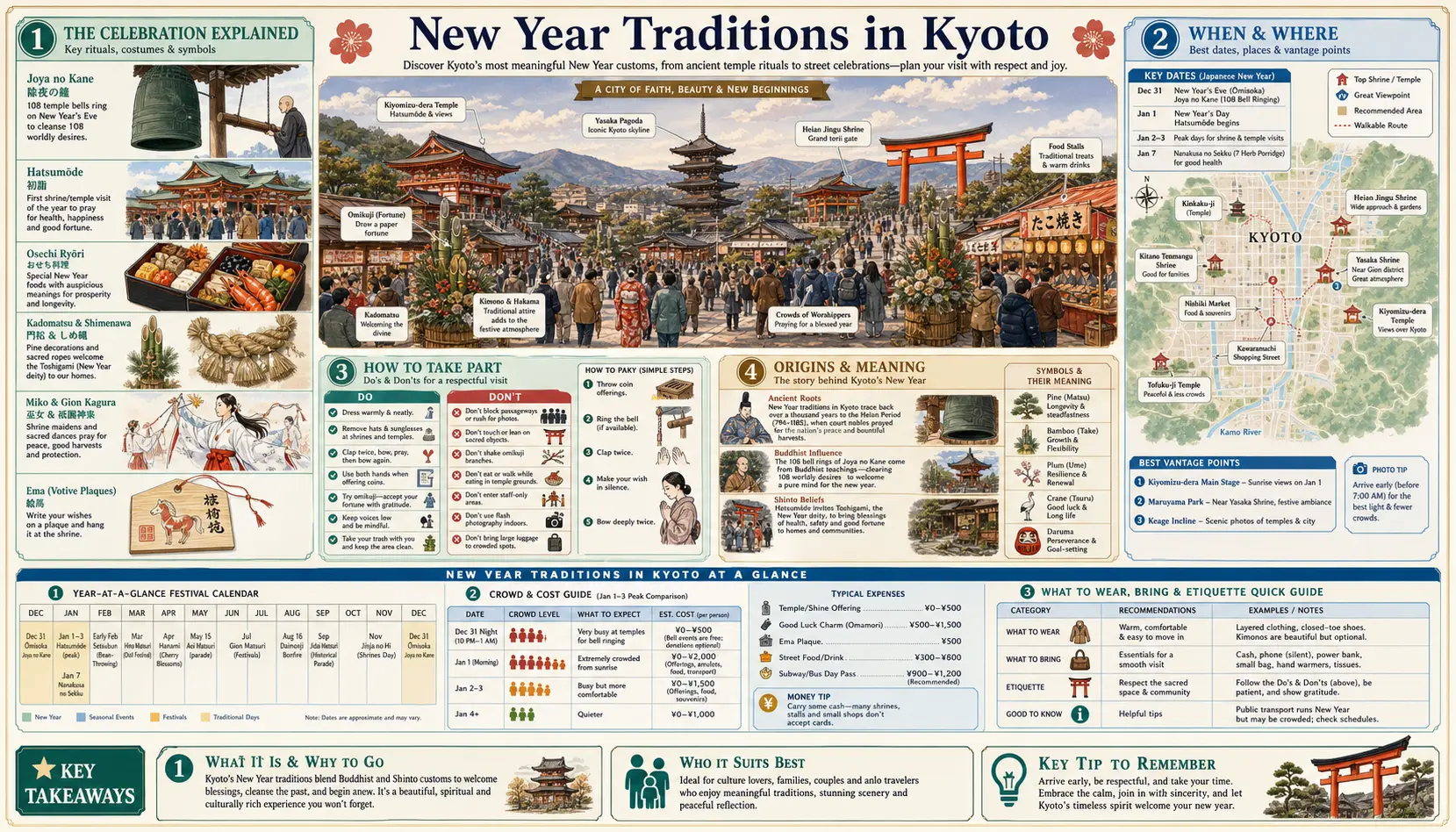
Kyoto's New Year is loud for about six hours and then very quiet for three days. On the night of 31 December the temple bells start — Chion-in's is one of the largest in Japan and takes a team of monks hauling on a beam to swing it — trains run through the small hours, and the lanes around Yasaka Shrine fill with people carrying smouldering rope. By the morning of 1 January the shutters are down along most of Teramachi, and the city belongs to families walking off a bowl of ozoni.
New Year's Eve into the first morning
Two events anchor the night. Joya no Kane, the 108 bell strikes, is rung at temples across the city from late evening; Chion-in above Maruyama Park draws the biggest crowd and access to the bell court is limited, so arriving early matters. At Yasaka Shrine, the Okera Mairi ritual lets people light lengths of braided rope from a sacred fire and carry the ember home — the glowing coils swing along Shijo-dori for hours. Keihan and Hankyu typically run extended or all-night services, and the Karasuma subway usually adds late trains. Dress for near-freezing temperatures and possible sleet.
Food, shopping and closures
The last week of December turns Nishiki Market into a scrum of people buying osechi ingredients — herring roe, black beans, rolled kelp — and the basement food halls at Daimaru and Takashimaya on Shijo sell lacquered osechi boxes to order. On the 31st people eat toshikoshi soba; on the 1st, Kyoto's ozoni is white miso with a round mochi. Note that 1 to 3 January is the deadest stretch of the year for restaurants and small shops, and many temple gardens close. Department stores reopen around the 2nd with fukubukuro lucky bags, which is when the queues reappear on Kawaramachi.