Music and Dance Traditions in Kyoto
A visual guide from the Kyoto travel guide — see all posters in Visual Guides.
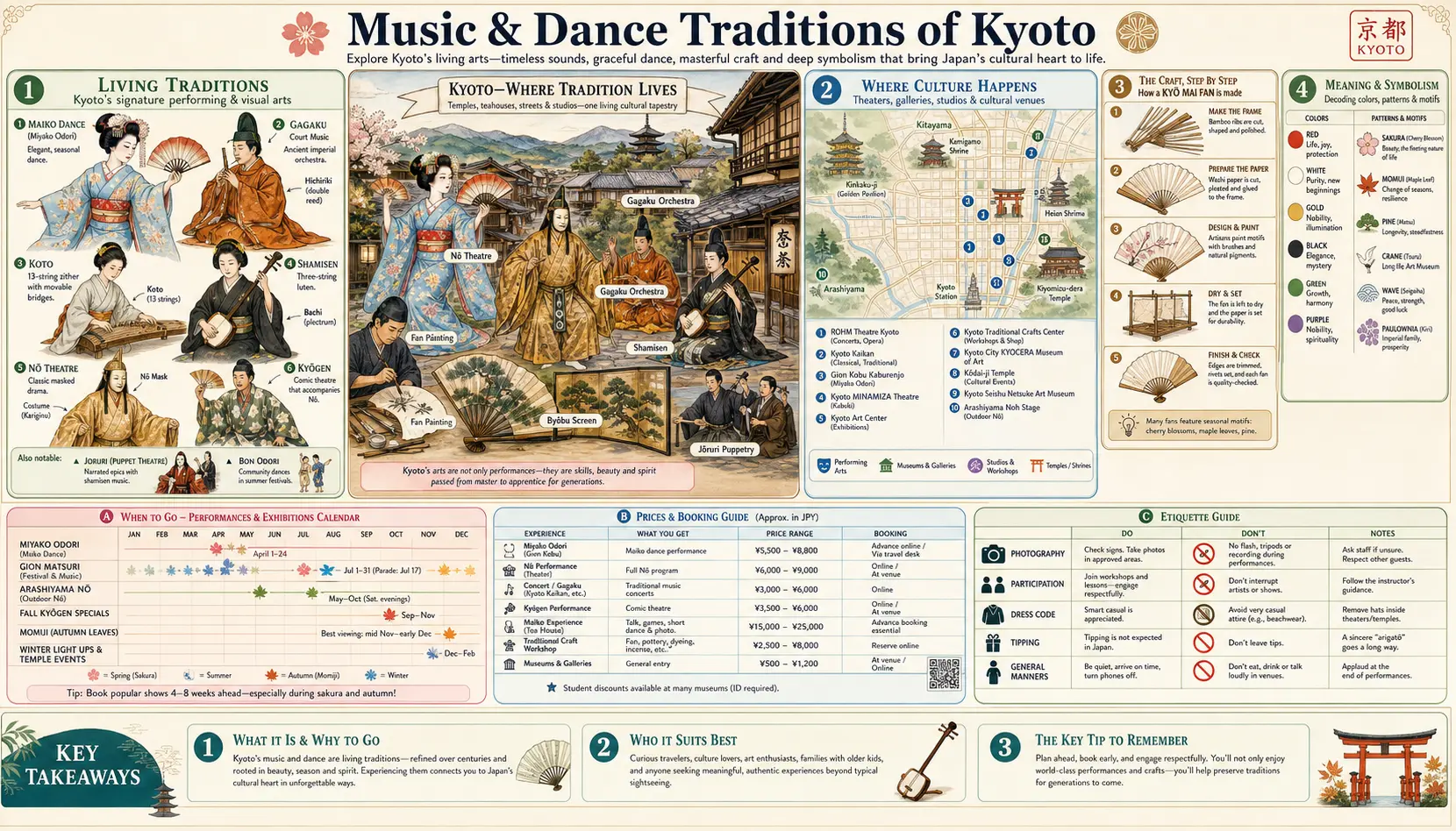
Each April the wooden theatre behind Hanamikoji fills with the flat thump of a shime drum and the long slide of a shamisen string, and the Miyako Odori dance season begins. Kyoto keeps more of this live performance culture than anywhere else in Japan — five geiko districts each stage their own annual revue, Noh troupes still work from private stages near the Imperial Palace, and Isozaki's concert hall in Kitayama books orchestras the same week. Most of it is ticketed, seated and entirely open to visitors who book ahead.
The dance seasons
The five hanamachi run their revues on a rough calendar: Miyako Odori at the Gion Kobu Kaburenjo through April, Kyo Odori in Miyagawacho and Kitano Odori in Kamishichiken around the same spring window, and Kamogawa Odori at the Pontocho Kaburenjo in May. Gion Higashi holds the one autumn slot, staging Gion Odori at its own theatre in November. Tickets typically go on sale a month or two out and the cheaper unreserved tiers sell first. Programmes last roughly an hour, staged as a series of tableaux with live shamisen, drums and flute from side galleries rather than a pit.
Year-round venues
Outside the spring seasons, Gion Corner at Yasaka Hall runs a short evening sampler — kyomai dance, koto, gagaku court music and a comic kyogen sketch in about an hour — which is the easiest single introduction. Kongo Nohgakudo, a few minutes' walk from Imadegawa station on the Karasuma subway line, stages Noh and kyogen on a classic cedar stage. For contemporary programming, the Rohm Theatre in Okazaki reopened after a Kengo Kuma redesign and books everything from ballet to electronic sets, while the Kyoto Concert Hall near Kitayama station handles the orchestral calendar.