Shopping Malls and Districts in Kuala Lumpur
Part of the Kuala Lumpur travel guide — see every topic in All Kuala Lumpur Guides.
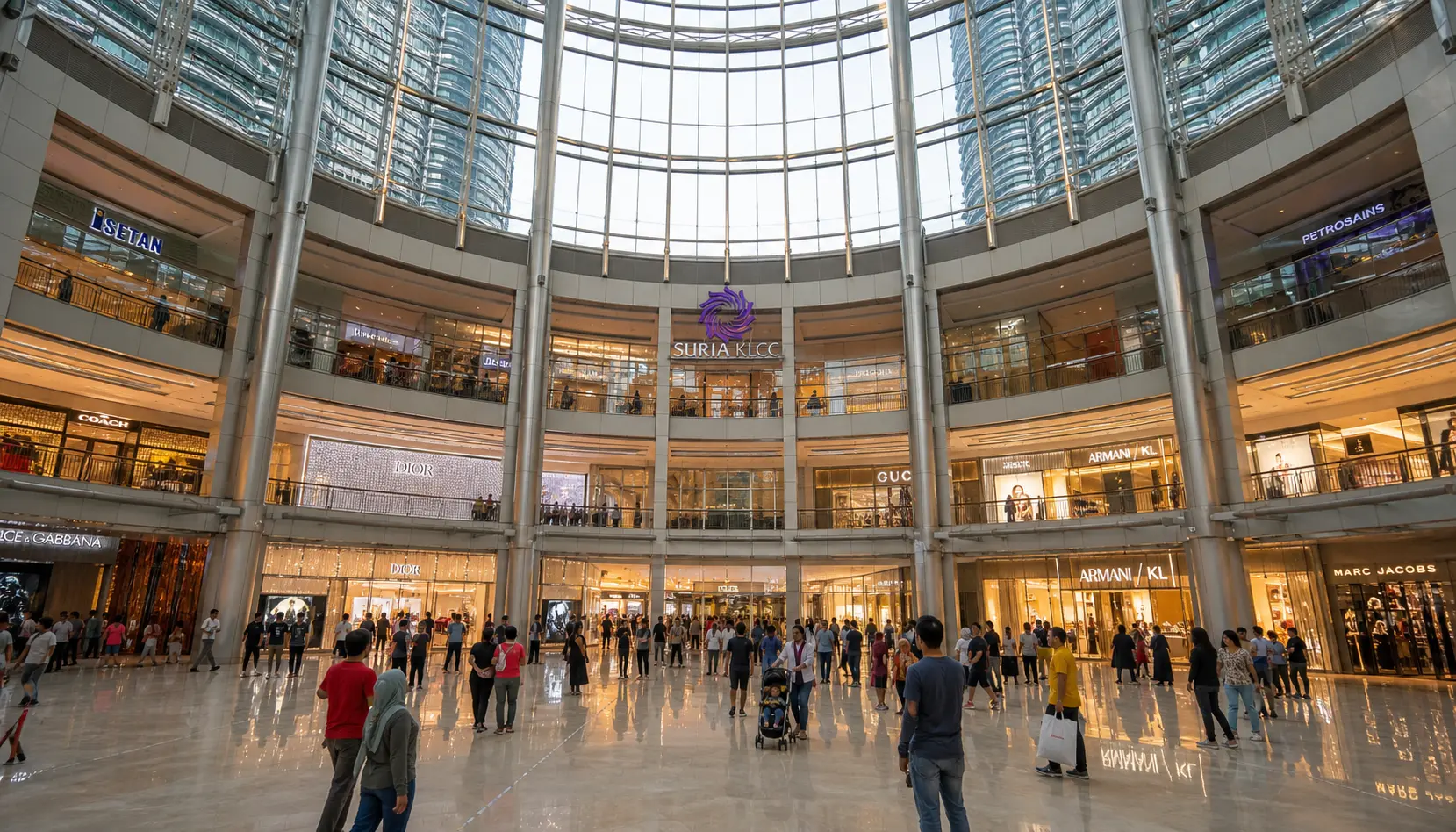
Shopping is one of the things Kuala Lumpur does at genuine international scale. The city has an enormous number of malls, several of them among the largest in the world, plus wet markets, wholesale streets and a well-developed craft sector. Prices on international brands are competitive rather than cheap; what is genuinely good value is local design, batik and pewter, electronics, and food. The malls also serve a practical function: they are air-conditioned, and between eleven and four that matters.
The main mall clusters
Bukit Bintang is the densest: Pavilion for international brands and a good food hall, Lot 10 for the Hutong hawker basement, Starhill for luxury, and Sungei Wang and Berjaya Times Square for the older, cheaper, more chaotic end. KLCC has Suria at the base of the Petronas Towers. Further out, Mid Valley Megamall and The Gardens sit together as one of the largest retail complexes in the country, and 1 Utama in Petaling Jaya is bigger still, with a rainforest atrium and a rooftop park.
Markets and streets
Central Market, in a 1937 art deco building, sells batik, pewter, woodcarving, songket and souvenirs at fixed and semi-fixed prices, and is the calm alternative to bargaining. Petaling Street in Chinatown is the counterfeit-goods arcade — noisy, negotiable and best treated as an experience. Chow Kit is the big wet market north of the centre, wholesale and entirely local. Kampung Baru's Saturday night market and the Ramadan bazaars are the Malay equivalents. Bangsar and Publika hold the independent design and weekend-market scene.
What is actually worth buying
Pewter — Royal Selangor has been making it here since 1885 and runs a visitor centre in Setapak where you can hammer your own dish. Batik, both Malaysian and Indonesian, at Central Market or from designers in Bangsar. Songket, the gold-thread brocade. Local coffee and white coffee from Ipoh. Durian products, if you dare. Electronics at Low Yat Plaza, which is the specialist mall — prices are competitive and international warranties are the thing to check. And Malaysian-brand skincare and food products, which are cheap and good.
Practical notes
Malaysia's tourist refund scheme has changed over the years; check the current position before planning around a VAT-style refund. Malls open around ten and close at ten. Sale seasons cluster around the Malaysia Mega Sale in mid-year and the pre-festive periods before Hari Raya, Chinese New Year and Deepavali. Bargaining applies at markets and street stalls, not in malls. Card and QR payment are near-universal in malls and cash still rules at wet markets and hawker stalls. Counterfeits are illegal to import into most countries.
Shopping Malls and Districts at a glance
| Main cluster | Bukit Bintang — Pavilion, Lot 10, Starhill, Sungei Wang |
|---|---|
| Biggest | Mid Valley plus The Gardens; 1 Utama in Petaling Jaya |
| Crafts, fixed prices | Central Market, in a 1937 art deco building |
| Electronics | Low Yat Plaza — check international warranty |
| Local speciality | Royal Selangor pewter, made here since 1885 |
| Hours | Malls roughly 10am–10pm |