Orangutans and Sepilok in Borneo (Sabah)
Part of the Borneo (Sabah) travel guide — see every topic in All Borneo (Sabah) Guides.
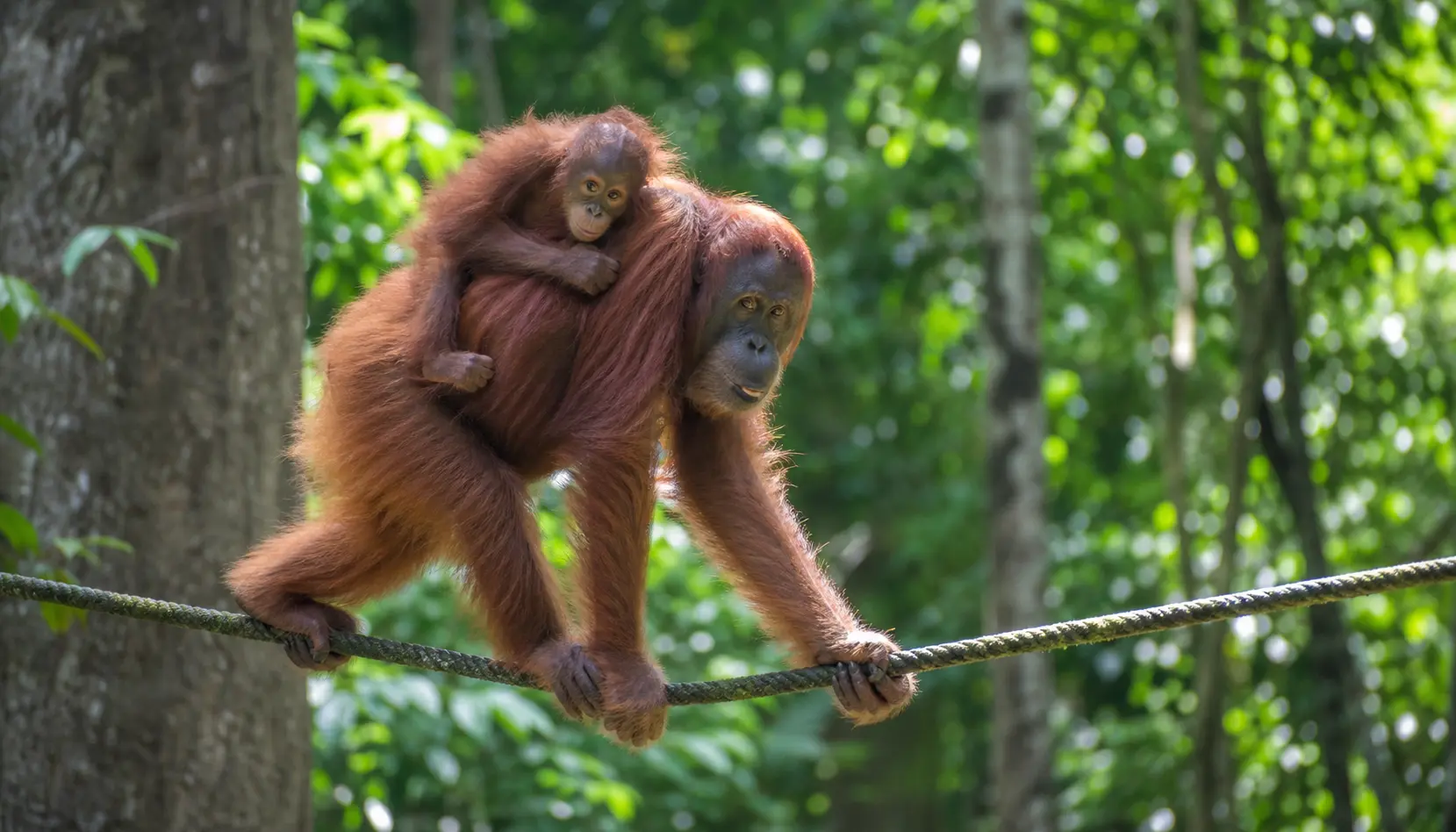
Sabah holds one of the two remaining wild populations of the Bornean orangutan, a critically endangered species whose numbers have fallen sharply with the loss of lowland forest. The Sepilok Orangutan Rehabilitation Centre, established in 1964 near Sandakan, takes in orphaned and displaced animals and prepares them for release into the surrounding forest reserve, and is the most accessible place in the world to see the species. Next door, the Bornean Sun Bear Conservation Centre does the same for the world's smallest bear.
Sepilok
The centre occupies a forty-three square kilometre forest reserve and rehabilitates orphaned, injured and confiscated orangutans, teaching them to climb, forage and nest before release. Visitors watch from boardwalks at the outdoor nursery, where juveniles play on ropes, and at the feeding platform, where semi-wild animals may or may not appear — the food offered is deliberately monotonous so that successfully rehabilitated animals prefer to forage in the forest, which means no sighting is guaranteed and a quiet day is a good sign. Two feeding sessions run daily.
The sun bears
The Bornean Sun Bear Conservation Centre, founded in 2008 and immediately adjacent, cares for rescued sun bears — the world's smallest bear, with a distinctive pale chest crescent, an extraordinarily long tongue for extracting honey and insects, and a habit of climbing. Many arrive from the illegal pet trade. Viewing is from raised walkways over a forest enclosure, and the animals behave naturally, which makes it in some ways a better wildlife experience than the orangutan feeding. A combined ticket with Sepilok is available.
The Rainforest Discovery Centre
Also at Sepilok, and consistently underrated: a canopy walkway up to twenty-eight metres above the forest floor with several observation towers, plant trails, a lake and one of the best birding sites in Sabah. Bornean bristlehead, hornbills, trogons and broadbills are all possible. Night walks are offered and turn up flying squirrels, tarsiers and slow lorises. It is quiet, inexpensive, and the three Sepilok sites together make a genuinely full day.
Seeing wild orangutans
Rehabilitation centres are not the wild. For genuinely wild sightings, the Kinabatangan river — two to three hours from Sandakan — offers boat-based viewing along the riverbank forest, with reasonable chances during morning and afternoon cruises. Danum Valley, a protected primary forest with a research centre and a lodge, has the highest densities and the best chance of a close encounter, at a considerably higher price. Both are far more rewarding than a feeding platform, and both take days rather than hours.
Orangutans and Sepilok at a glance
| Sepilok | Founded 1964; 43 km² forest reserve near Sandakan |
|---|---|
| Feeding | Two sessions daily; sightings not guaranteed by design |
| Next door | Bornean Sun Bear Conservation Centre, founded 2008 |
| Underrated | Rainforest Discovery Centre — 28 m canopy walkway |
| Wild sightings | Kinabatangan river; Danum Valley for the best chance |
| Status | Bornean orangutan is critically endangered |