Borobudur Day Trip in Yogyakarta
Part of the Yogyakarta travel guide — see every topic in All Yogyakarta Guides.
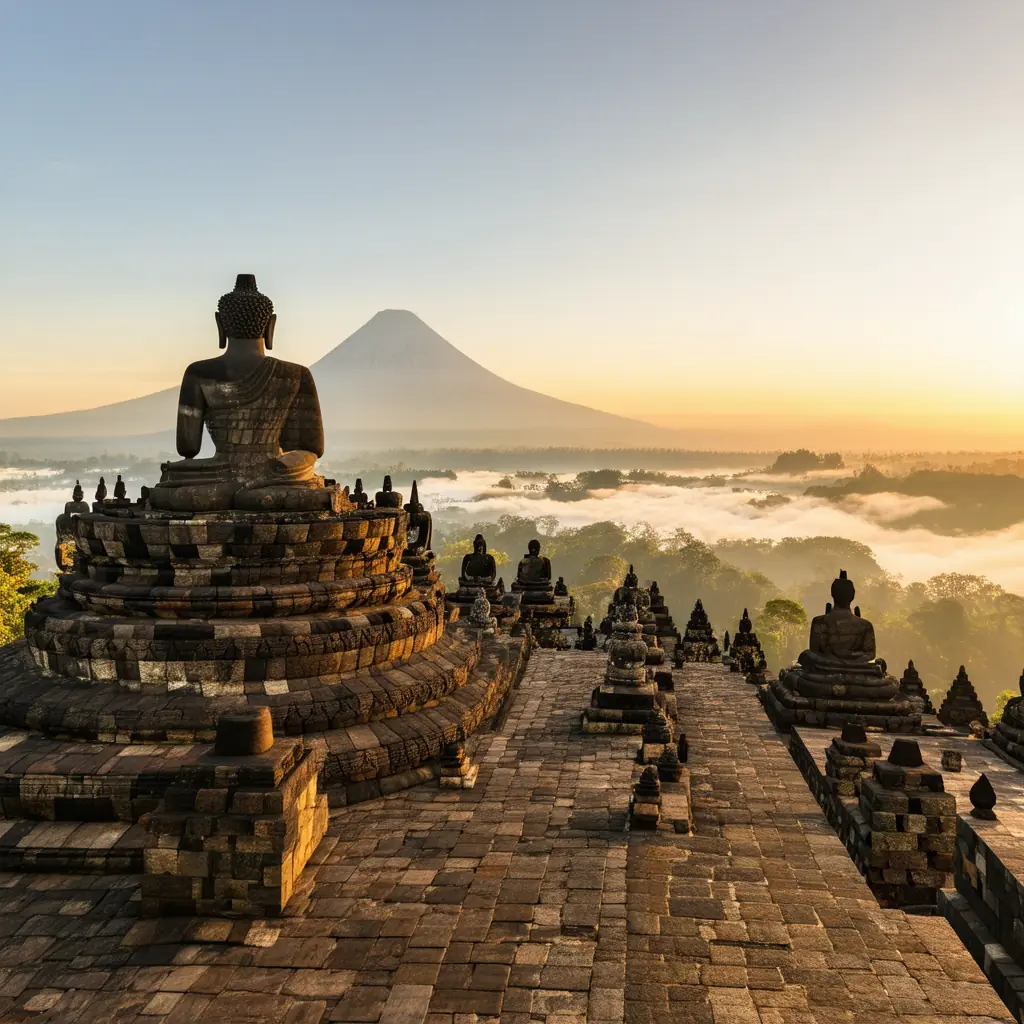
Borobudur is a ninth-century stepped pyramid of two million blocks of andesite, carrying five kilometres of narrative relief and 504 Buddha statues, built by the Sailendra dynasty and abandoned for centuries under volcanic ash before its rediscovery in 1814. It sits about an hour and a half north-west of Yogyakarta and is the single most visited monument in Indonesia. The access rules changed significantly in 2023 to protect the stone, and turning up without understanding them is the main way visitors are disappointed.
How access works now
The grounds and the base are open to general admission, but climbing to the upper terraces is capped, timed and guided: you book a slot, wear supplied sandals that protect the stone, and go up in a small group with a licensed guide. Numbers are limited per day and the popular early slots go first, so book online in advance rather than at the gate. Foreign-visitor pricing is substantially higher than domestic, and the climb ticket is separate from grounds admission. Check the current official site before travelling — quotas and prices have been revised more than once since the system started.
Sunrise, and the honest version
The famous sunrise photographs — mist in the valley, stupas in silhouette, Merapi behind — are mostly taken from Punthuk Setumbu, a hill about three kilometres away, not from the monument itself. That hill costs a fraction of the price, is open before dawn, and gives you the view everyone recognises. Sunrise access on the monument itself has been offered through the neighbouring Manohara hotel at times and has been restricted at others. If the picture is what you want, go to Punthuk Setumbu or Setumbu's neighbour Barede Hill, then visit Borobudur properly at opening.
What to actually look at
The reliefs are the point and most visitors walk past them. The lower galleries carry the Karmavibhangga panels on cause and effect, largely hidden behind a later stone casing; above them run the Lalitavistara reliefs telling the life of the Buddha, and the Gandavyuha sequence following the pilgrim Sudhana. Walking clockwise through all four galleries covers about five kilometres of carving, which is the intended pilgrimage and takes well over an hour. The upper three terraces are circular, plain, and hold the perforated stupas — the shift from dense narrative to emptiness is the architectural argument of the whole building.
Getting there and combining it
A car with driver from Yogyakarta is 500,000–700,000 rupiah for the day and is the practical choice; the Trans Jogja plus Damri bus combination is cheap but slow. Borobudur pairs naturally with Mendut and Pawon, two smaller temples on the same axis, and with Prambanan on the other side of the city if you are willing to make it a long day — though doing both properly is better split over two. Go on a weekday: Indonesian domestic tourism fills the site at weekends and during school holidays. Bring water, a hat and sunscreen; there is no shade on the terraces.
Borobudur Day Trip at a glance
| Built | 9th century, Sailendra dynasty; ~2 million stone blocks |
|---|---|
| Distance | ~40 km north-west of Yogyakarta, ~1.5 h |
| Upper terraces | Timed, capped, guided slots with supplied sandals — book ahead |
| Best sunrise view | Punthuk Setumbu hill, ~3 km away |
| Relief galleries | ~5 km of carving; walk clockwise |
| Car with driver | IDR 500,000–700,000 for the day |