Thailand now requires the Digital Arrival Card before you board
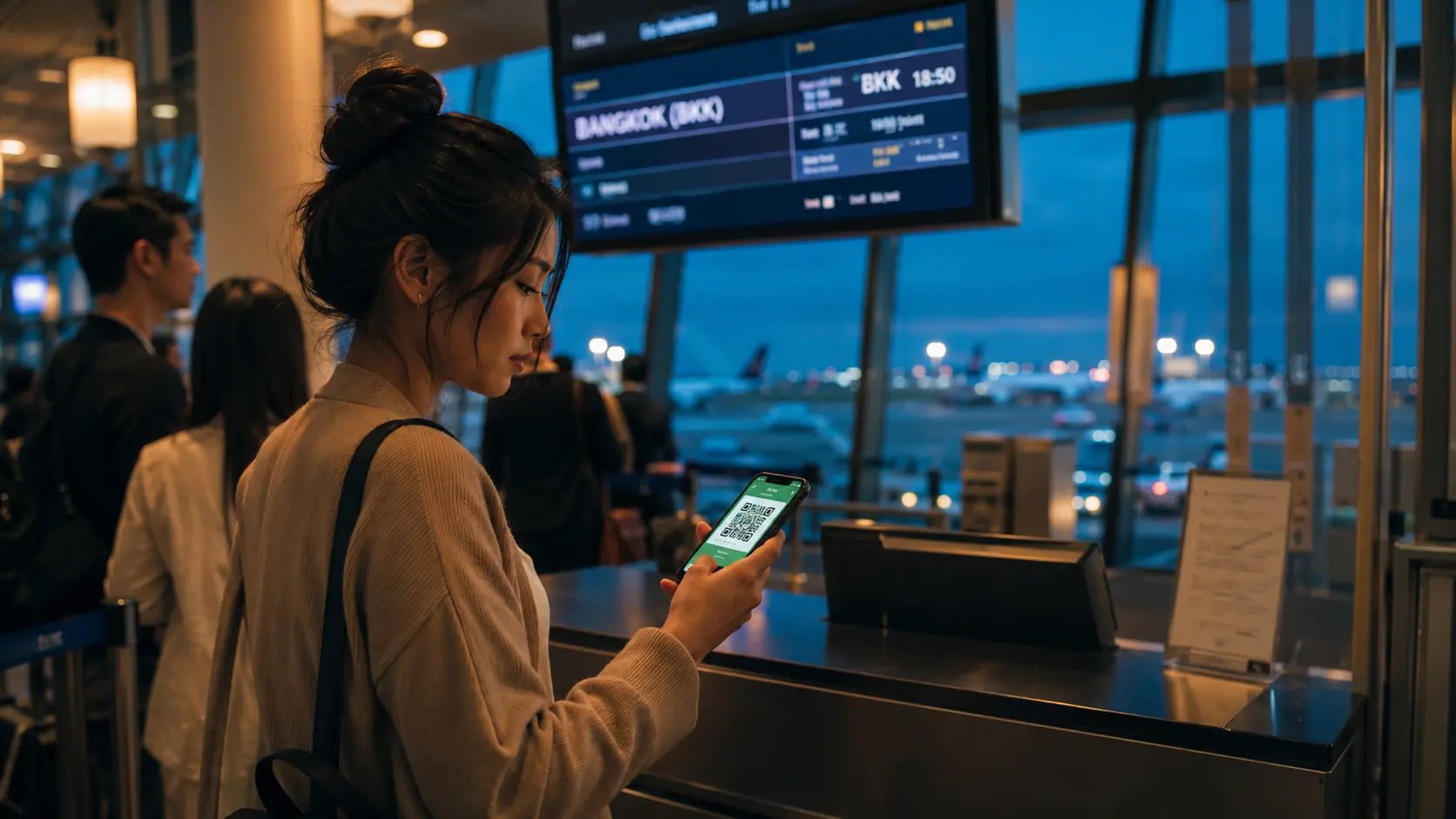
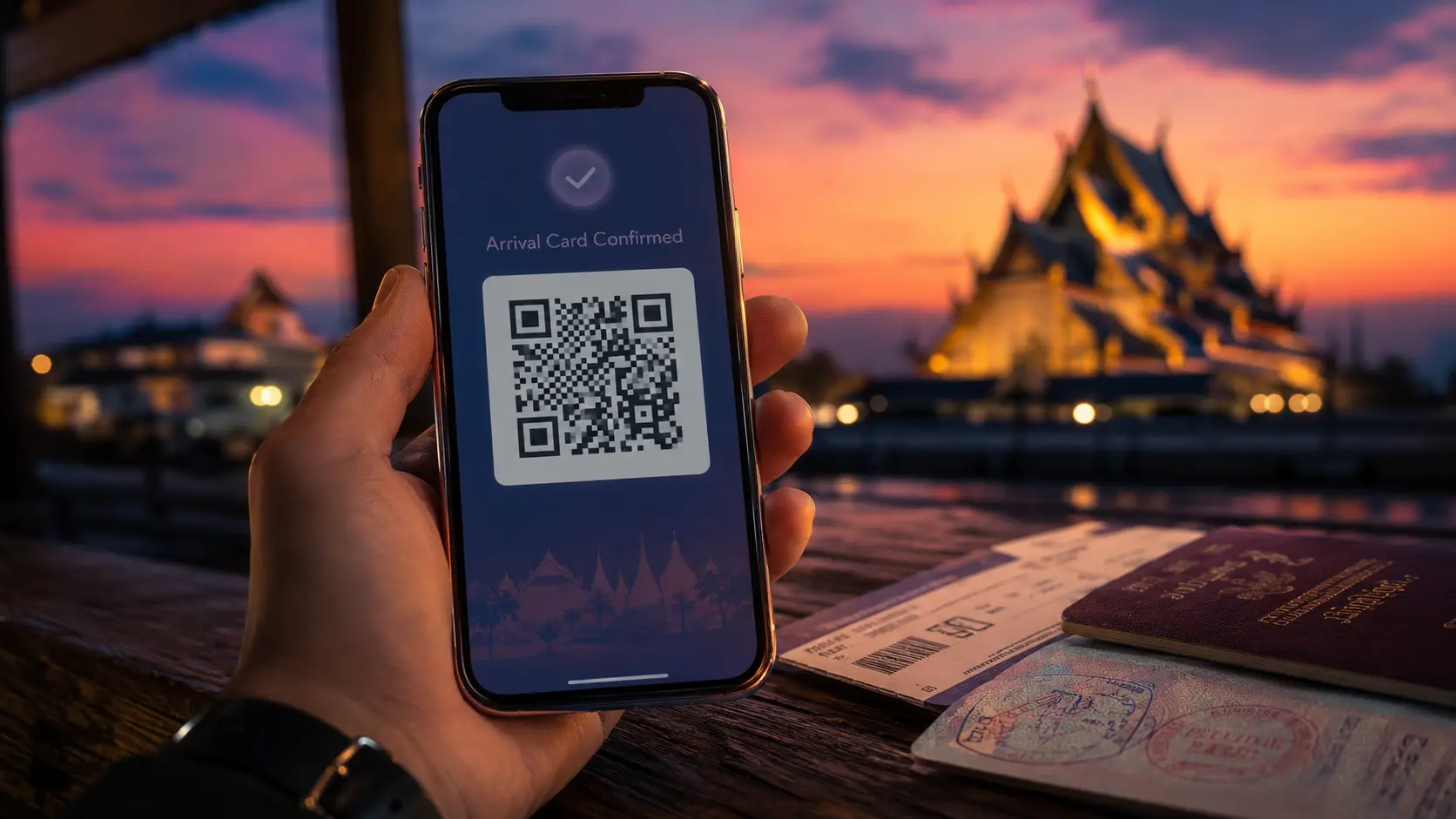
If you’re flying into Thailand this year — even for a single connection that clears immigration — you now have a new pre-flight checklist item alongside your passport and your boarding pass. The Thailand Digital Arrival Card (TDAC) replaced the paper TM6 form in May 2025, and over the last twelve months airline check-in desks have moved from “recommended” to “will not print your boarding pass without it.” A handful of travelers showing up at Suvarnabhumi or Phuket without a completed TDAC have been turned around at the gate or pulled into separate immigration queues on arrival.
The form is free, takes about ten minutes, and is filed entirely on the Thai Immigration Bureau’s own site — tdac.immigration.go.th. If a website is asking you to pay USD $10–$50 to “process” your TDAC, you are on a scam site. Close the tab.
What the rule actually says
Thailand’s Immigration Bureau requires every non-Thai national entering the Kingdom by air, land, or sea to submit a Digital Arrival Card before crossing the border. The previous paper TM6 card — the one you used to scribble on the plane during descent — has been abolished. Children, infants, and diplomats traveling on non-Thai passports each need their own TDAC. The only exemptions are airline crew on duty and passengers who never clear Thai immigration (i.e. true international-to-international transit).
The submission window is a hard 72 hours before arrival. The system will reject a form filed earlier than that — so if you book six months out, set a reminder for three days before departure. The card asks for:
- Passport details (name, number, nationality, date of birth, expiry)
- Flight or vehicle number and date of arrival
- Your address in Thailand — hotel name and address counts
- Purpose of travel (tourism, business, transit, etc.)
- A short health declaration
- An email for your confirmation QR code
On submission, the email arrives within a minute or two with a QR code attachment. Save it to your phone’s photos and to your email inbox — both, so you have an offline copy if the airport Wi-Fi is fighting you.
Why airlines are now enforcing it at check-in
For the first six months of the TDAC rollout, the rule was officially mandatory but practically a soft check — Thai immigration officers would help arrivals fill it out on arrival kiosks if they hadn’t done it in advance. That has changed. Carriers operating long-haul routes into Bangkok, Phuket, Chiang Mai, and Krabi have begun adding TDAC verification to the same check-in step that already handles visa and passport-validity checks for destinations like the U.S. (ESTA), Canada (eTA), the U.K. (ETA), and Australia (ETA).
The mechanics are airline-specific, but the pattern is consistent:
- At online or kiosk check-in — the carrier asks for your TDAC reference number or QR. Some airlines simply present a checkbox you must tick attesting that it has been filed.
- At the bag-drop or counter — the agent will visually verify the QR code on your phone if you couldn’t complete the digital-only check-in.
- At the boarding gate — in cases where check-in skipped the verification, gate agents have started spot-checking, and they are within their rights to refuse boarding under Document Improperly Verified (DIV) policy.
Airlines have a strong incentive to enforce: if Thailand refuses to admit a passenger on arrival, the carrier is on the hook for flying them back, and historically they’ve also been fined per non-compliant passenger. That’s why a rule officially aimed at immigration is, in practice, enforced at boarding.
How to file it — the 10-minute version
Do this 24 to 72 hours before your flight. Earlier than 72 hours and the form is rejected. Later than your flight and you may already be at the gate.
- Go to https://tdac.immigration.go.th. The site is in English by default; switch language at the top right if needed.
- Choose Individual or Group. Groups allow up to ten travelers on a single submission — useful for families or small tour parties.
- Either type passport details by hand, or use the MRZ scanner option to capture them from a photo of the passport’s machine-readable zone. The scanner is usually faster but won’t pick up a damaged or laminated passport cleanly.
- Fill in your flight number, arrival date, accommodation address, and travel purpose.
- Answer the brief health-declaration questions. They are short — a handful of yes/no questions about recent symptoms and high-risk regions.
- Review, submit, and wait for the email. Save the QR to your phone’s photo library.
If you don’t have an exact hotel name yet because you’re still finalising the trip — pick one. You can amend the form before arrival by re-filing with the corrected address; the immigration officer only sees the most recent submission tied to your passport.
The scam-site problem
Because the rule is new and travelers searching for “Thailand arrival card” on Google often land on ads first, an ecosystem of look-alike sites has appeared. These sites mirror the official form, then charge $10 to $50 to “process” or “expedite” a submission that costs nothing on the real site. Some of them genuinely re-submit your data to the official portal afterward; others simply pocket the fee and email you a screenshot.
How to recognise the real site:
- The official URL is tdac.immigration.go.th — ending in
.go.th, the reserved domain for Thai government agencies. Anything ending in.com,.org,.info, or.travelis a third party regardless of how official it looks. - The official site never asks for a credit card. There is no fee.
- If the page is showing an ad banner or affiliate disclosure, it is not the immigration bureau’s site.
Treat any “Thailand visa” service offering to bundle a TDAC with their visa application the same way you’d treat an ESTA reseller: legal, but charging you for a free government form.
What if you forget?
You have three escalating fallbacks, in order of pain:
- At the airport before check-in — pull out your phone, file the form yourself on airport Wi-Fi, save the QR, and go to bag-drop. This is the most common case and costs you fifteen minutes.
- At the bag-drop or check-in counter — agents at most departure airports will give you a few minutes to file it on your phone before they print the boarding pass. Tone matters here — apologise and file, don’t argue.
- On arrival in Thailand — airport kiosks at Suvarnabhumi (BKK), Don Mueang (DMK), Phuket (HKT), and Chiang Mai (CNX) will let you file on the spot, but you’ll be routed to an “assistance” queue that can add 30 to 90 minutes to your arrival. The rule doesn’t list a fine for filing on arrival, but immigration discretion is real — expect questions.
The case you actually want to avoid: the airline refusing to board you in your origin city because they cannot see a TDAC reference and don’t want to fly a passenger Thailand may refuse. That is not a hypothetical — reports from Singapore, Hong Kong, Doha, and Frankfurt this month confirm it has happened to travelers who treated the TDAC as a formality.
If you’re a PacificAir reader, what to do today
- If your flight to Thailand is more than 72 hours away — set a calendar reminder for 48 hours before departure to file the TDAC.
- If your flight is within 72 hours — file it now at tdac.immigration.go.th. Save the QR to your phone’s photo library and to your email.
- If you’re traveling with family — file one Group submission covering up to ten passports rather than ten individual forms.
- If your visa situation is more complicated than a standard tourist entry (long-stay, retirement, education, marriage, Elite) — file the TDAC anyway. It does not replace the visa. The two systems are separate.
The TDAC is annoying but small. The downside if you skip it is large — a missed flight, a re-route through a third country, or a long wait at the immigration desk after a 14-hour flight. Ten minutes on a laptop tonight is the cheapest part of your trip.