Japan in 2 Weeks: The Classic First-Timer Route
The Golden Route and a little more — Tokyo to Osaka by shinkansen, with the temples, the deer, and the food.
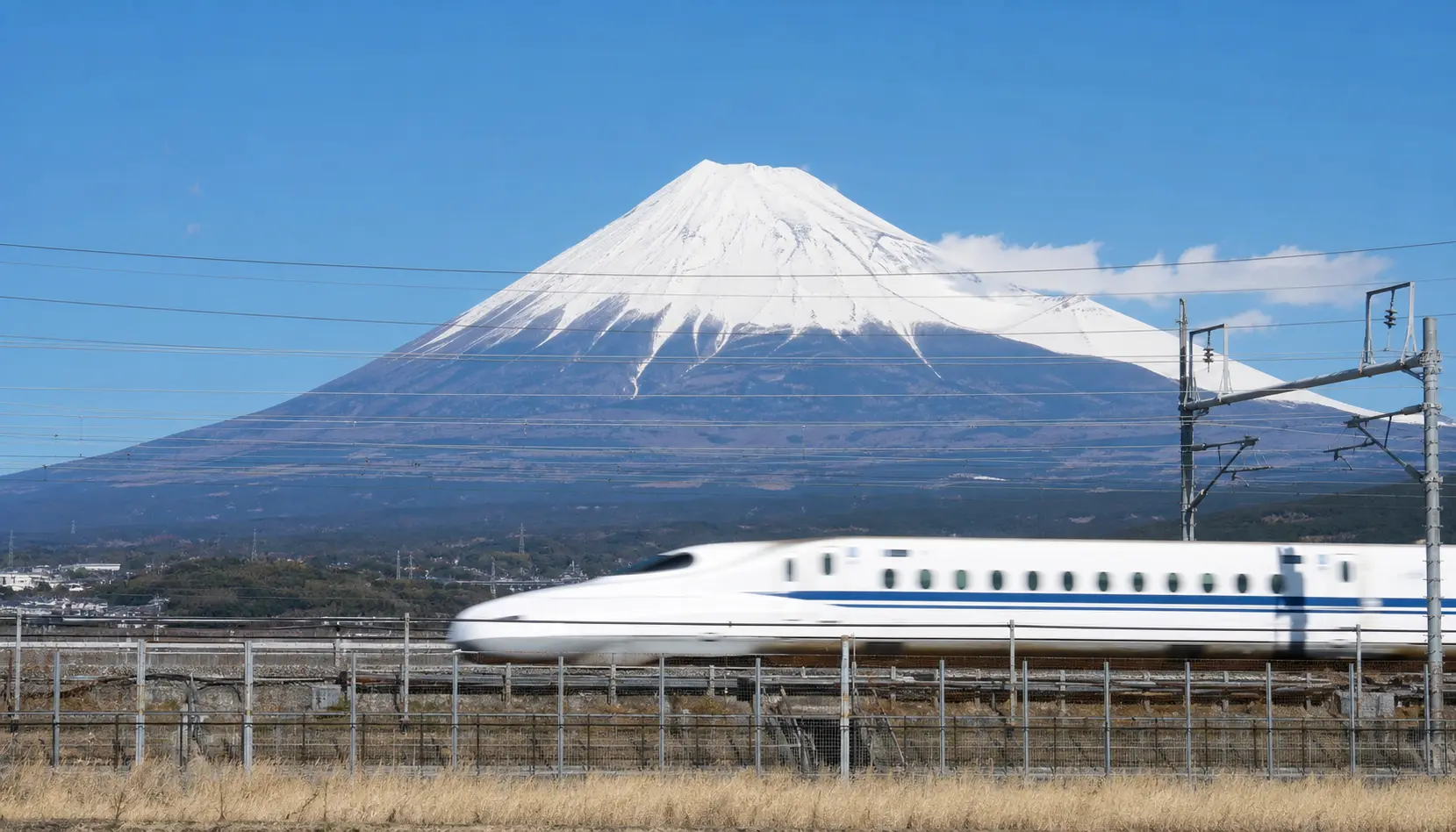
Last updated: June 2026.
This is the route Japan is almost designed to deliver: a near-frictionless arc from the capital down the Tokaido corridor to Kyoto and Osaka, riding the fastest trains in daily service on Earth. Fourteen days is enough to give Tokyo the time it demands, sleep one night under Mount Fuji, slow right down in Kyoto, and still leave room for the deer of Nara and the kitchen energy of Osaka. Add a fast day to Hiroshima if long train rides please rather than tire you.
How many days do you need in Japan?
Two weeks is the right length for a first trip. It covers the Golden Route — Tokyo, Kyoto, Osaka — without rushing, leaving a couple of days for a mountain night and a side trip. Ten days feels clipped; three weeks lets you reach Hiroshima, Kanazawa, or Hokkaido at a gentler pace.
The route at a glance
- Tokyo — 4 nights, with day trips to Nikko and Kamakura.
- Hakone / Mount Fuji — 1 night, the Hakone loop and a ryokan with an onsen.
- Kyoto — 3 nights, with a Nara day trip.
- Osaka — 2 nights, the food capital and your exit airport (KIX).
- Optional extension — Hiroshima and Miyajima, or Kanazawa, if you trim a Tokyo night.
The day-by-day itinerary
| Day | Base | Highlights |
|---|---|---|
| 1 | Tokyo | Arrive Narita or Haneda; settle in Shinjuku or Asakusa; first izakaya dinner. |
| 2 | Tokyo | Senso-ji and Asakusa, Meiji Shrine, Shibuya crossing, the Shinjuku night. |
| 3 | Tokyo | Day trip to Nikko — Tosho-gu shrine and cedar avenues, ~2 hrs by Tobu line. |
| 4 | Tokyo | Day trip to Kamakura — the Great Buddha and coastal temples, ~1 hr by JR. |
| 5 | Hakone | Romancecar from Shinjuku; the Hakone loop — pirate ship, ropeway, Owakudani; ryokan onsen. |
| 6 | Kyoto | Odawara to Kyoto by Tokaido shinkansen (~2 hrs); Fushimi Inari at dusk. |
| 7 | Kyoto | Arashiyama bamboo grove, Kinkaku-ji, the Philosopher’s Path, Gion in the evening. |
| 8 | Nara | Day trip (~45 min): Todai-ji’s Great Buddha, the bowing deer of Nara Park. |
| 9 | Kyoto | Kiyomizu-dera, Nishiki Market, a tea house, or a half-day to Uji for matcha. |
| 10 | Osaka | Kyoto to Osaka (~15 min by shinkansen, ~45 min local); Dotonbori and street food. |
| 11 | Osaka | Osaka Castle, Kuromon market, Shinsekai; or the optional Hiroshima day (see below). |
| 12 | Osaka | Extension day — Hiroshima & Miyajima, or Kanazawa’s Kenroku-en garden. |
| 13 | Osaka | Slow morning, last takoyaki, souvenirs in Namba. |
| 14 | Depart | Kansai International (KIX) — Haruka express or Nankai Rapi:t from Namba. |
Is the JR Pass worth it in 2026?
For this exact loop, usually not. Since the October 2023 price rise the 7-day Japan Rail Pass costs roughly ¥50,000, and a one-way Tokyo–Kyoto shinkansen is about ¥14,000. A simple Tokyo–Kyoto–Osaka itinerary rarely clears the pass price, so individual tickets are often cheaper.
The pass earns its keep when you add long hops — tack on Hiroshima and Miyajima (a Tokyo–Kyoto–Hiroshima–Osaka shape), or run several big legs inside seven days, and the maths tips back in its favour. Note too that even with a JR Pass the fastest Tokaido and Sanyo service, the Nozomi, is excluded; you ride the slightly slower Hikari or pay a supplement. Buy the pass before you fly — it is no longer cheaper inside Japan.
For everything else — the metro, buses, the Yamanote line, convenience-store coffee — load an IC card. A Suica (Tokyo) or ICOCA (Kansai) works nationwide; tap in, tap out, never queue. If the physical cards are sold out amid the ongoing chip shortage, the Welcome Suica for tourists, or a Suica added to an iPhone’s Apple Wallet, does the same job.
When should you go to Japan?
Late March to early April brings cherry blossom and the year’s most crowded, most expensive fortnight; late October to mid-November turns the maples red. May and early June, then September, are the value-for-money shoulder months. The country’s seasonal swings are spelled out on the Japan destinations page — worth a look before you fix dates, because the right two weeks for sakura is the wrong two weeks for almost everything else.
Where should you stay at each base?
- Tokyo — Shinjuku for transit and nightlife, Asakusa for old-town quiet and value, Tokyo Station / Ginza for polish. Stay near a Yamanote-line stop and the city opens up.
- Hakone — a ryokan with its own onsen is the point of the night; book ahead for one with a Fuji-facing bath.
- Kyoto — around Kyoto Station for the shinkansen and buses, or Gion / Higashiyama to walk to the eastern temples at dawn before the crowds.
- Osaka — Namba / Dotonbori puts you in the middle of the food, and the Nankai line runs straight to the airport.
Do you need a visa for Japan?
Most Western travellers do not — a short tourist stay is visa-free for citizens of around sixty-eight countries, typically up to ninety days. Confirm the current rules and the arrival paperwork on the Japan visa guide before you book, and budget the rest of the trip with the realistic numbers in Budgeting.
← All itineraries · Japan destinations · Japan visa