Food in Southeast Asia & Japan
A plastic stool, a wok throwing fire, and a bowl that ruins every version you’ll eat back home — this is why people now plan whole trips around the table.
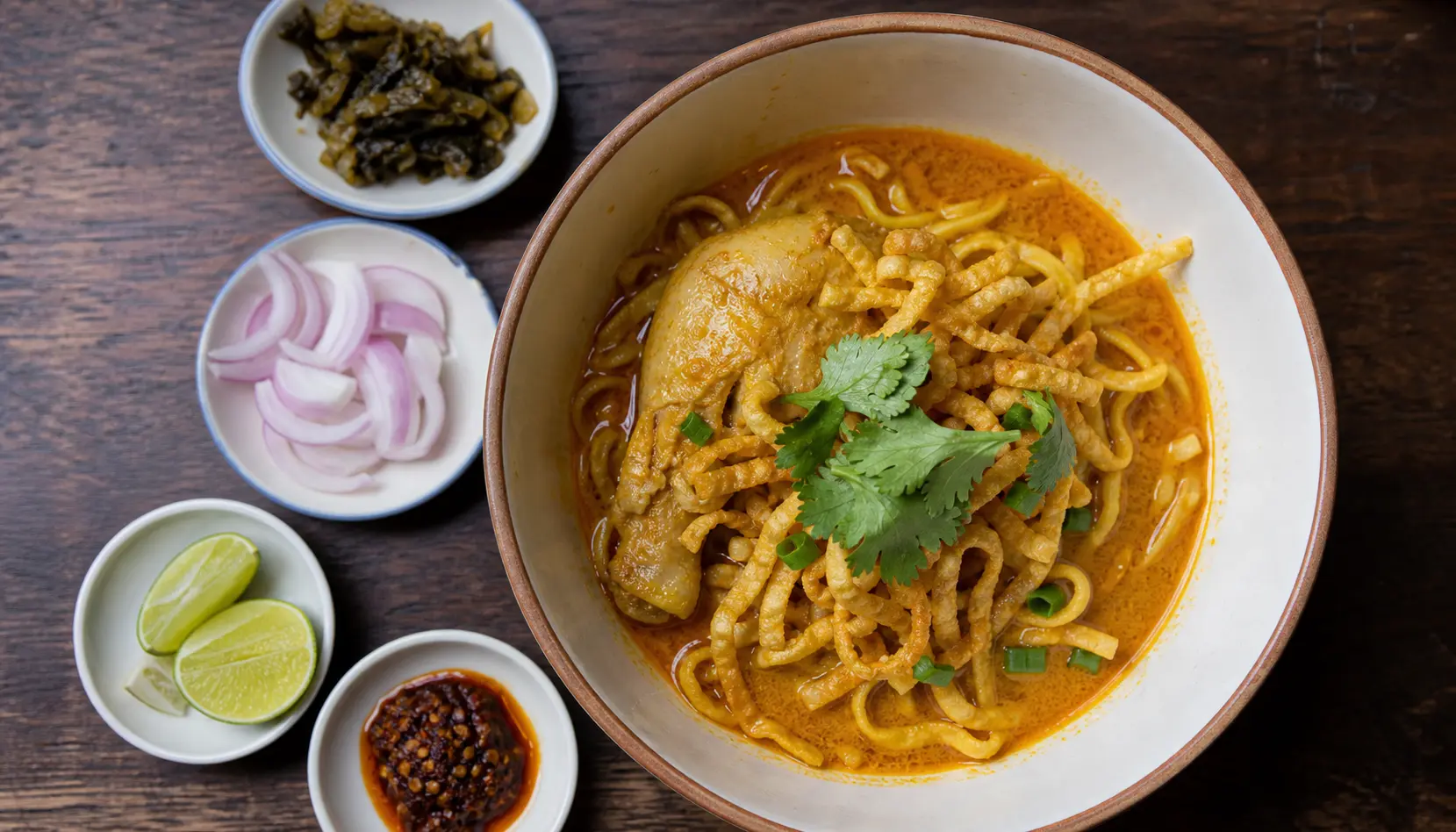
For a long time the food was the reward for the temple-climbing. Somewhere in the last decade that order quietly reversed. People fly to Asia for the eating now, and book the temples around it. It is not hard to see why: Chiang Mai has been crowned one of the world’s leading culinary cities, Hanoi’s pavements are a continuous open-air kitchen, Tokyo holds more starred restaurants than any city on earth, and Penang turns hawker cooking into something close to civic religion. Vietnam, Thailand, Japan and Malaysia are not merely good places to eat — they are food powerhouses, and the cheapest meal is often the best one.
This guide is a map of the region’s table: what to eat in each country, where it is at its best, and the small, learnable craft of eating from a street stall without spending a day regretting it. Order off the table below, follow the city links into the destination pages, and read the Food & Water Safety guide before you sit down to your first bowl.
What food is Southeast Asia known for?
Southeast Asia is known for fresh, punchy, balanced cooking — the four-way tension of sour, salty, sweet and spicy held in a single mouthful. Think Thai som tam, Vietnamese pho, Malaysian laksa and Indonesian rendang: herb-heavy, rice-based, built around fish sauce, chillies, lime and lemongrass, and most often cooked to order on the street. Japan plays a different game to the north — restraint over riot, the precision of sushi and kaiseki, the deep umami of a ramen broth simmered overnight. Travel the region and you cover the full range in a fortnight: the loud street wok of Bangkok one night, the silent eight-seat sushi counter of Tokyo the next.
Where is the best food in Asia? The signature dishes, country by country
There is no single answer — the “best” depends on what is on the table. What follows is the working version: each country’s must-eat dishes and the city where you should go out of your way to eat them. Treat the right-hand column as an itinerary.
| Country | Must-eat dishes | Where it’s best |
|---|---|---|
| Thailand | Pad thai · som tam (green papaya salad) · khao soi (northern curry noodles) · boat noodles · mango sticky rice | Bangkok for the street wok & boat noodles; Chiang Mai for khao soi |
| Vietnam | Pho · banh mi · bun cha (grilled pork & noodles) · com tam (broken rice) · egg coffee | Hanoi for bun cha & egg coffee; Ho Chi Minh City for com tam & southern pho |
| Japan | Sushi · ramen · okonomiyaki & takoyaki · izakaya plates · kaiseki | Tokyo for sushi & kaiseki; Osaka for okonomiyaki & takoyaki |
| Malaysia | Char koay teow · asam laksa · nasi lemak · Hainanese chicken rice | Penang (George Town) — the hawker capital |
| Indonesia | Nasi goreng · satay · rendang · babi guling (suckling pig) | Bali for babi guling & satay |
| Philippines | Adobo · sinigang (sour soup) · lechon · halo-halo | Cebu for lechon; Manila across the board |
| Cambodia | Fish amok · lok lak · Khmer red curry | Siem Reap & Phnom Penh markets |
| Taiwan | Beef noodle soup · xiao long bao · night-market snacks (stinky tofu, oyster omelette) · bubble tea | Taipei for the night markets; Tainan for the old-city snack culture |
A few of these are worth a flight on their own. Khao soi — coconut curry broth over soft egg noodles, crowned with a tangle of crisp fried ones — barely exists outside northern Thailand. Penang’s char koay teow, flat rice noodles charred in pork fat with cockles and chives, has to be eaten where a hawker has cooked nothing else for thirty years. And a bowl of bun cha in Hanoi, the grilled pork smoking over coals at the kerb, is the single most persuasive argument for eating in the cheapest seat in the country.
Is street food safe? How to eat it without regret
Yes — street food is often the safest food, because it is cooked to order in front of you over high heat, and a busy stall sells out and restocks daily. The risk is not the street; it is food sitting lukewarm, unpeeled fruit washed in tap water, and ice of unknown origin. Choose turnover and heat, and you eliminate most of it.
The whole craft fits in four rules, covered properly in the Food & Water Safety guide:
- Follow the crowd. A stall with a queue of locals has high turnover, fresh ingredients, and a cook with a reputation to protect. An empty one at 3pm is a gamble.
- Eat it hot, eat it fresh. Anything cooked to order and served steaming has just been sterilised by the wok. Be wary of buffet trays and pre-cooked dishes losing heat at room temperature.
- Peel it, cook it, or forget it. Fruit you peel yourself is safe; salads and raw garnishes rinsed in tap water are the classic trap.
- Bottled or boiled water, no loose ice. Stick to sealed bottled water. Machine-made cylindrical ice with a hole through it is fine; cloudy hand-cut chips are not worth the risk.
Build the gut slowly — eat lightly cooked food for a day or two, then work up to the raw herbs and riskier stalls. Carry oral rehydration salts and an anti-diarrhoeal for the night it goes wrong anyway; over a long enough trip, it will.
Eating well as a vegetarian or with allergies
The region is generous to vegetarians and merciless to the careless. Buddhist culture means dedicated meat-free food is everywhere — look for the yellow flag and the word jay in Thailand, chay in Vietnam, and the morning monks’ markets in Cambodia. The hidden trap is fish sauce and shrimp paste, which season nearly everything and are invisible on the plate.
- Learn one written phrase. A translation-app card saying “no fish sauce, no shrimp paste, no meat” in the local script clears up more than any amount of pointing. Translate’s camera mode reads menus the other direction.
- Nuts and shellfish hide in plain sight. Peanuts garnish pad thai and satay sauce; shellfish lurk in laksa and char koay teow broths. A serious allergy means sticking to restaurants that can answer questions, not the busiest kerbside stall.
- India-influenced and Chinese-Buddhist kitchens are your friends. Malaysian mamak stalls, Taiwanese vegetarian buffets and Indian-Malay food open up huge, reliably meat-free menus.
Why are night markets the heart of it?
Because the region eats out, late, and together. The night market is where a city does its real cooking — cheaper than restaurants and the surest way to taste twenty dishes in one evening for the price of a single Western main. You graze: a skewer here, a bowl of noodles two stalls down, something cold and sweet to finish, eaten standing up in the warm dark. Taipei may be the world’s greatest night-market city — Shilin and Raohe are institutions, and the stinky tofu is a rite of passage. Chiang Mai’s Sunday Walking Street threads food through a craft market, Tainan guards Taiwan’s oldest snack culture, and Penang’s hawker centres run the same idea under a roof every night. Arrive hungry, carry small notes, and do not fill up at the first stall.
Plan around it: time your arrival for the right season and the markets that only run certain nights with the Itinerary Building guide, and keep a data connection for menu translation and stall reviews with the Staying Connected eSIM guide. Everything else is just turning up hungry.
← Back to Guides · All Destinations · Food & Water Safety