Vegetarian and Vegan Eats in Kyoto
A visual guide from the Kyoto travel guide — see all posters in Visual Guides.
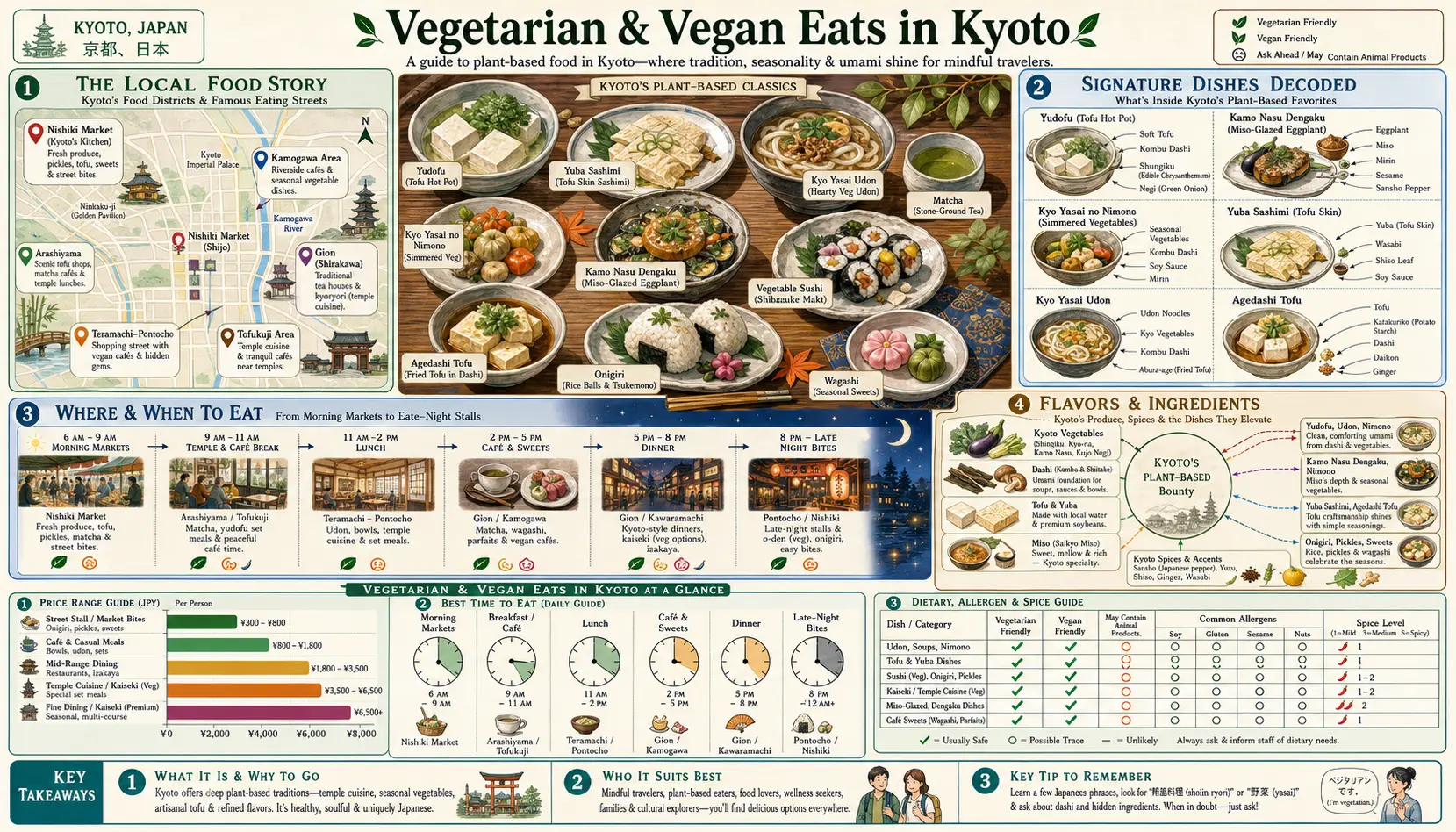
Kyoto is quietly one of Asia's best cities for plant-based eating, thanks to a centuries-old culinary tradition of vegetable-forward cooking that modern chefs have embraced and reinvented. Silky tofu, seasonal vegetables, and inventive plating are the backbone of the scene here, and today that heritage feeds a thriving crop of contemporary cafes, juice bars, and design-forward restaurants that would feel at home in any global food capital.
Tofu Culture, Kyoto-Style
Kyoto's soft water and long culinary history made it a center for tofu craftsmanship, and that legacy still shapes how the city eats today. Silken and firm tofu show up in everything from simmered dishes to modern fusion plates, often paired with seasonal vegetables and yuba (tofu skin), a local specialty prized for its delicate texture. You will find tofu-focused restaurants scattered through the city's dining districts, many updating the format with sleek interiors and contemporary presentation rather than old-fashioned formality.
Modern Cafes and Vegan-Friendly Menus
A growing wave of casual, design-conscious cafes across central Kyoto now cater specifically to vegan and vegetarian diners, with clearly labeled menus, oat-milk lattes, and globally inspired plates alongside Japanese staples. These spots tend to cluster near the city's shopping streets and university areas, blending fast-casual convenience with genuinely thoughtful cooking. It is an easy way to eat well without hunting for niche restaurants, and many double as relaxed spots to recharge between sightseeing stops with solid coffee and reliable wifi.
Markets, Noodles, and Easy Wins
Kyoto's covered market streets and depachika (department store food halls) are packed with plant-based grab-and-go options, from pickled vegetables and seasoned tofu to seasonal produce you will not find elsewhere. Ramen and soba shops increasingly offer vegetable-broth versions, and asking about ingredients is normal and welcomed. Convenience stores have also stepped up, stocking clearly marked vegetarian rice balls and salads, making it simple to eat plant-based even on the go between transit connections.
Tips for Eating Well
Menus increasingly use English and icons to flag vegetarian and vegan dishes, especially in central neighborhoods frequented by international visitors, though it still helps to confirm that dashi (often fish-based) has been swapped for a vegetable stock. Reservations are wise for smaller, well-regarded spots, particularly in peak seasons. Pair a meal with an evening stroll along the Kamo River or through a modern shopping arcade, and Kyoto's plant-based dining starts to feel less like a niche and more like one of the city's genuine culinary strengths.