Kyoto's UNESCO World Heritage, Woven Into a Modern City
A visual guide from the Kyoto travel guide — see all posters in Visual Guides.
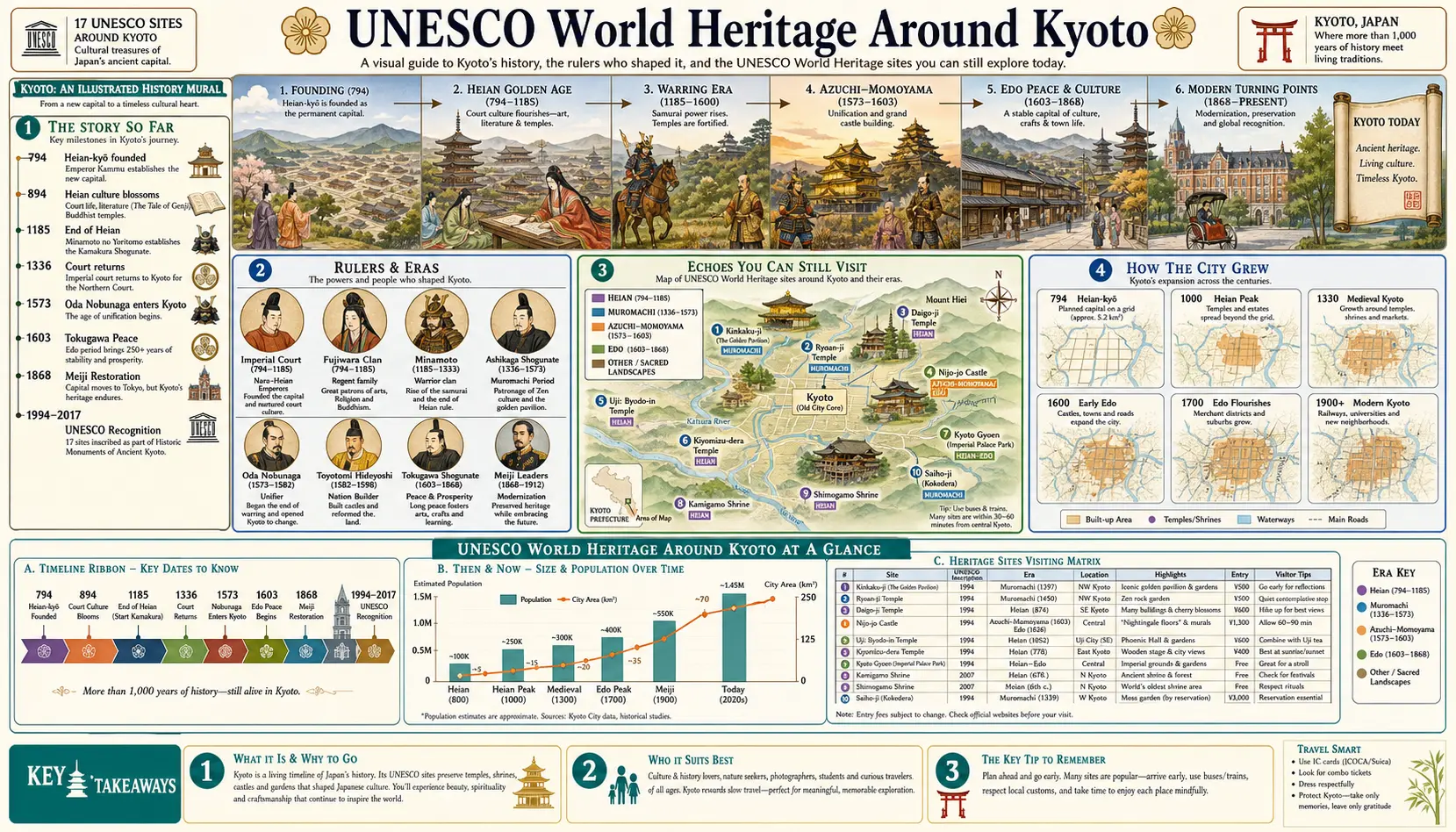
Kyoto carries seventeen UNESCO-listed sites scattered across a city that otherwise feels thoroughly contemporary. You'll pass sleek train stations, riverside izakaya rows, and glass-fronted shops on the same afternoon you glimpse a centuries-old rooftop. The trick to enjoying Kyoto is treating the heritage sites as punctuation, not the whole sentence — quick, worthwhile stops between subway hops, mountain viewpoints, and the city's genuinely excellent food and nightlife scenes.
A City Built for Easy Exploring
Kyoto's compact grid and efficient subway and bus network make it simple to string together a day that mixes old and new. Hop the Karasuma or Tozai line, add a rental bike for the flatter stretches, and you can reach a heritage garden, a design-forward shopping arcade, and a hillside viewpoint without much backtracking. Locals treat the city's layout as one of its best features — nothing feels far, and the transit itself is clean, punctual, and easy for first-time visitors to navigate confidently.
Kyoto After Dark
Once the daytime sites close, Kyoto shifts gears. Pontocho and the Kiyamachi canal strip fill with bars, cocktail counters, and small live-music venues tucked into narrow alleys, while Kyoto Station's soaring glass atrium glows as a genuinely futuristic backdrop for an evening stroll. Craft breweries and sake bars pull in a younger, design-savvy crowd, and rooftop spots near the station offer skyline views over the basin, with the surrounding hills silhouetted after sunset.
Mountains, Rivers, and Seasonal Color
Kyoto sits in a basin ringed by forested hills, and that geography is arguably its biggest draw. The Arashiyama district pairs a scenic river and mountain views with a compact bamboo grove walk, while the Kamo River corridor through downtown is where locals jog, picnic, and cool off in summer. Autumn foliage and spring blossoms transform the same hillsides twice a year, drawing crowds who come as much for the natural scenery as for any single landmark.
Food Culture Worth Building a Trip Around
Kyoto's food scene stands entirely on its own, heritage sites aside. Nishiki Market's covered arcade is packed with stalls selling regional specialties, skewers, and sweets, and the city's density of small, highly focused restaurants — from ramen counters to modern kaiseki-influenced spots — rewards wandering. Pair a market crawl with a coffee shop housed in a converted machiya townhouse for a sense of how Kyoto blends old architecture with a thoroughly modern café culture.