Travel Etiquette and Customs in Kyoto
A visual guide from the Kyoto travel guide — see all posters in Visual Guides.
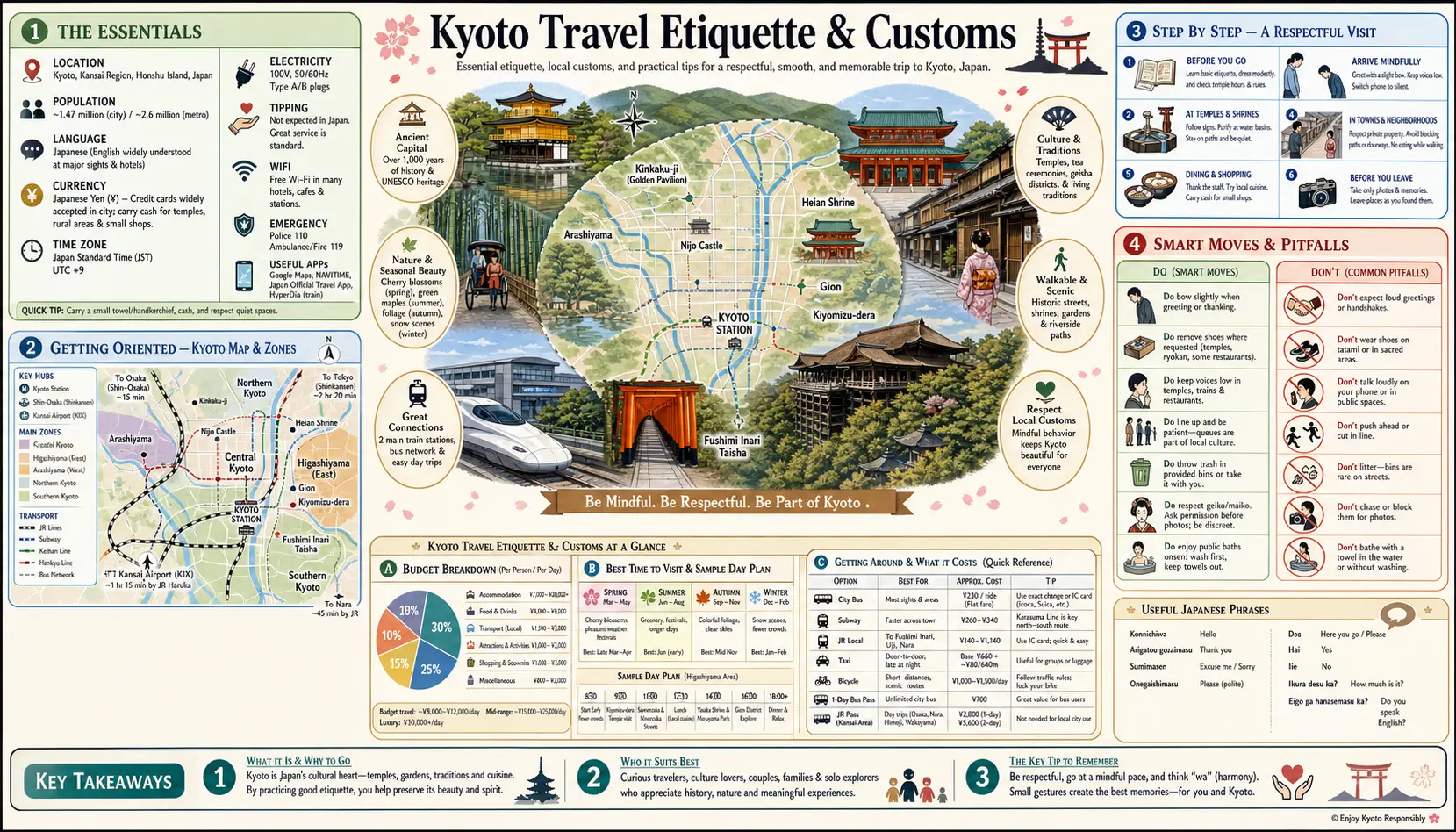
Kyoto blends sleek modern convenience with a quiet social rhythm, and a little cultural awareness goes a long way. Etiquette here isn't about rigid rules & formality — it's about reading the room on trains, in restaurants, and along the riverside paths where locals unwind. Master a few habits and you'll move through the city like someone who belongs, freeing you to focus on Kyoto's sharp coffee bars, design shops, and neon-lit nightlife.
Riding the Rails and Buses
Kyoto's subway and bus network is fast, clean, and refreshingly punctual, but it runs on quiet cooperation. Phone calls are avoided on board, conversations stay low, and priority seating near doors is respected without needing a reminder. Boarding happens in an orderly line, letting passengers exit first before stepping on. An IC card taps you through gates instantly, making transfers between the subway, JR lines, and buses effortless — one of the easiest ways to feel like a confident local rather than a tourist figuring things out as the city's modern transit grid hums along.
Dining Out With Ease
Kyoto's food scene ranges from sleek ramen counters to izakayas humming with after-work energy, and a few small habits smooth every meal. A quiet itadakimasu before eating is appreciated, tipping isn't expected anywhere, and chopsticks rest on their holder rather than standing upright in rice. Sharing plates is common at izakayas, and it's courteous to pour drinks for others at the table rather than only your own glass. Reservations matter at popular spots, especially the design-forward restaurants and rooftop bars that keep multiplying across the city's evolving food map.
Everyday Courtesy in Public Spaces
Kyoto rewards visitors who keep noise, litter, and clutter to a minimum. Eating while walking is generally avoided outside food-stall areas, trash is carried until a bin is found since public bins are scarce, and smoking is confined to marked zones rather than open sidewalks. Cashless payment is now standard at cafes, malls, and convenience stores, so tap cards and mobile wallets work almost everywhere. A soft voice indoors, a small bow or nod as thanks, and patience in queues all read as basic good manners rather than anything formal or old-fashioned.
Respecting Shared and Historic Spots
Kyoto pairs futuristic convenience with pockets of older architecture, and both deserve the same everyday respect as any shared public space. Photography is fine almost everywhere, but it's considerate to avoid blocking narrow lanes or private entrances for a shot, and to keep drone use to open areas away from crowds. Where any historic site does appear on your route, quiet footsteps and a moment of patience for other visitors go further than any strict rulebook — the same courtesy that makes Kyoto's markets, malls, and riverside paths pleasant for everyone.