Spa and Massage Traditions in Kyoto
A visual guide from the Kyoto travel guide — see all posters in Visual Guides.
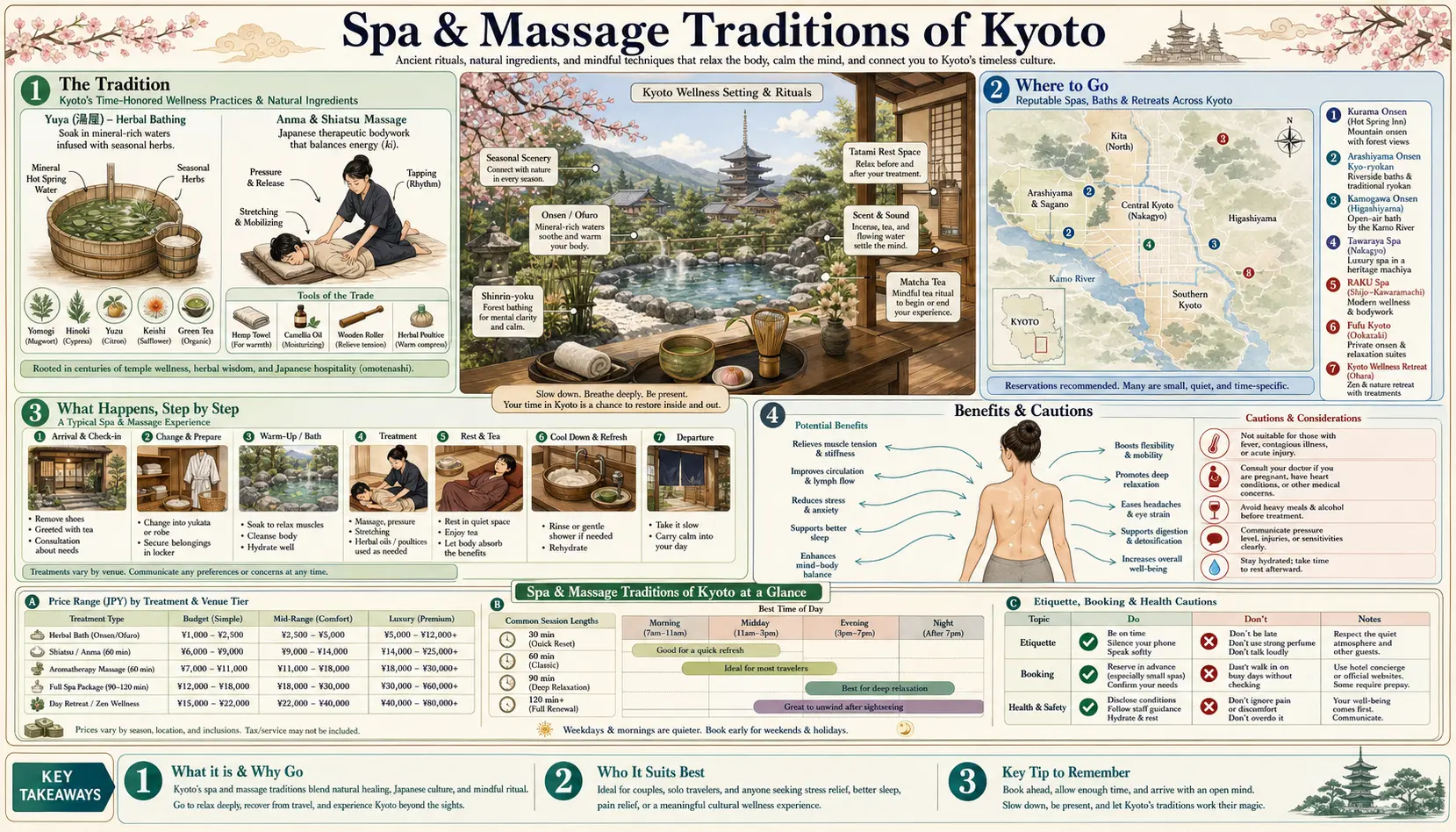
Kyoto pairs its famous calm with a genuine talent for relaxation. Beyond the historic streets, the city runs on a quiet rhythm of hot-water bathing, precision massage, and design-forward wellness spaces that feel thoroughly modern even when the techniques behind them are generations old. Whether you want a fast shiatsu reset between sightseeing stops or a slow, candlelit evening soak, Kyoto's spa scene rewards travelers who build recovery time into an itinerary as deliberately as they plan meals.
The Onsen and Sento Ritual
Japan's bathing culture runs deep, and Kyoto's sento (neighborhood public baths) and hotel-based onsen-style facilities make it easy to join in without traveling to a hot-spring town. The etiquette is simple once you know it: wash and rinse thoroughly at the stool-and-shower stations before easing into the communal tub, keep small towels out of the water, and let the heat work slowly rather than rushing the soak. Many upscale hotels now build sleek indoor-outdoor bathing decks with skyline or garden views, turning an old ritual into a strikingly contemporary amenity for jet-lagged travelers.
Shiatsu and Traditional Massage
Shiatsu, literally "finger pressure," originated in Japan and remains the backbone of Kyoto's massage tradition, using palm and thumb pressure along the body's energy lines to release tension without oil or heavy kneading. Related practices like anma dry massage are widely available at hotel spas, dedicated massage studios, and even quick 20-minute chair sessions near shopping arcades. It is practical, affordable, and genuinely effective after a long day of walking & sightseeing, making it one of the most useful wellness habits to pick up while in the city.
Modern Wellness and Hotel Spas
Kyoto's newer hotels have embraced a design language that mixes minimalist Japanese materials, such as cedar, stone, and washi paper, with the amenities of an international spa: heated pools, aromatherapy treatment rooms, and skincare lines using local ingredients like yuzu & green tea. These spaces often sit inside striking modern architecture, floor-to-ceiling glass overlooking the hills, rooftop soaking tubs, and mood lighting that would feel at home in any global wellness capital. It is a strong option for travelers who want the relaxation benefits of tradition delivered in a thoroughly contemporary package.
Building Recovery Into Your Trip
Because Kyoto rewards slow exploration, pace your days by pairing an active morning with an evening soak or massage rather than saving it all for the last night. Many facilities require reservations, especially private onsen rooms and popular spa suites, so booking a day or two ahead is wise during busy seasons. Tattoos can occasionally be an issue at traditional public baths, though many modern spas and private-room options have relaxed or eliminated that restriction, so it is worth checking policies before you go.