Kyoto's Skyline and Signature Towers
A visual guide from the Kyoto travel guide — see all posters in Visual Guides.
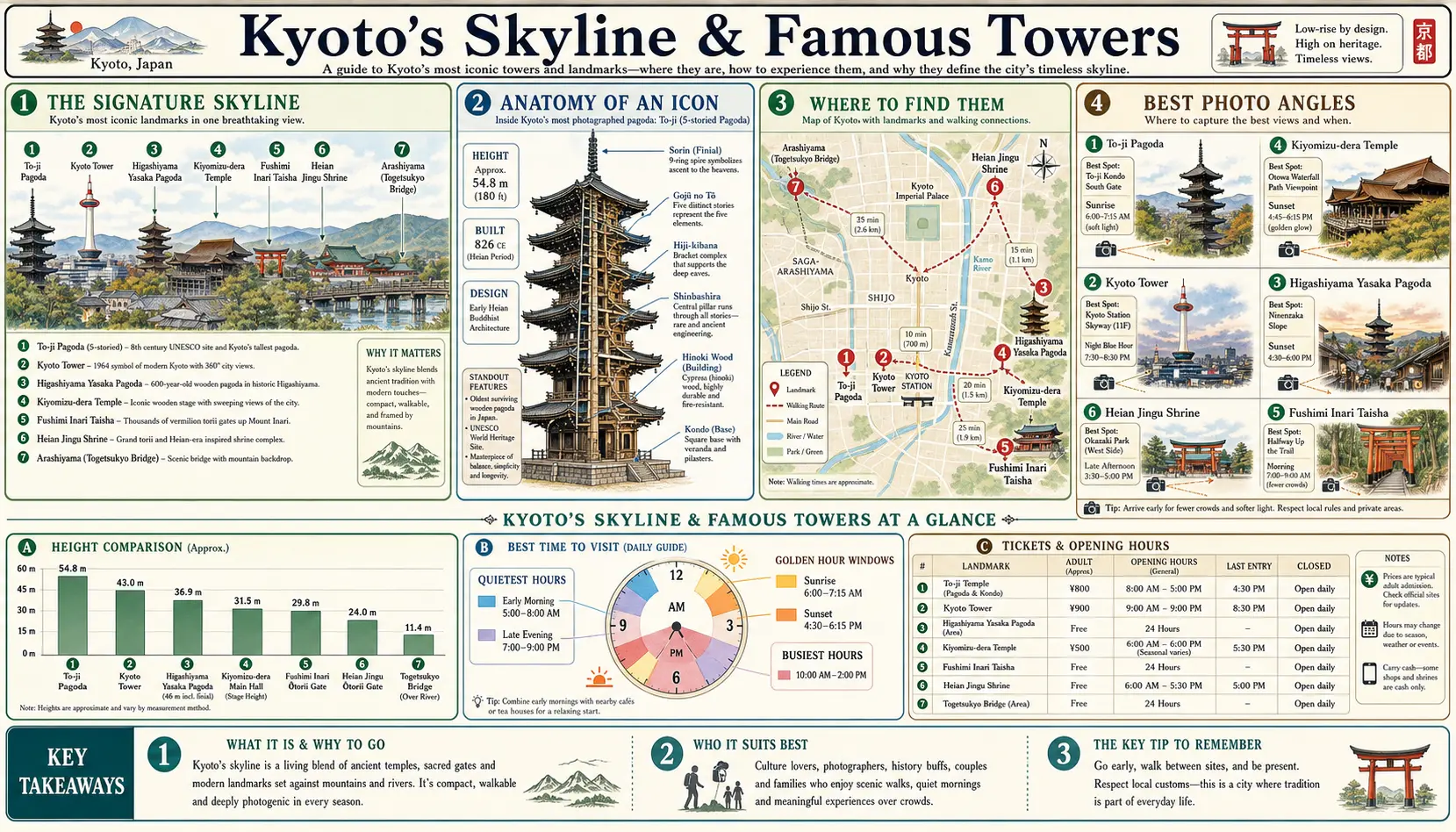
Kyoto isn't a city of glass towers, and that's the point. Strict height limits keep the skyline low and human-scaled, so the few landmarks that do rise above the rooftops stand out dramatically. Kyoto Tower anchors the view near the station, while the futuristic curves of Kyoto Station itself prove this city can do bold modern architecture without losing its horizon to high-rises.
Kyoto Tower's Retro-Futuristic Silhouette
Rising just across from Kyoto Station, Kyoto Tower is the city's most recognizable modern landmark, its white lighthouse-like form lit up at night in shifting colors. The observation deck delivers a genuinely great panorama: a sea of low tiled roofs stretching toward the surrounding mountains, with almost nothing tall enough to interrupt the view. It's a quick, easy stop for orientation on arrival, and the illuminated tower itself becomes part of the nighttime skyline photo everyone takes from the station plaza.
Kyoto Station: A Skyline Statement in Steel and Glass
Kyoto Station is one of Japan's most striking pieces of contemporary architecture, an enormous steel-and-glass atrium that feels more spaceship than train hall. Escalators climb through open-air terraces to a rooftop viewpoint, giving a free, elevated look across the city toward the hills. At night the building's illuminated staircase and grand hall glow dramatically, making the station itself a destination and a genuine architectural counterpoint to Kyoto's low, tiled-roof skyline.
Best Vantage Points for the Wider View
Because Kyoto keeps its buildings low, the real skyline views come from elevation, not altitude in a tower. Hillside and mountainside viewpoints ringing the basin look down over an unbroken carpet of rooftops with the city's low profile framed against distant peaks & changing light. Sunset is the best time to go, when the tiled roofs turn amber and Kyoto Tower begins to glow. It's a refreshingly modern way to see an old city: not by its monuments, but by its skyline as a whole.
Modern Design Woven Into an Old Grid
Beyond the station and tower, Kyoto's modern architecture shows up in quieter ways: sleek museums, contemporary hotels, and glass-fronted shopping complexes tucked into the traditional grid without overwhelming it. The contrast is the appeal — a city that protects its low skyline while still embracing bold, contemporary design where it counts. For visitors expecting only old rooftops, Kyoto's flashes of steel, glass, and light are a pleasant, very modern surprise.