Royal Dynasties and Rulers in Kyoto
A visual guide from the Kyoto travel guide — see all posters in Visual Guides.
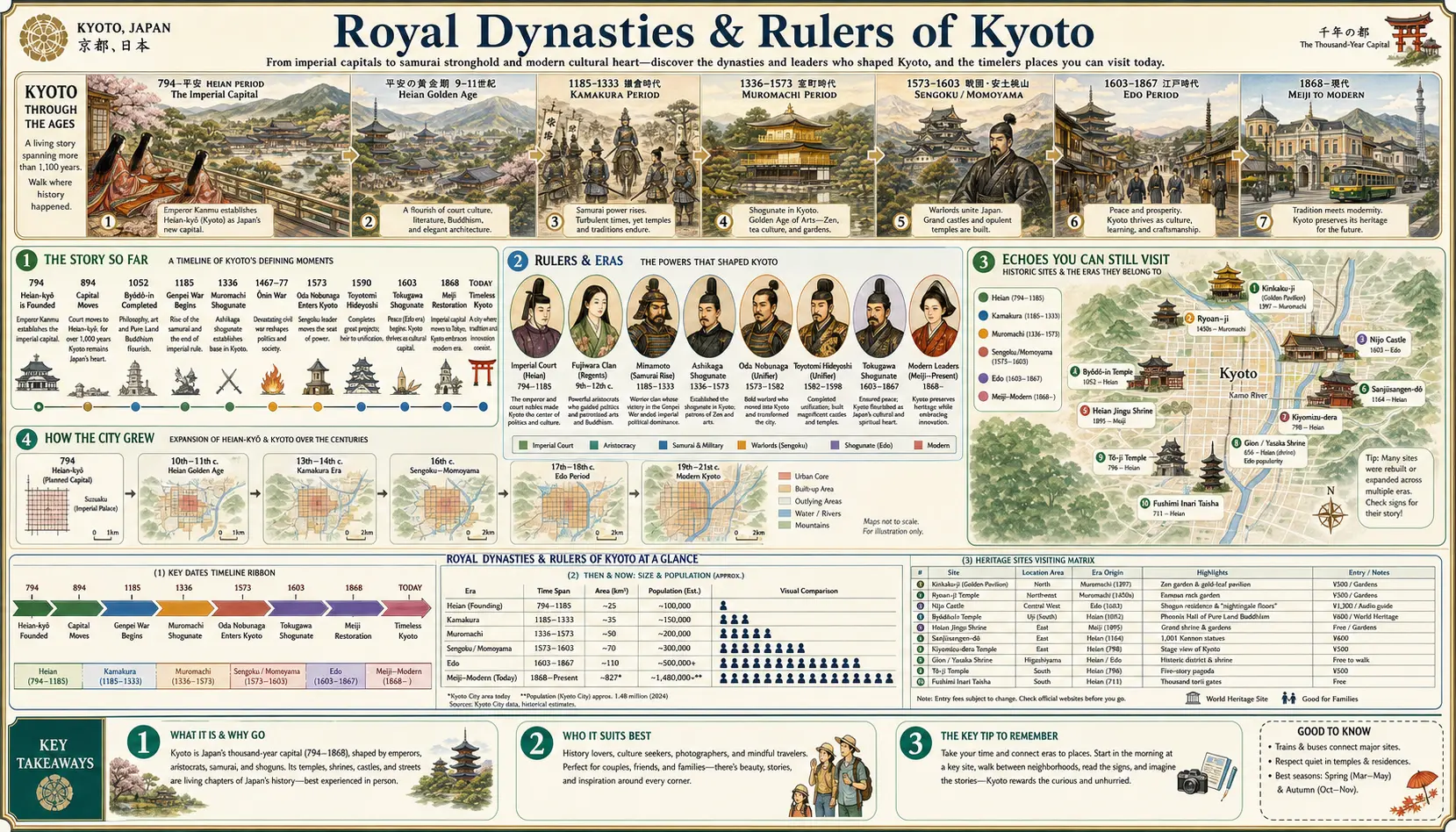
For more than a thousand years, Kyoto was the seat of imperial power in Japan, and that legacy still shapes the city's bones today. Broad avenues, walled compounds, and a grid-planned street layout trace back to when emperors and, later, shoguns ran the country from here. But modern Kyoto wears that history lightly — a compact, walkable city of sleek train lines, riverside bars, and glass-fronted cafés layered right over the old capital's footprint.
The Imperial Palace Grounds
The Kyoto Imperial Palace, set inside the sprawling green expanse of Kyoto Gyoen park, was home to Japan's emperors until the capital moved to Tokyo in the late 1800s. Today the park is one of the city's best public spaces — locals jog its gravel paths, cyclists cut through at rush hour, and the palace buildings themselves can be toured on a scheduled walk-through. It is less a monument frozen in time than a genuinely used slice of downtown green space, bordered by modern offices and apartment towers just beyond the trees.
Nijo Castle and the Shogun Era
While emperors held ceremonial authority, real power for centuries sat with military rulers, the shoguns. Nijo Castle, built by the Tokugawa shogunate, is the standout site for this chapter of history — famous for its "nightingale floors," engineered to chirp underfoot as a built-in security alarm. The surrounding moat and stone walls sit a short tram ride from Kyoto's modern shopping arcades, making it an easy add-on to a day that otherwise centers on food halls and design stores.
A Capital Shaped by Its Rulers
Kyoto's original grid layout, modeled on the Chinese capital of the era, still guides how the city reads today — numbered and named streets running in tidy rows beneath a skyline of low-rise buildings and the occasional modern tower like Kyoto Tower near the station. That imperial-era planning is part of why the city feels so easy to navigate by bike, bus, or on foot, threading between contemporary boutiques and pocket parks without ever losing the sense of an underlying, centuries-old blueprint.
Where Old Power Meets New Energy
The most rewarding way to feel this history is to let it blend into an ordinary Kyoto day: a morning walk through Gyoen park, lunch at a design-forward café nearby, then an evening among the bars and izakayas of downtown. Kyoto Station itself, a dramatic glass-and-steel structure, makes a striking contrast point — futuristic architecture standing minutes from grounds where emperors once lived, a reminder that this city has always been rebuilding itself while keeping one foot in its past.