Kyoto's Regional Specialties: A Food Lover's Guide
A visual guide from the Kyoto travel guide — see all posters in Visual Guides.
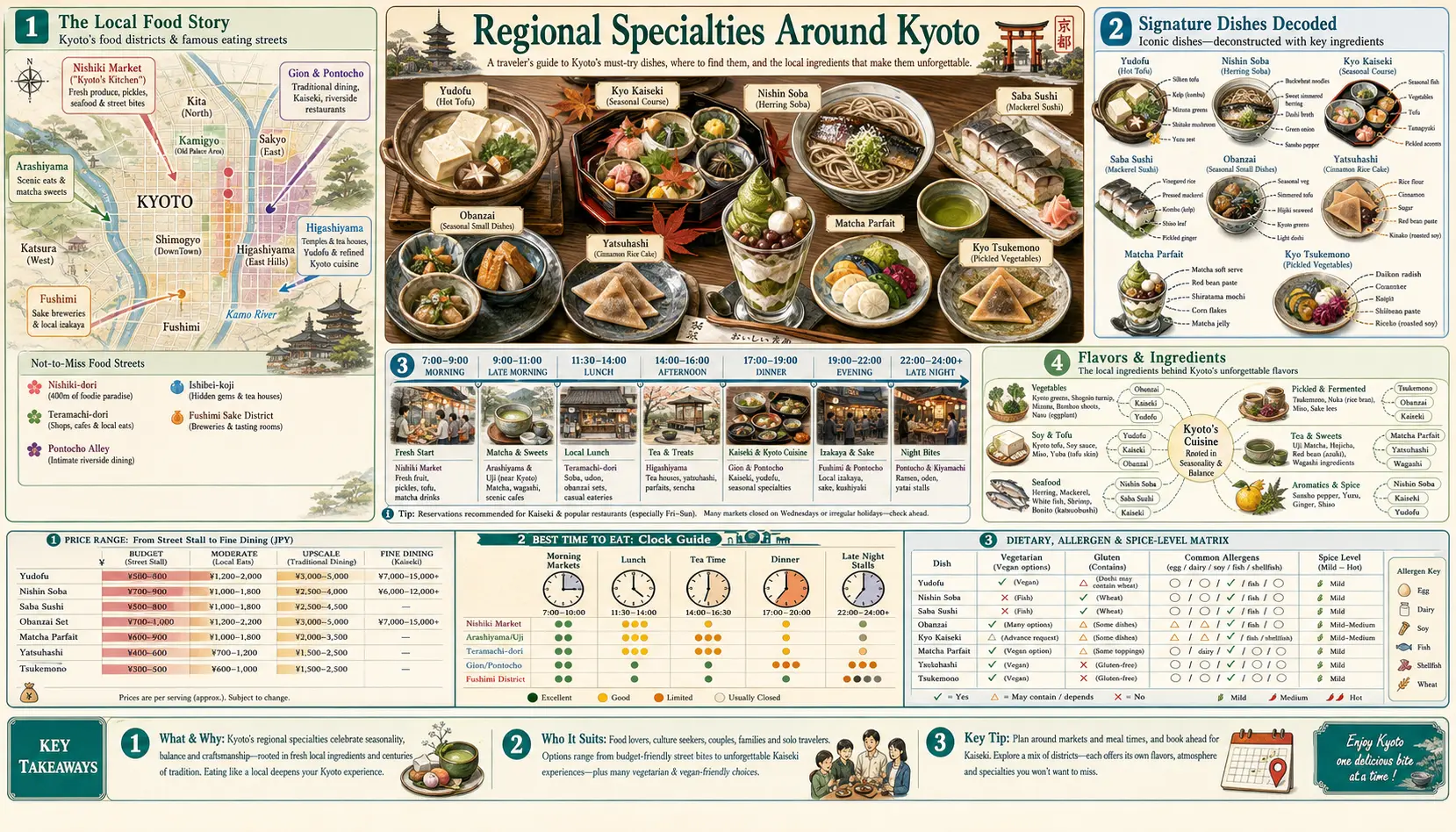
Kyoto's food culture rewards curiosity as much as appetite. Centuries as Japan's refined capital shaped a cuisine built on subtlety — kaiseki, delicate tofu, pickled vegetables, and matcha in every form imaginable. But this is also a city of buzzing department-store basements, sleek cocktail bars, and ramen counters that stay busy past midnight, so the old and the new share the same streets, often the same block.
Kaiseki and the Art of the Course Meal
Kaiseki, Kyoto's multi-course dining tradition, turns a meal into a seasonal narrative — small, precisely plated dishes that shift with what's freshest that week. Restaurants across the city offer approachable lunch versions of this style at a fraction of the formal dinner price, making it an easy way to sample the format without a big commitment. Presentation matters as much as flavor: ceramics, lacquerware, and garnish are chosen to echo the season outside. It's a slower, more deliberate way to eat, and a good entry point into understanding why Kyoto's food culture is held in such high regard nationally.
Tofu, Yuba, and the Vegetarian Table
Kyoto's soft local water made it a historic center for tofu-making, and the city still takes the craft seriously. Yudofu (simmered tofu) and yuba (the delicate skin that forms on simmering soy milk) show up in everything from casual set lunches to elaborate tasting menus. Restaurants specializing in tofu-centric meals cluster near the city's wooded western and northern edges, where the setting itself — bamboo groves, quiet gardens — is part of the appeal. It's some of the most satisfying vegetarian-friendly dining in Japan, without ever feeling like a compromise.
Matcha, Sweets, and Modern Cafés
Kyoto is Japan's spiritual home of matcha, thanks to nearby Uji, one of the country's most respected tea-growing regions. That heritage now fuels a thriving modern café scene: matcha lattes, soft-serve, parfaits, and pastries sit alongside traditional wagashi sweets in shops that range from centuries-old to designer-minimalist. Pull up a stool at a contemporary matcha bar and you'll see the full spectrum of Kyoto's food identity in one order — an ancient ingredient reinterpreted for a generation that wants both craft and Instagram-worthy presentation.
Street Eats and the Station Food Halls
For a faster, livelier take on Kyoto's flavors, head underground. The basement food halls beneath Kyoto Station and nearby department stores pack in bakeries, bento counters, sake shops, and pickle stalls, and they're a genuinely fun way to graze through local specialties without booking a table. Nishiki Market remains the classic pick for skewers, fresh seafood, and small-batch condiments, best visited with a light appetite so you can sample widely. Evenings shift the mood toward izakaya counters and ramen shops, where Kyoto's quieter, more refined daytime dining gives way to something looser and more social.