Public Transit Decoded in Kyoto
A visual guide from the Kyoto travel guide — see all posters in Visual Guides.
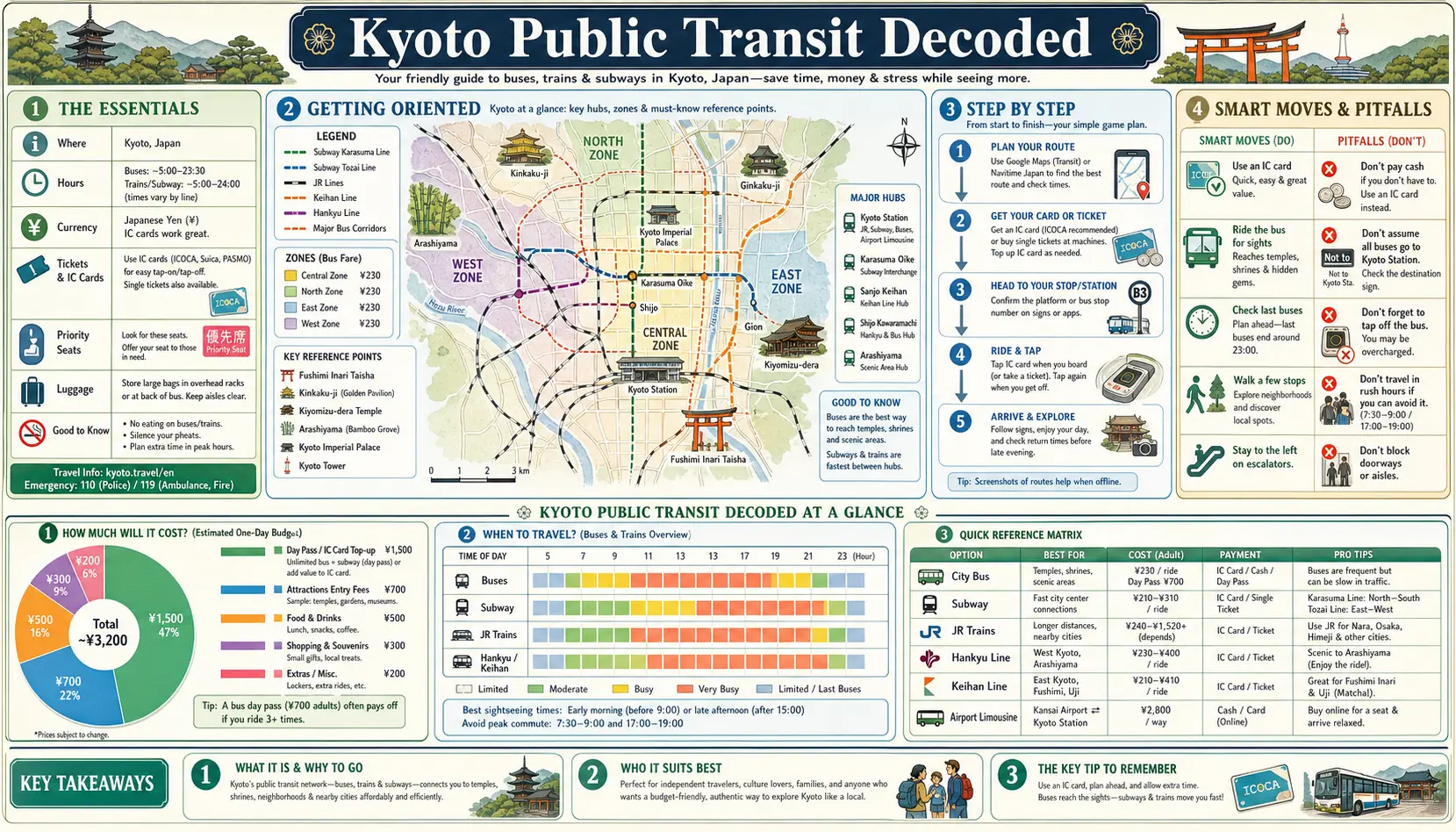
Kyoto rewards visitors who master its transit network early. Unlike Tokyo's sprawling rail web, Kyoto runs on a tighter, bus-heavy system layered over two subway lines and several private rail operators. Once you understand the basic grid, getting between neighborhoods, viewpoints, and the surrounding hills becomes fast and refreshingly stress-free — leaving more time for the city's food, shops, and skyline views.
Buses Rule the City
Kyoto City Bus is the backbone of getting around, with dense routes crisscrossing downtown, Kawaramachi, and the eastern hills. Boarding is rear-door, flat-fare within the central zone, and pay-as-you-exit at the front — cash, IC card, or the all-day bus pass all work. Digital route boards and English announcements make navigation manageable even for first-timers. Traffic can bunch buses during peak sightseeing hours, so building in a buffer around midday is smart. For quick hops between major hubs like Kyoto Station, Shijo-Kawaramachi, and Gion, buses remain the most direct option.
The Subway: Fast and Uncrowded
Kyoto's two subway lines — Karasuma running north-south and Tozai running east-west — cut travel time dramatically compared to surface buses, especially during rush hour or festival crowds. The Karasuma Line connects Kyoto Station to the university district and northern neighborhoods, while the Tozai Line reaches eastern areas near Nijo Castle and beyond toward Yamashina. Trains run frequently, platforms are clean and well-signed, and the subway is the fastest way to skip street-level congestion entirely.
IC Cards and Day Passes
A rechargeable IC card (ICOCA or Suica-compatible) is the easiest way to move seamlessly between buses, subway, and connecting private railways without fumbling for exact change. Frequent sightseers often find an all-day bus-and-subway pass pays for itself after just a few rides, especially when bouncing between distant districts in one day. Tap-in, tap-out readers are standard at every subway gate and bus front door, and the same card works across most of Japan's transit systems, making it a smart one-time setup for the whole trip.
Private Rail to the Edges
Beyond the city core, private railways like the Keihan, Hankyu, and Randen (Keifuku) tram lines extend reach toward the Arashiyama bamboo groves, riverside paths, and outlying hills prized for sunset views and seasonal color. The Randen tram, in particular, offers a slower, scenic ride through western neighborhoods and feels distinctly local. These lines require separate tickets from the city bus and subway system, so factor in a short walk or transfer when your day trip pushes past Kyoto's central grid.