Iconic Landmarks in Kyoto
A visual guide from the Kyoto travel guide — see all posters in Visual Guides.
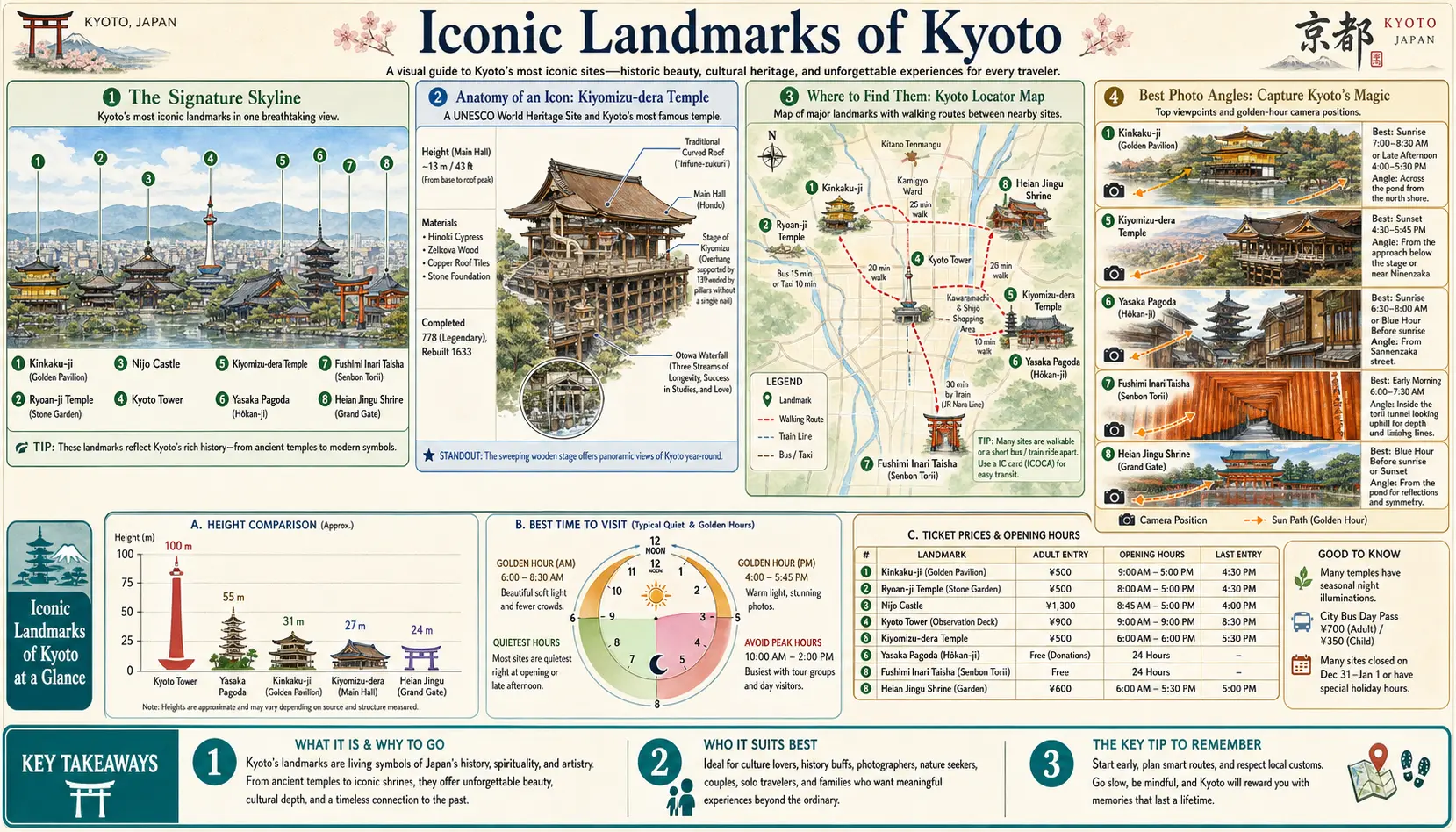
Kyoto's skyline is a study in contrasts: soaring glass architecture rising beside riverside promenades, misty bamboo groves, and centuries-old streetscapes. This is a city where modern design and natural beauty share the frame, from a cathedral-scale train station to a river lined with restaurant terraces. The landmarks below capture Kyoto's present-tense energy as much as its history & the places locals actually gather, and the views that make first-time visitors reach for their cameras.
Kyoto Station's Futuristic Architecture
Few train stations double as tourist attractions, but Kyoto Station does. Its cavernous glass-and-steel atrium, designed by architect Hiroshi Hara, opens into a soaring space with escalators climbing toward a rooftop observation deck that frames the surrounding hills. Inside, department stores, restaurant floors, and a wide performance stairway make it a destination in its own right, not just a transit hub. At night the building's clean geometric lines light up, offering one of Kyoto's most striking modern architectural silhouettes and a sharp contrast to the low-rise city beyond its walls.
Arashiyama's Bamboo Grove and River Views
On Kyoto's western edge, the Arashiyama bamboo grove is one of Japan's most photographed natural landmarks: a narrow path threading through towering green stalks that filter sunlight into shifting patterns overhead. Nearby, the Togetsukyo Bridge spans the Katsura River against a backdrop of forested mountains, especially striking at sunset. The district rewards a slow visit — rent a bicycle, follow the riverside paths, and take in mountain views that shift dramatically with the seasons, from spring blossoms to fiery autumn foliage.
The Kamogawa Riverfront
The Kamo River is Kyoto's social spine, cutting through the city center with wide grassy banks that fill with joggers, musicians, and couples at sunset. In summer, restaurants along the western bank build yuka — open-air platforms over the water — for dinner beneath the sky, a uniquely Kyoto twist on riverside dining. Evenings bring a relaxed, youthful energy as students and locals gather along the stone steps near Sanjo and Shijo bridges, making the riverfront one of the best places to feel the city's contemporary, unhurried pace.
Higashiyama's Lantern-Lit Streets
The sloping lanes of Higashiyama preserve Kyoto's old streetscape: wooden facades, tea houses, and stone paths that glow under lanterns after dark. It's less about any single monument and more about the atmosphere — boutique shops, matcha cafes, and photogenic alleyways that peak toward a hillside viewpoint over the city's rooftops. Historic sites dot the area, but the real draw is strolling — ideally early morning or evening, when the crowds thin and the lantern light turns the whole district into one of Kyoto's most atmospheric outdoor spaces.