Historic Forts and City Walls in Kyoto
A visual guide from the Kyoto travel guide — see all posters in Visual Guides.
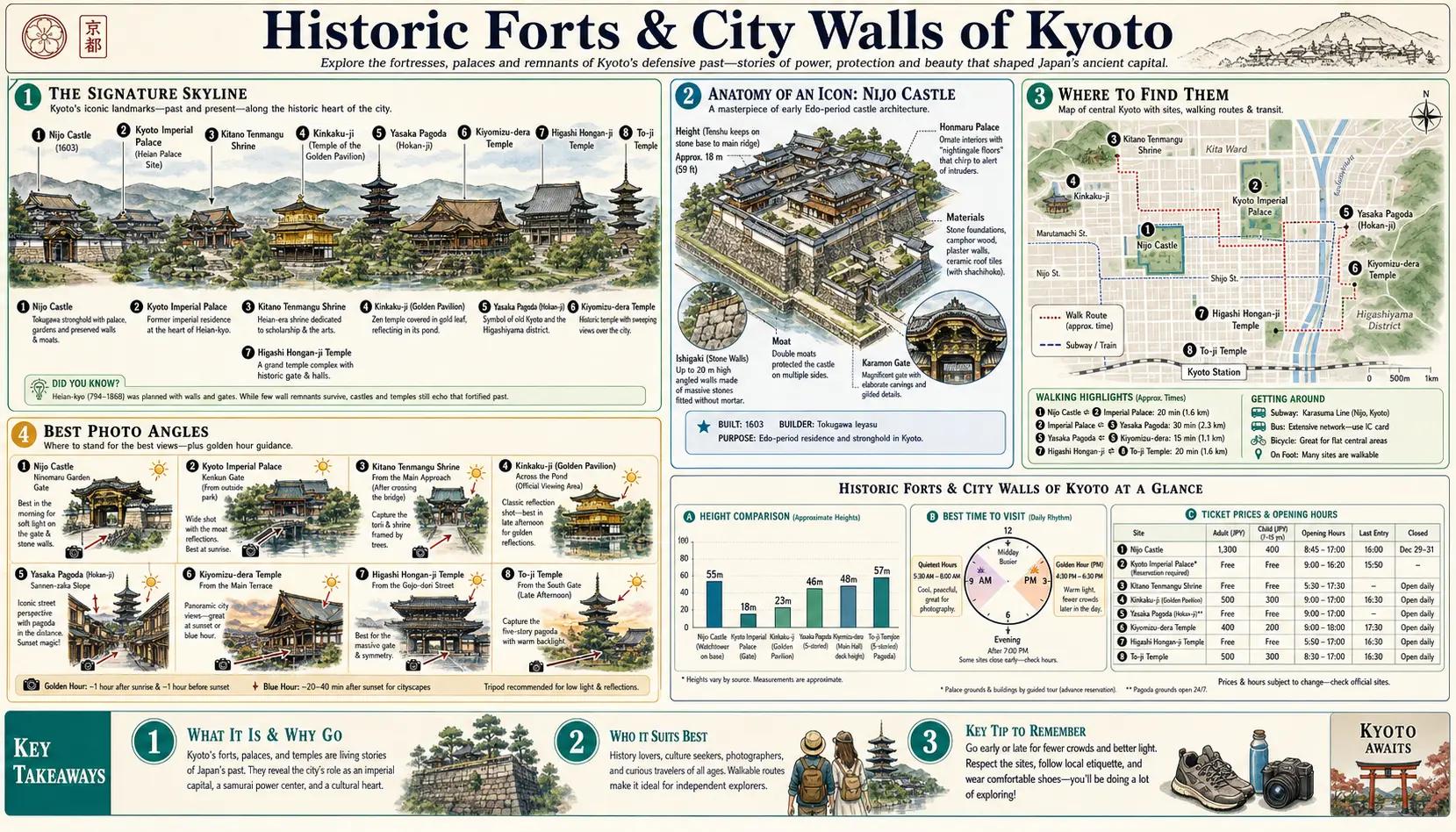
Kyoto's centuries as imperial capital left behind a quieter kind of monument: broad moats, sloped stone ramparts, and gatehouses built to project power rather than height. Nijo Castle anchors the story, its walls and water still tracing the old shogunal seat downtown. Pair a walk along these fortifications with the modern city humming just beyond them — cafes, tree-lined avenues, and a skyline that keeps Kyoto feeling lived-in rather than frozen.
Nijo Castle's Walls and Moats
The best-preserved fortification in Kyoto is Nijo Castle, its double ring of moats and sloped granite walls built in the early 1600s as the shogun's power base. Walking the outer perimeter, you can trace how the stonework angles outward at the base and steepens near the top — a classic defensive profile designed to make scaling nearly impossible. The surrounding park is a genuinely pleasant urban green space, popular with joggers and cherry-blossom crowds alike, and it sits an easy walk or short subway ride from downtown's shopping streets.
Fushimi's Hilltop Rebuild
On a wooded rise in southern Kyoto, the reconstructed Fushimi Castle keeps the silhouette of a Momoyama-era stronghold — white walls, layered tiled roofs, and a commanding view over the city and the Yodo River basin. It's less about original stonework and more about the panorama: on a clear day you can pick out Kyoto's low-rise skyline stretching toward the mountains. The approach roads are quiet and shaded, a nice break from the busier central sightseeing routes, and good by bike if you don't mind a climb.
Reading the City's Old Grid
Kyoto's checkerboard street plan is itself a legacy of fortified planning, laid out over a thousand years ago and still visible in how easily the modern city grid makes sense to newcomers. Traces of old gate names and ward boundaries survive in neighborhood names even where the physical walls are long gone. It's a fun lens for exploring on foot or by rental bicycle — a way to notice how a defensive-era layout quietly shapes a thoroughly contemporary streetscape of boutiques, coffee bars, and design shops.
Getting Around the Fort Sites
Nijo Castle sits directly on the Tozai subway line, making it one of the easiest historic sites in Kyoto to reach without a car. Fushimi requires a bit more effort — a short train ride plus a walk uphill — but rewards you with fewer crowds and better views. Combine either stop with Kyoto's excellent modern transit network to string together a day that mixes ramparts and moats with riverside cafes, shopping arcades, and the city's laid-back, walkable evening scene.