Grand Bridges and Gateways in Kyoto
A visual guide from the Kyoto travel guide — see all posters in Visual Guides.
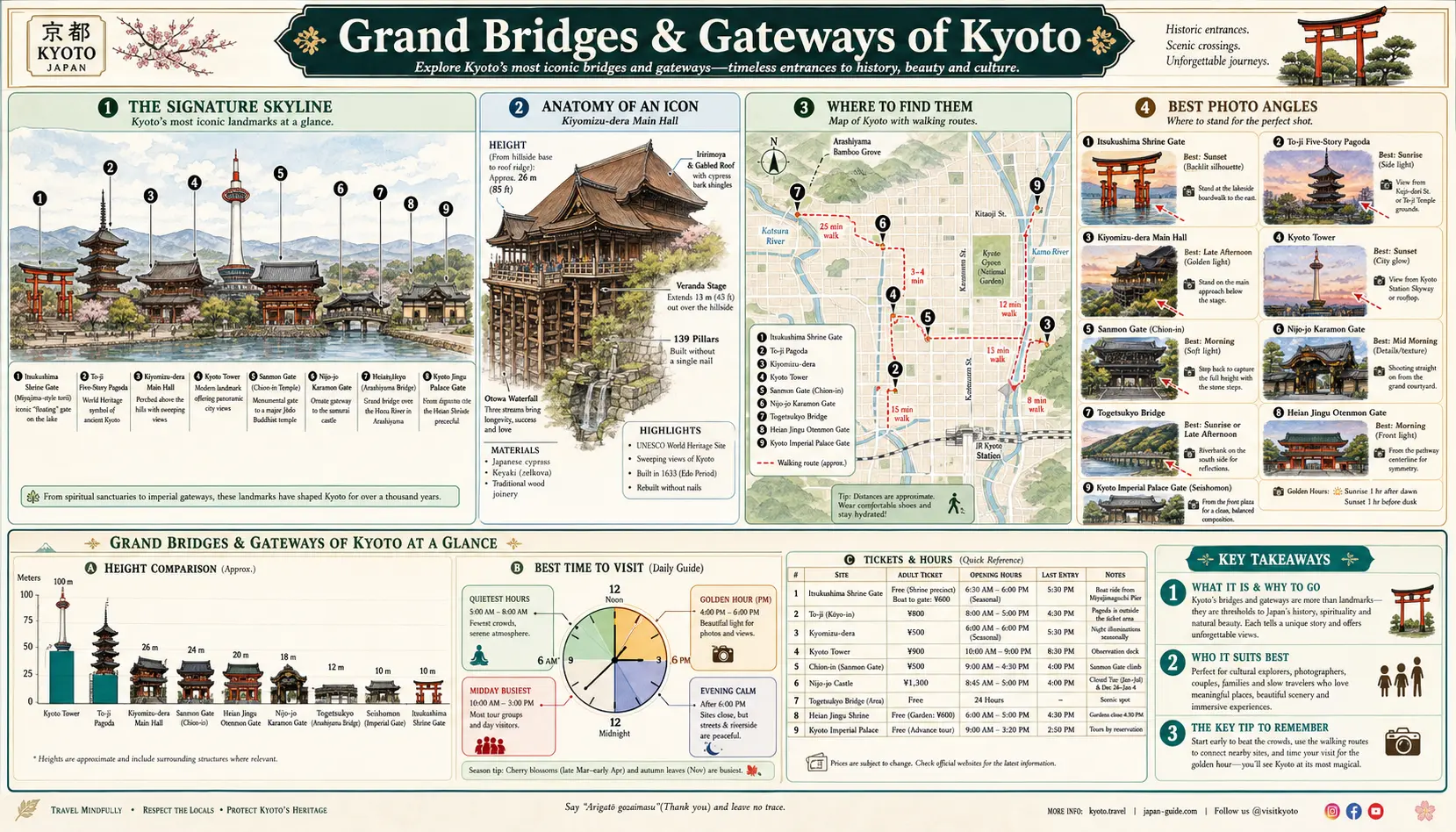
Kyoto is a city defined by thresholds — river crossings, station concourses, and mountain passes that mark the shift from one mood to another. Its bridges and gateways aren't just infrastructure; they're vantage points, meeting spots, and some of the most photographed lines in the city. From a futuristic transit hub to a wooden bridge framed by forested hills, these crossings give Kyoto its rhythm and its skyline.
Kyoto Station: A Gateway of Glass and Steel
Few arrivals in Japan feel as dramatic as stepping into Kyoto Station. Its cavernous atrium, engineered by architect Hiroshi Hara, is a cathedral of steel trusses and escalators that climb toward a rooftop skygarden with panoramic city views. At night the building's illuminated grid glows against the dark hills, a striking contrast to the low-rise streets beyond. As a transit gateway it links the shinkansen, subway, and bus networks, making it the true modern entry point to the city — and a photogenic one, especially from the sky-high observation walkway at dusk.
Togetsukyo: The Bridge Over the Moon-Crossing
In the western district of Arashiyama, the Togetsukyo Bridge spans the Katsura River with a long, low wooden-railed profile that has made it one of Kyoto's most photographed crossings. Its name, roughly "moon-crossing bridge," comes from a poetic description of the moon appearing to glide across it. Framed by forested slopes that turn brilliant orange in autumn and soft green in spring, it's a favorite spot for river views, rental boats below, and an easy walk into the bamboo groves and riverside cafés nearby.
Kamo River Crossings and City Rhythm
The Kamo River bisects central Kyoto, and its string of bridges — including Sanjo and Shijo — double as social gateways between neighborhoods. In warm months, restaurants along the western bank open kawadoko platforms right over the water, while locals and visitors sit along the stone steps at sunset. These crossings connect the nightlife and dining strip of Pontocho and Gion to the modern shopping arcades on the opposite bank, making the riverside one of the best places to feel the city's everyday pulse.
Mountain Passes and Modern Overlooks
Beyond the city center, cable cars and ropeways act as vertical gateways into Kyoto's surrounding peaks, lifting visitors from urban streets to sweeping viewpoints over the basin. These modern transit links make it easy to reach forested ridgelines for sunset panoramas without a long hike. Combined with the station's rooftop terrace and the river's low bridges, they round out a city where getting from one place to another is often as memorable as the destination itself.