Kyoto's Countryside and Villages
A visual guide from the Kyoto travel guide — see all posters in Visual Guides.
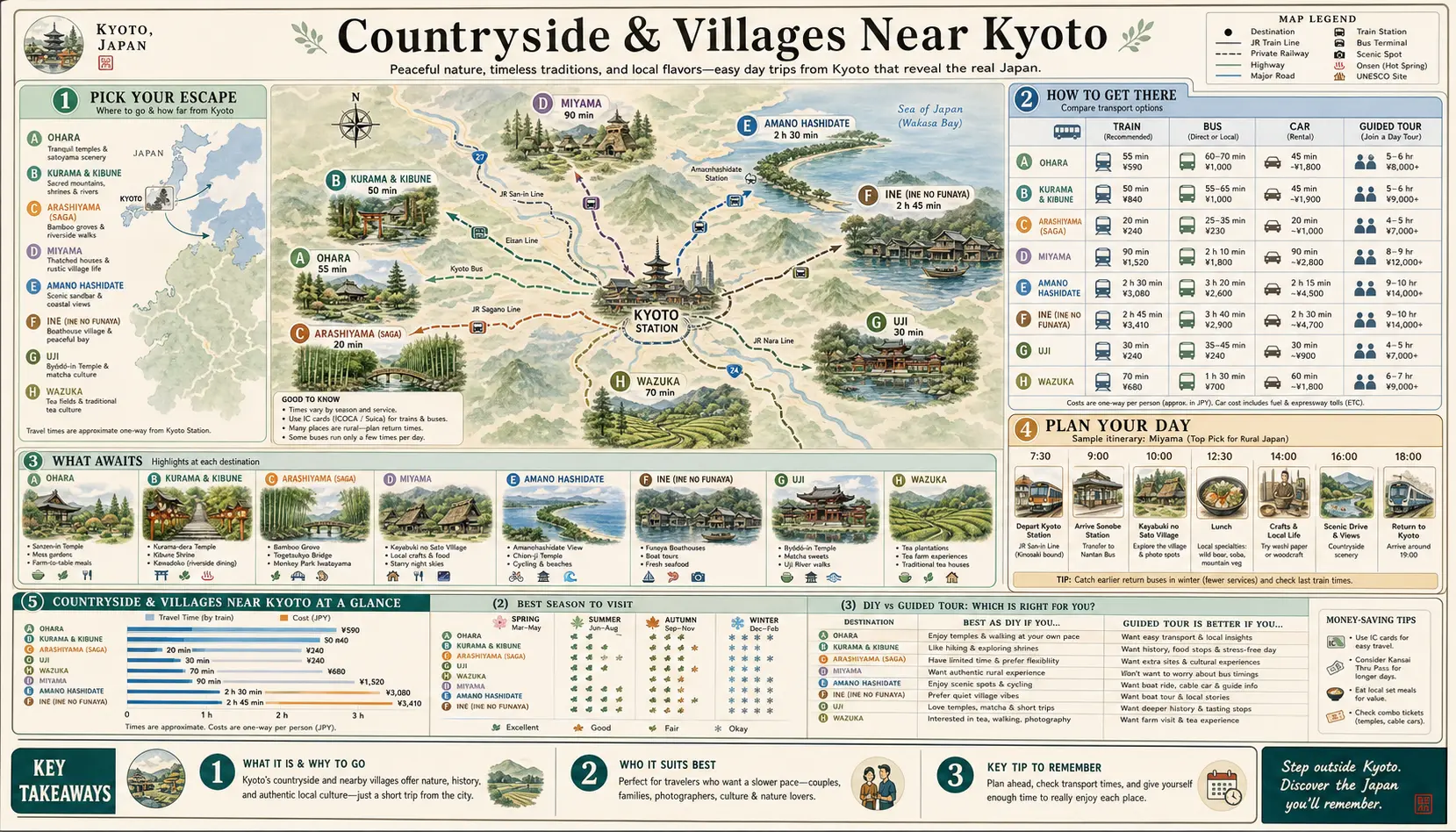
Kyoto is a compact, walkable city, but its rail lines slip effortlessly into a much quieter world of terraced hills, riverside farmhouses, and mountain valleys within an hour of downtown. You don't need a car — local and regional trains reach forested mountainsides, tea-growing towns, and small riverside communities where the pace slows and the views open up. It's an easy way to pair Kyoto's modern energy with the natural beauty of rural Japan in a single day.
Ohara and the Northern Hills
North of the city, the Ohara valley sits tucked between forested ridges, its small farms and vegetable stalls giving it a genuinely rural feel despite being a short bus ride from central Kyoto. Rice paddies and pickled-vegetable stands line the main road, and the surrounding hillsides turn vivid green in summer and deep red in autumn. It's a favorite for travelers who want mountain air and slow scenery without committing to a long trip — a half-day loop is enough to feel worlds away from the city's busy stations and shopping streets.
Kurama and Kibune's River Valley
A short ride on the Eizan Railway lifts you into a steep, cedar-lined valley where two small villages, Kurama and Kibune, face each other across a mountain stream. In warmer months, restaurants build wooden platforms directly over the rushing water, serving meals in the cool shade of the gorge — one of the most refreshing escapes from Kyoto's summer heat. A forested hiking trail connects the two villages over a ridge, making it easy to combine a scenic walk with a riverside lunch in a single outing.
Uji: Tea Fields and a Riverside Town
South of Kyoto, Uji is built along a wide, clear river and is famous across Japan for its shaded green-tea fields, which blanket the surrounding hillsides in neat rows. The town center makes for an easy walk, with tea shops, riverside cafes, and views back toward the water and hills. It's a quick regional-train trip from Kyoto Station, and a great pick for travelers who want a scenic, food-focused half-day without straying far from the city's rail network.
Miyama's Thatched-Roof Hamlet
Further into the mountains northwest of Kyoto, the small settlement of Miyama is known for its cluster of traditional thatched-roof farmhouses set against rice fields and wooded hills. It's a working rural community rather than a museum piece, and the surrounding countryside — rivers, forest trails, and open farmland — makes for some of the most striking natural scenery within reach of the city. Reaching it takes a bit more effort than Kyoto's closer valleys, which is exactly why it feels so remote and rewarding.