Meiji-Era Western Heritage in Kyoto
A visual guide from the Kyoto travel guide — see all posters in Visual Guides.
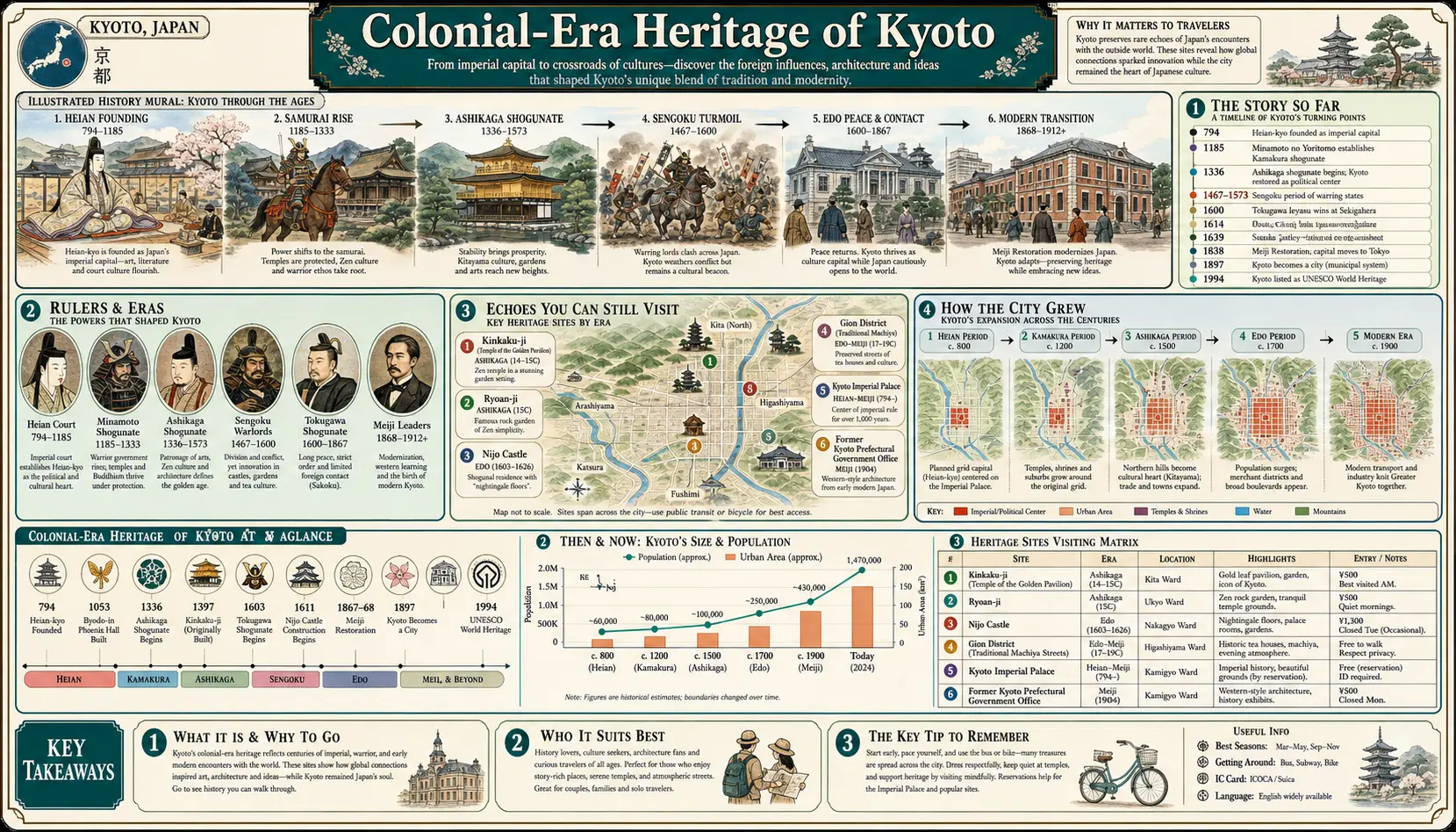
Kyoto never fell under colonial rule, so the closest real chapter here is the Meiji era (late 1800s), when Japan raced to modernize on its own terms. Brick warehouses, Western-style government halls, and early electric infrastructure sprang up alongside the old capital's grid of streets. Today these buildings have been repurposed into galleries, cafes, and event spaces, giving visitors a stylish detour between the city's ultramodern rail lines and its quieter historic lanes.
Brick and Stone Amid the Old Capital
Kyoto's Meiji-era push to modernize left behind a scattering of red-brick and stone buildings that still stand out against the city's traditional wooden streetscapes. Former banks, waterworks facilities, and municipal halls near the city center show off Western architectural styles that Japanese builders adapted and reinterpreted rather than simply copied. Many of these structures cluster around the Nijo and Kawaramachi areas, easy to fold into a day of shopping or transit-hopping. It's a compact, walkable layer of history that rewards a slow afternoon stroll rather than a dedicated pilgrimage.
The Lake Biwa Canal and Kyoto's Modern Rebirth
One of the era's most striking legacies is the Lake Biwa Canal, an ambitious engineering project that brought hydroelectric power and boat transport to Kyoto as the city reinvented itself after losing its status as imperial capital to Tokyo. The canal's incline railway and pumping stations, some now landscaped into quiet walking paths, reveal how Kyoto used bold infrastructure to stay relevant. Cherry trees now line stretches of the waterway, making it a favorite spot for sunset walks that blend industrial history with genuinely beautiful scenery.
Adaptive Reuse: Old Halls, New Energy
Rather than museum-ifying every Meiji-era building, Kyoto has leaned into adaptive reuse. Former Western-style halls and school buildings now house design shops, roasteries, and art spaces, giving them a genuinely modern second life. This pattern mirrors what's happening across the city's contemporary architecture scene, where minimalist concrete and glass structures sit comfortably beside a century-old brick facade. It's a great lens for travelers who like their history served with good coffee and current design rather than roped-off velvet corridors.
Getting Around This Layer of the City
Kyoto's efficient bus and subway network makes it simple to string together a self-guided route past these sites without a car. Many of the notable buildings sit within walking distance of the Kawaramachi and Karasuma corridors, close to the city's best modern shopping and dining strips. Pair a visit with an evening in Kyoto's compact but lively bar scene, where renovated townhouses and modern izakayas keep the night going well after the historic buildings have gone quiet.