Antiques and Flea Markets in Kyoto
A visual guide from the Kyoto travel guide — see all posters in Visual Guides.
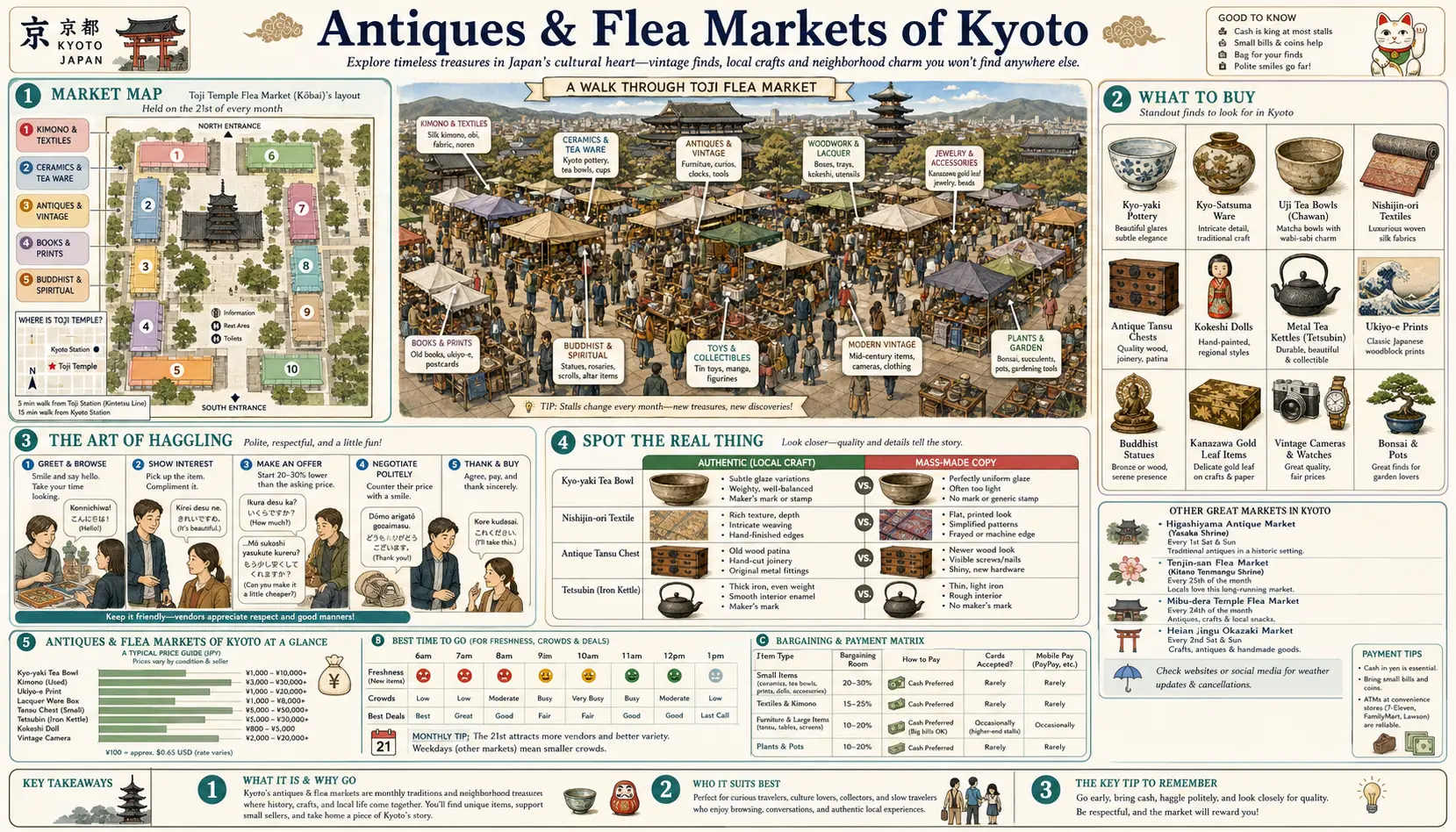
Kyoto rewards travelers who love the hunt as much as the find. Monthly outdoor markets fill open courtyards with folding tables of vintage kimono, hand-thrown ceramics, retro cameras, and quirky homeware, drawing collectors, designers, and curious wanderers alike. It's a modern-meets-nostalgic ritual: dealers set up before dawn, coffee carts and street-food stalls fuel the browsing, and bargaining is part of the fun. Bring cash, comfortable shoes, and an open mind.
The Monthly Market Rhythm
Kyoto's best-known flea markets run on fixed monthly schedules, drawing hundreds of vendors to open courtyard grounds on set calendar dates. Arrive early—serious collectors and interior designers show up at first light to beat the crowds to standout ceramics, textiles, and woodwork. By mid-morning the aisles fill with locals and visitors alike, and the pace turns social: friends run into each other, vendors chat with regulars, and the whole scene feels more like a neighborhood gathering than a tourist stop. Rain or shine, these markets rarely cancel outright, though stalls thin out in wet weather.
What to Look For
Expect a wide mix: folded stacks of secondhand kimono and obi in patterned silk, chipped-but-charming Kiyomizu and Shigaraki ceramics, brass teapots, vintage cameras, Showa-era toys, and handmade jewelry from independent craftspeople. Prices are rarely marked in stone—polite haggling is normal, especially for multiple items or slightly damaged pieces. Textile hunters often find obi cords and scarves cheap enough to use as modern home decor or fashion accents, while design-minded shoppers scout mid-century Japanese tableware that pairs surprisingly well with contemporary interiors.
Beyond the Big Markets
Smaller antique fairs and secondhand shops fill the gaps between the major monthly dates, scattered through central Kyoto's shopping streets and covered arcades. Dedicated antique malls house dozens of individual dealer booths under one roof, useful on days when outdoor markets aren't running or when you want air-conditioned browsing. Vintage and thrift boutiques near the city center add a more curated, fashion-forward angle—think retro denim, band tees, and designer resale alongside the traditional wares, appealing to a younger, style-conscious crowd.
Getting There and Making a Day of It
Market grounds sit within easy reach of Kyoto's bus and rail network, and pairing a morning market visit with lunch at a nearby café or food hall makes for a relaxed, well-rounded day. Pack a foldable tote for purchases, keep small bills handy, and budget extra time—these markets reward slow, unhurried wandering rather than a quick pass-through. For photographers, the stalls piled with color and texture make for some of the city's most vivid, human-scale street scenes.