Tea Plantations in Cameron Highlands
Part of the Cameron Highlands travel guide — see every topic in All Cameron Highlands Guides.
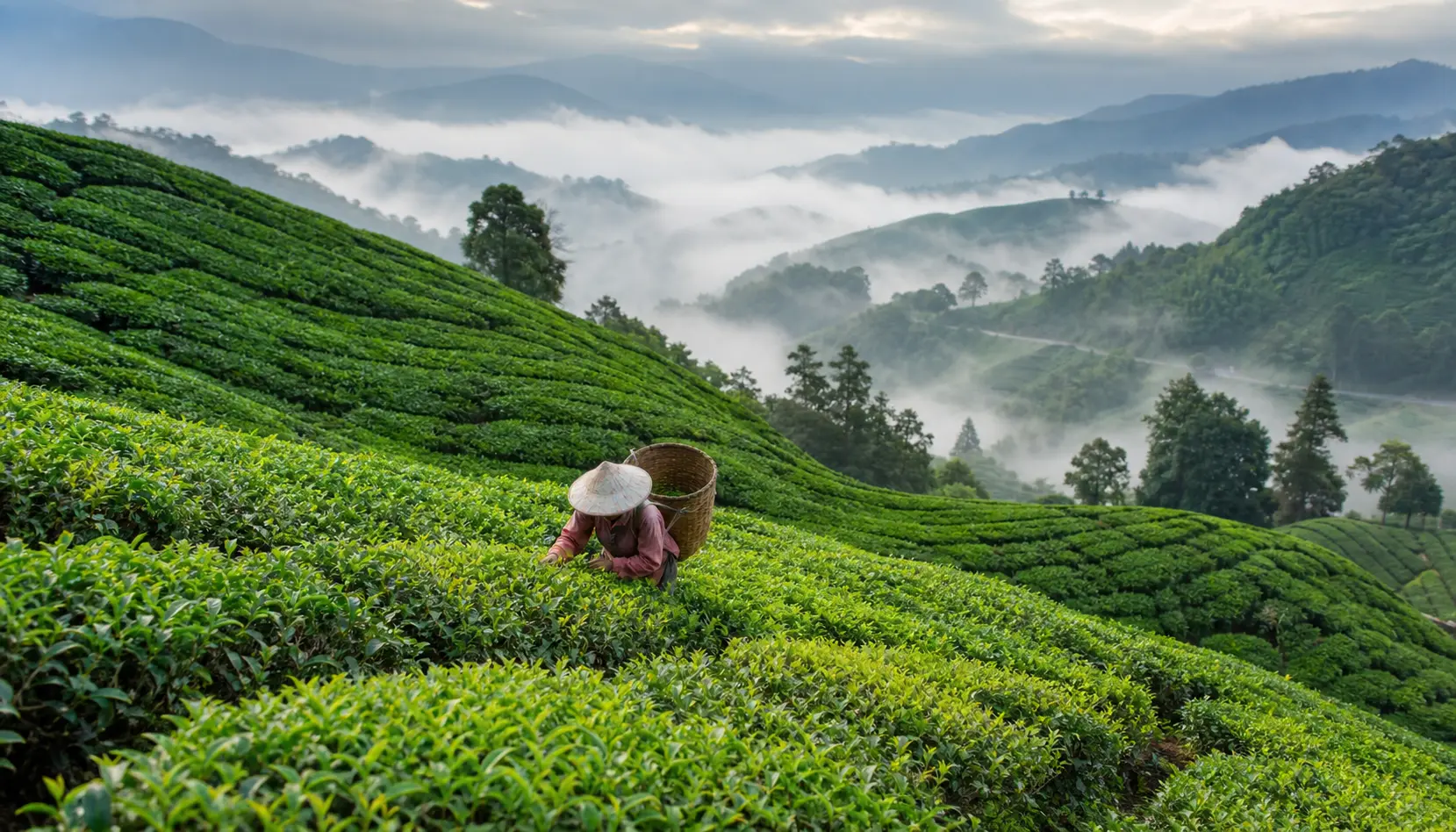
The Cameron Highlands' tea industry began in 1929, when J. A. Russell planted the first commercial estate at Habu, and the terraced green hillsides that resulted are now the region's defining image. Three main producers — BOH, Bharat and Cameron Valley — run estates across the highlands, and all of them have visitor centres with cafes overlooking the fields. Entry is generally free, the views are genuinely spectacular, and the tea itself, grown at 1,200–1,600 metres, is worth taking home.
BOH
The largest producer in Malaysia, founded by J. A. Russell in 1929 and still family-run. Its Sungei Palas estate above Brinchang is the one to visit: a modern cantilevered visitor centre and cafe projecting over the valley, a free factory walkway showing withering, rolling, fermenting and drying, and a tea shop. The view from the terrace across the terraced slopes is the photograph everyone comes for. BOH's other estate at Habu, near Ringlet, is the original and is quieter. Both are free; the cafes are busy at weekends.
Bharat and Cameron Valley
Bharat Tea, founded in 1933, runs estates along the main road between Tanah Rata and Ringlet with two Cameron Valley tea houses set directly among the bushes — less polished than BOH and arguably better placed, since you can walk straight out into the plantation. They are the easiest to reach without a car, being on the main road. Cameron Valley is the associated brand. Between the three producers the highlands supply the bulk of Malaysia's domestic tea.
How the tea works
The bushes are Camellia sinensis assamica, planted in contour rows and kept at picking height by regular pruning; the flush of new growth — two leaves and a bud — is what is harvested. At 1,200–1,600 metres the growth is slower than in the lowlands, which concentrates flavour. Most production is orthodox black tea processed on site: withered to remove moisture, rolled to break the cell walls, oxidised in a controlled room, then fired. The factory walkways at BOH let you watch each stage from above.
Practicalities
Go early: the highlands cloud over from late morning and the estates are best in clear light, and the weekend crowds at BOH Sungei Palas are substantial. The roads to the estates are narrow, steep and winding, and parking at Sungei Palas is limited — a tour or a taxi avoids the problem. Bring a layer; it is fifteen degrees cooler than the lowlands and windy on the ridges. Walking into the plantations is generally permitted on the tracks but not through the bushes, which are working crop.
Tea Plantations at a glance
| First planted | 1929, by J. A. Russell at Habu |
|---|---|
| Main producers | BOH, Bharat, Cameron Valley |
| Best visitor centre | BOH Sungei Palas — free factory walkway and cafe |
| Altitude | 1,200–1,600 m — slower growth, more flavour |
| Entry | Free at all the main estates |
| Go | Early — cloud builds from late morning |