Mikazuki Water Park in Da Nang
A visual guide from the Da Nang travel guide — see all posters in Visual Guides.
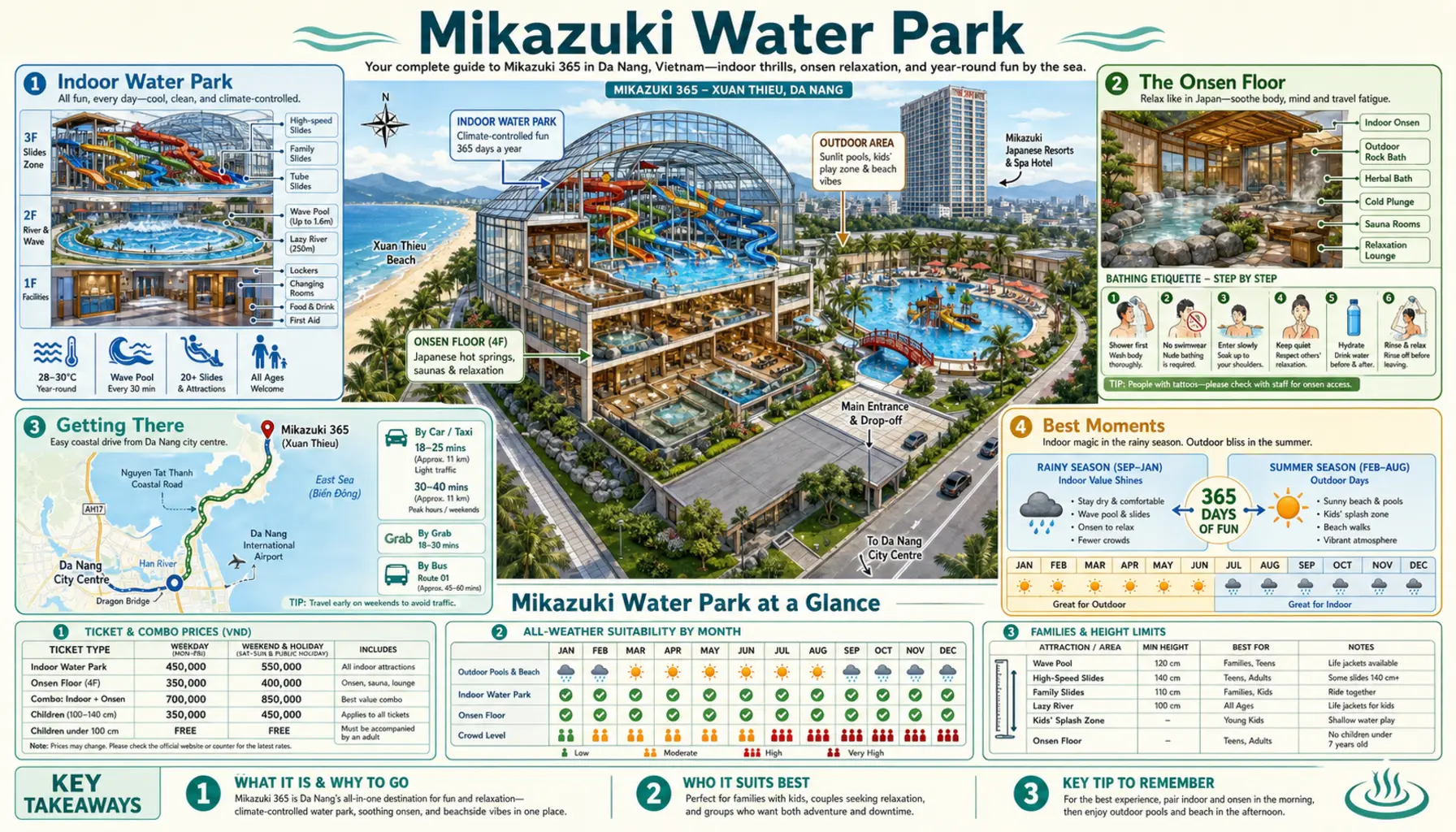
Mikazuki sits at Xuân Thiều beach in Liên Chiểu, roughly 10–12 km north of central Da Nang on the road toward the Hải Vân Pass. It is a Japanese-themed resort complex with three separate things going on: a large climate-controlled indoor water park, outdoor pools facing the sea, and a proper onsen bathing floor. The indoor half is the real argument for coming — it works in rain, wind and the cool months when Da Nang's beaches are effectively unswimmable.
Indoor first, outdoor second
Da Nang's swimming season is not year-round. From roughly October into February the sea turns rough, grey and cold, and hotel pools sit empty. Mikazuki's answer is a big indoor hall kept warm whatever the weather, with a wave pool, a lazy river and a cluster of slides under one roof. The outdoor pools and beach frontage are the better half from March to September. A day pass normally covers both sides, which means a wet forecast is not a reason to cancel — it is more or less the reason the place was built.
The onsen floor, and how to behave in it
The onsen is separate from the water park and follows Japanese convention: men's and women's sides, no swimwear, no exceptions. You undress in the changing room, sit at a low shower station and wash thoroughly before going anywhere near a bath — the bath is for soaking, not for cleaning. The small towel stays out of the water and long hair goes up. Tattoos are the genuine unknown: Japanese onsen traditionally refuse them, overseas outposts are often relaxed, and venue rules change. Ask at the desk before you undress, not after.
Getting there, tickets and timing
There is no useful public transport out here. A Grab car from My Khe or the city centre takes 20–30 minutes and costs a fraction of a hotel taxi, but arrange the return in advance — pickups this far north are thin. Passes are usually sold separately for the water park and the onsen, with a combined option; expect a day pass in the hundreds of thousands of dong, and check current rates and opening hours, which move with the season and the day of the week. Weekends and Vietnamese holidays are busy; a weekday morning is a different place entirely.