Bắc Mỹ An and Beach Resorts in Da Nang
A visual guide from the Da Nang travel guide — see all posters in Visual Guides.
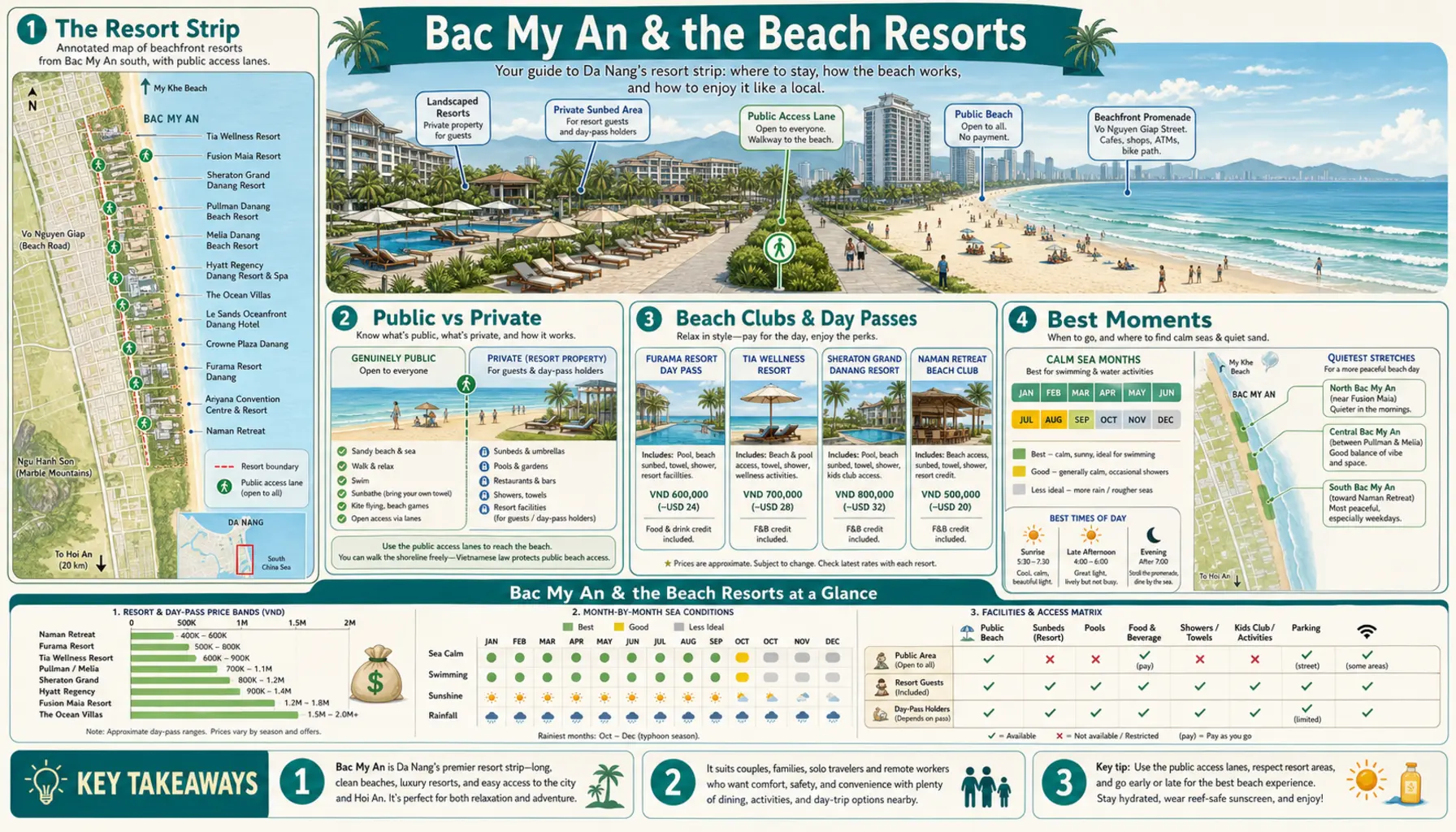
South of Mỹ Khê the beach road runs past a wall of five-star frontage — Bắc Mỹ An, Non Nước, and the stretch toward Ngũ Hành Sơn. The resorts here are landscaped, quiet and expensive, and they give the impression of owning the sand. They don't. Vietnamese law keeps the beach itself public, but the sunbeds, showers and shade in front of each property are not. Knowing where that line falls saves an awkward conversation.
Where the public beach actually is
Every metre of sand below the high-water mark is public, and there are marked public access lanes between the resorts — look for the numbered beach entrances off Võ Nguyên Giáp and Trường Sa. Walk in, put your towel down, swim. What you cannot do is help yourself to a lounger, umbrella or towel service belonging to a hotel; staff will politely move you on. The practical result is a two-tier shore: a free strip near the waterline and the tended zone behind it. In practice nobody minds where you walk, only where you sit.
Day passes and beach clubs
Most of the big beachfront properties sell some form of day pass — pool, sunbed, towel, and often a food-and-beverage credit that swallows a good part of the fee. Rates move with season and occupancy, so call or message ahead rather than trusting an old blog figure; low season is markedly cheaper and in high season some resorts stop selling passes altogether. Beach clubs along the strip are the looser option: buy a drink or lunch and the sunbed comes with it, no gate and no booking. If you only want shade and a cold beer, that is the better value.
Flags, rips and swimming
Da Nang runs a lifeguard flag system on its patrolled beaches and it is worth reading rather than ignoring: green for open water, yellow for caution, red for no swimming, and buoy lines marking where to stay. Rip currents here are genuinely dangerous, strongest in the cooler months when the swell is up, and drownings happen most years. Lifeguards are on duty during daylight hours in season and will whistle you back; do what they say. Swim between the flags, not at dawn on an empty resort beach with nobody watching.