Royal Dynasties and Rulers of Siem Reap & Angkor Wat
A visual guide from the Siem Reap & Angkor Wat travel guide — see all posters in Visual Guides.
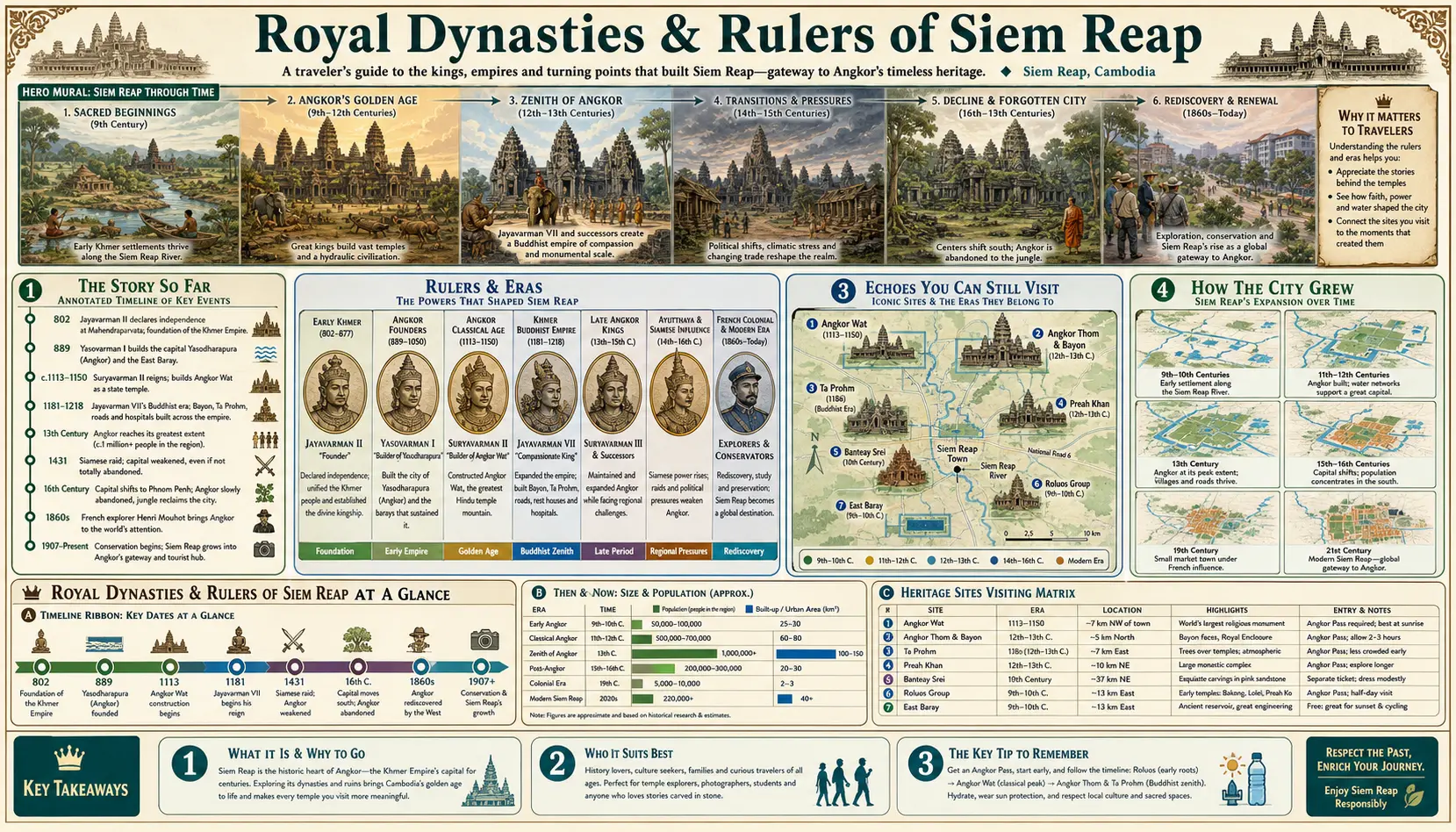
Long before Siem Reap became a buzzing hub of rooftop bars and boutique hotels, this stretch of Cambodia was the beating heart of the Khmer Empire, once the dominant power in Southeast Asia. Understanding the ambitious kings who raised Angkor's capitals gives real depth to a visit here — but today's city is just as much about vibrant night markets, riverside dining, and a young, energetic pulse that has nothing to do with the past.
The Builders of an Empire
At its height between the 9th and 13th centuries, the Khmer Empire stretched across much of mainland Southeast Asia, and its rulers competed to leave the boldest mark on the landscape. Suryavarman II commissioned Angkor's most famous complex in the 12th century, while Jayavarman VII later expanded the empire's reach and rebuilt infrastructure, including roads, hospitals, and reservoirs, after a period of turmoil. These kings ruled through a blend of military campaigns, diplomacy, and vast public works, and their competing legacies shaped the layout of the entire region around modern Siem Reap.
Reading the Ruins as History
You don't need to be a scholar to notice how each ruler's era left a different architectural signature — shifting styles in stone carving, layout, and scale tell the story of changing dynasties and priorities. Guides and museums in town do a good job connecting these threads without turning a visit into a lecture, and it's worth spending an hour with an informed local guide who can point out details easy to miss. Treat the ancient sites as one layer of a much bigger, livelier destination rather than the whole story.
Siem Reap Today: A Modern Gateway
Modern Siem Reap has reinvented itself as a genuinely cosmopolitan base, with Pub Street and the surrounding Old French Quarter humming with live music, craft cocktail bars, and inventive Khmer-fusion restaurants. New boutique hotels and design-forward cafes keep popping up, and the city's night markets are as much about contemporary Cambodian creativity — fashion, art, street food — as any historical throwback. It's a city confidently building its own current identity alongside its storied past.
Beyond the Royal Story
Once you've absorbed the dynastic history, balance your days with Siem Reap's other draws: sunset boat rides on the Tonle Sap, cycling routes through the surrounding countryside, and a genuinely exciting food scene blending traditional Khmer flavors with global technique. The city rewards travelers who split their time between learning where this region came from and enjoying the modern, energetic place it has become.