Regional Specialties of Siem Reap
A visual guide from the Siem Reap & Angkor Wat travel guide — see all posters in Visual Guides.
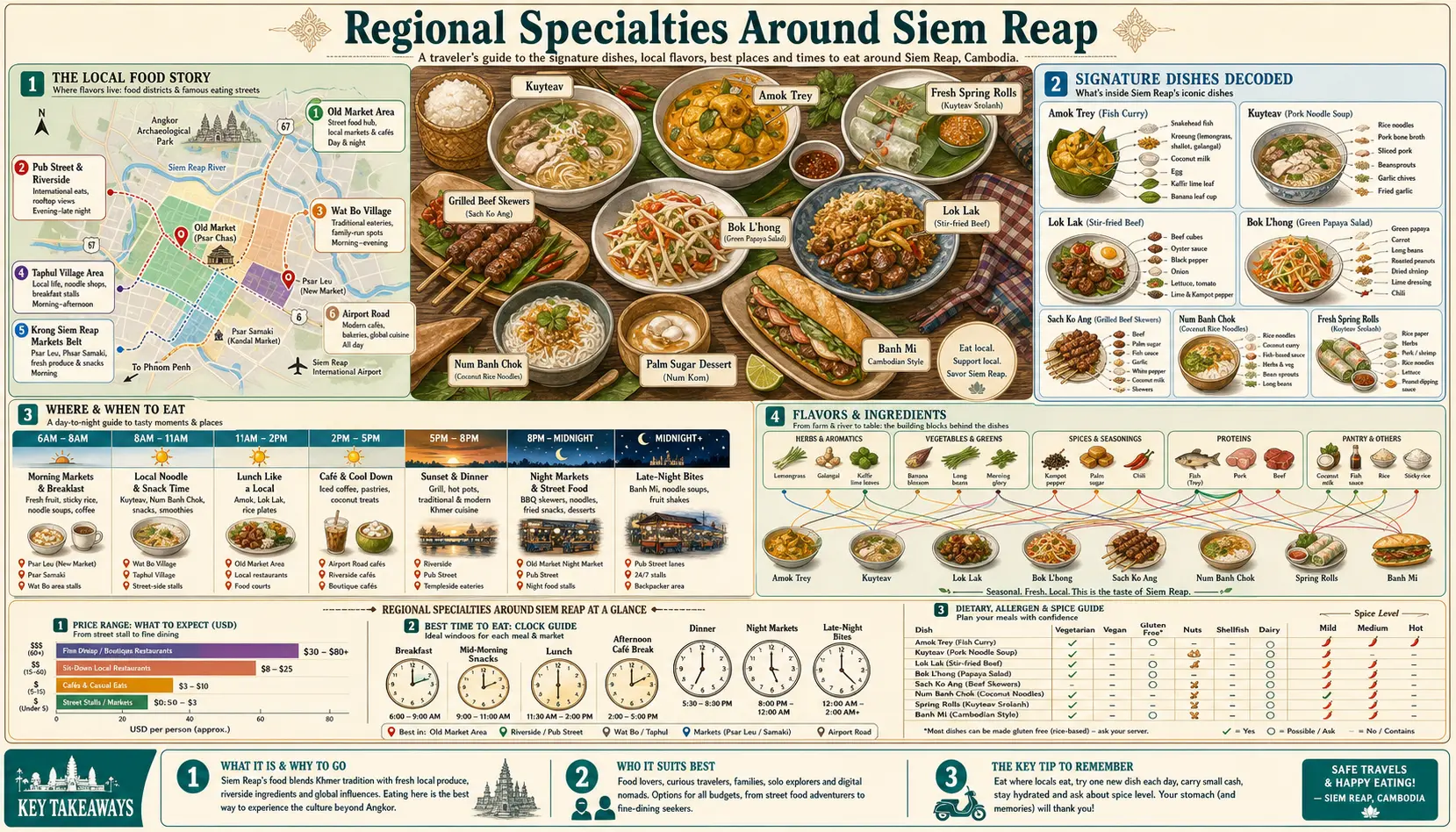
Cambodian cooking is one of Southeast Asia's underrated pleasures, and Siem Reap is the perfect place to dig in. Khmer food leans fragrant and balanced rather than fiery — think creamy coconut curries, fresh herbs, lime, and the world-class Kampot pepper. Around town you'll find everything from morning rice-noodle stalls to polished modern restaurants reinventing the classics, plus a buzzing night scene that makes eating your way through the city half the fun.
The Khmer Classics
Start with the icons. Fish amok is the national dish — a mousse-like coconut curry of freshwater fish steamed in banana leaf, mild and aromatic. Lok lak delivers seared, marinated beef over rice with a bright lime-and-pepper dipping sauce, while kroeung, the lemongrass-and-galangal spice paste, underpins many dishes. Cambodia's signature seasoning, Kampot pepper, turns up everywhere and is worth seeking out fresh — its citrusy heat is genuinely distinctive.
Street Food & Markets
Siem Reap eats well on the street. Breakfast is often num banh chok, soft rice noodles ladled with a green fish-based gravy and piled with raw herbs and vegetables. Markets and roadside grills sell skewers, grilled corn, tropical fruit, and palm-sugar sweets, and the more adventurous can try the region's famous fried insects. It's cheap, fresh, and a fast way to understand local flavours — follow the busiest stalls and the crowds of locals.
The Modern Dining Scene
Thanks to its visitors, Siem Reap punches above its weight for restaurants. Around the Pub Street area and the leafy lanes nearby you'll find stylish spots plating refined Khmer tasting menus, cooking schools where you can learn amok yourself, and cocktail bars mixing local palm spirits and tamarind. It's an easy, low-key food city: graze the markets by day, then settle into a modern dining room at night for a polished take on the same regional flavours.