Historic Towns Around Siem Reap & Angkor Wat
A visual guide from the Siem Reap & Angkor Wat travel guide — see all posters in Visual Guides.
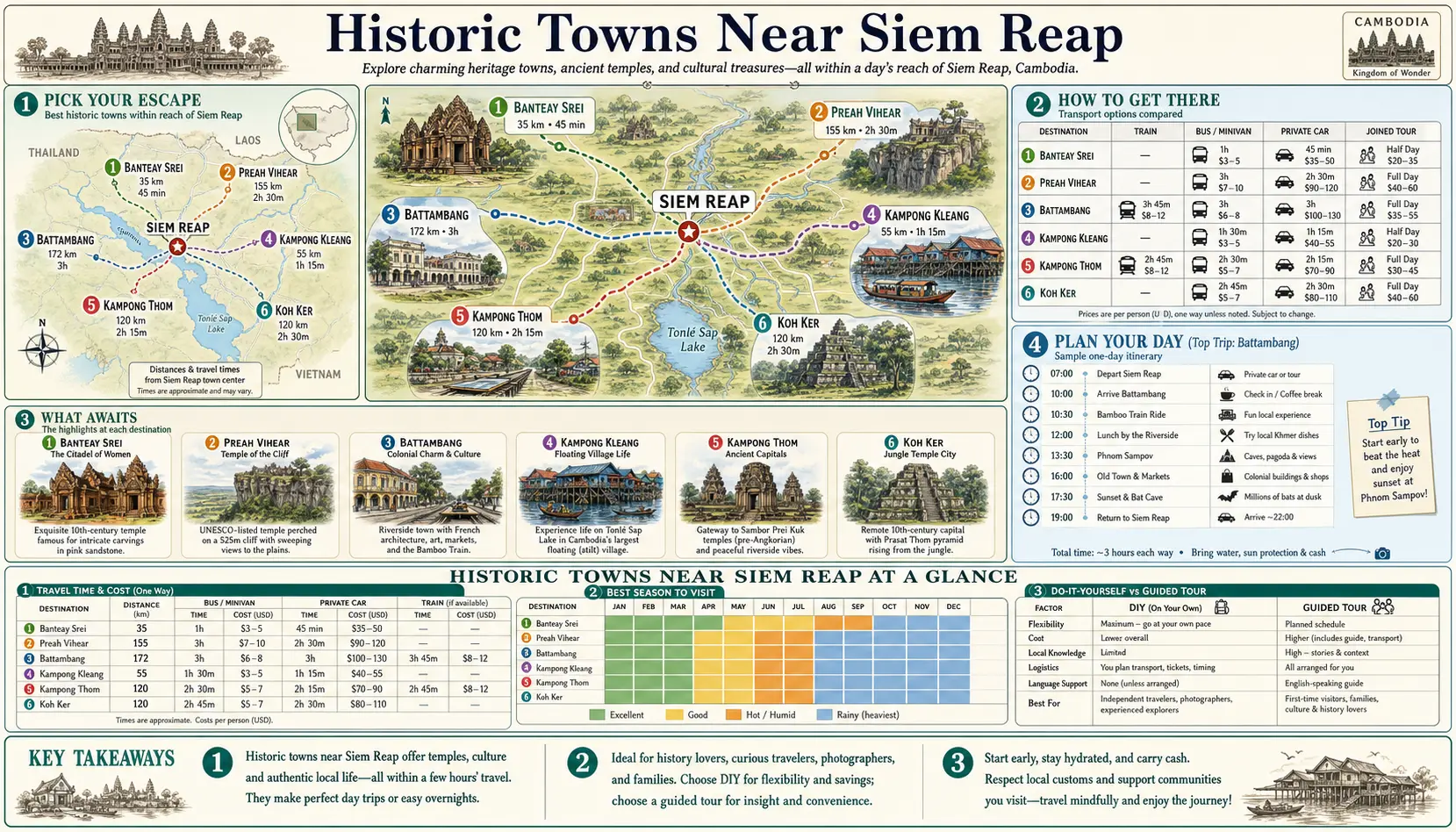
Siem Reap has grown into one of Southeast Asia's most livable small cities — a walkable grid of tree-lined streets, a tidy riverside promenade, and a French-colonial quarter reborn as boutique hotels, galleries, and cafés. The town itself is worth slow exploring, not just as a launchpad for the temples nearby. Cyclists and night-market shoppers share the same lanes as tuk-tuks gliding past art-deco shopfronts, making the old town feel both historic and thoroughly current.
The French Quarter & Riverside
Siem Reap's old French Quarter, clustered near the Siem Reap River, retains rows of early-20th-century shophouses now painted in soft pastels and filled with restaurants, boutiques, and design studios. Wander the riverside path at dusk when lanterns switch on and locals jog or cycle along the water. This is the town's most photogenic stretch, blending colonial-era architecture with a distinctly modern café culture — craft coffee, cocktail bars, and independent fashion labels sit comfortably inside century-old façades.
Pub Street & the Old Market Buzz
The Old Market (Psar Chas) area anchors the historic core, its narrow covered aisles selling produce, textiles, and souvenirs by day. After dark, the adjoining Pub Street district turns into Siem Reap's liveliest strip — strings of neon, open-air bars, and live music spilling onto the pavement in a genuinely festive, youthful atmosphere. It's less about heritage than energy, but the surrounding lanes of shophouses give the nightlife a distinctive backdrop you won't find in a purpose-built entertainment district.
Villages Along the Rivers and Lake
Just outside town, communities such as Kampong Phluk sit on stilts above the floodplain feeding into Tonlé Sap, Southeast Asia's largest freshwater lake. A boat ride here shows a working rural Cambodia of fishing families, floating gardens, and mangrove-lined channels that rise and fall dramatically with the seasons. It's a striking contrast to Siem Reap's cafés — and a reminder that the region's real character lives as much in these waterside settlements as in any single landmark.
Modern Siem Reap Meets Its Past
What makes Siem Reap distinctive is how comfortably old and new coexist: restored shophouses hold design hotels and rooftop bars, art galleries showcase contemporary Khmer artists a few blocks from century-old market stalls, and the airport-to-town corridor has filled with sleek resorts and spas. Spend a day exploring on foot or by bicycle, and the town reveals itself as a genuinely liveable, low-rise city — not just a gateway to the temples, but a worthwhile historic destination in its own right.