Cooking Classes and Food Tours in Siem Reap
A visual guide from the Siem Reap & Angkor Wat travel guide — see all posters in Visual Guides.
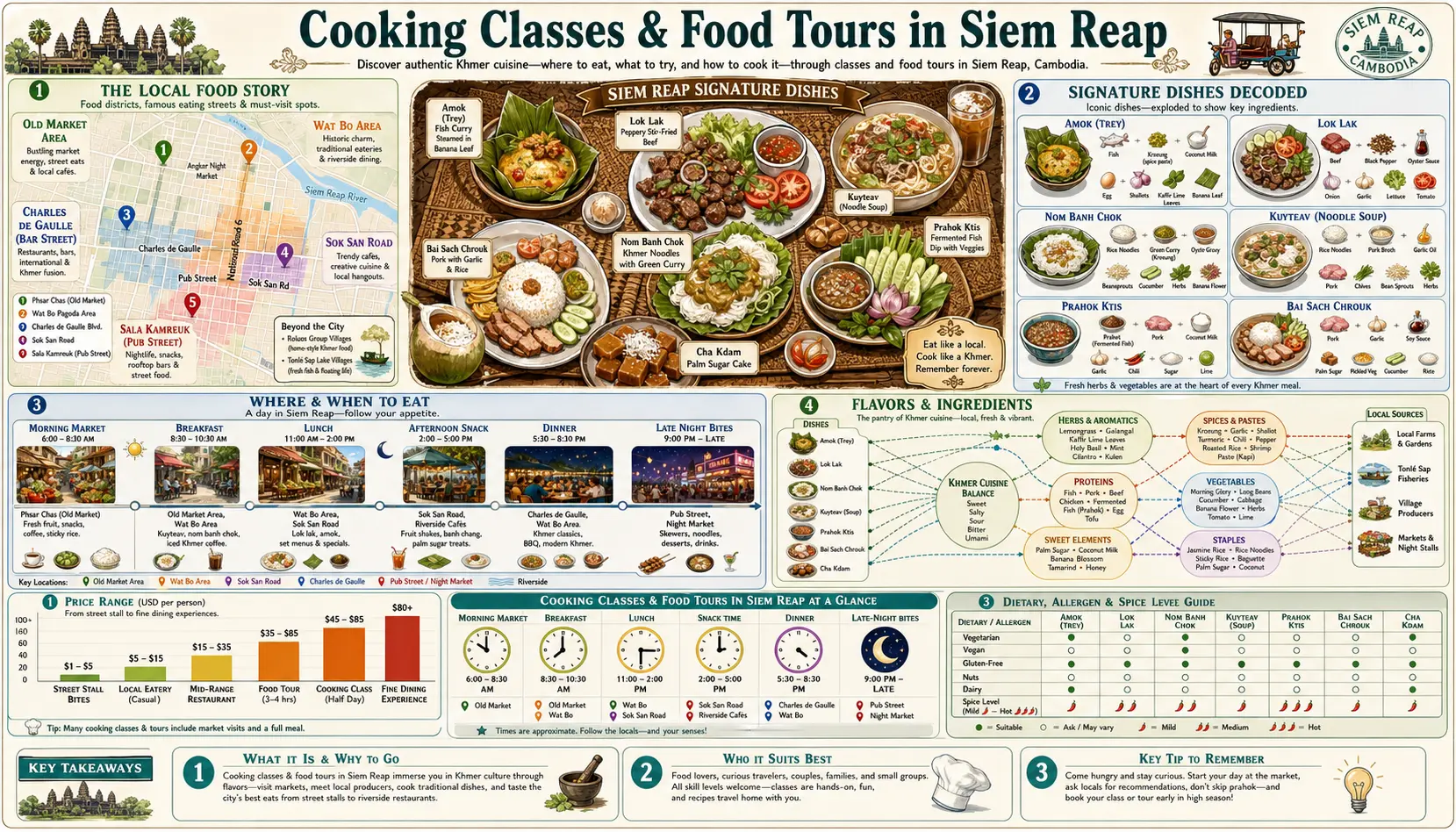
Siem Reap's food scene has grown up fast, and these days a market visit and a hands-on cooking class feel as central to a trip here as the temples. Khmer cuisine is its own distinct tradition — lighter and herbier than its neighbors — and spending a few hours learning to cook it, or simply eating your way through the old market and the riverside night-food strip, is one of the most rewarding ways to experience the city.
Hands-On Khmer Cooking Classes
Cooking schools across Siem Reap teach the essentials of Khmer cuisine: amok (a steamed, curried fish custard often served in banana leaf), fragrant kroeung spice pastes pounded from lemongrass, galangal, and turmeric, and simple soups like samlor. Most classes begin with a guided walk through a local market to pick out produce and herbs, then move into an open-air kitchen for a few hours of hands-on cooking, finishing with the meal you made. It's a relaxed, sociable way to spend a morning or evening, and a genuinely useful skill to bring home.
Markets and Street Food
Siem Reap's Old Market (Psar Chas) is the natural starting point for any food tour — stalls of dried fish, palm sugar, tropical fruit, and fresh noodles sit alongside vendors grilling skewers and frying banana fritters. In the evenings, the streets around Pub Street and the riverside fill with food carts serving grilled meats, rice-noodle soups, and Cambodian barbecue. Guided food-tour operators can walk you through the best stalls and etiquette, but wandering solo with an appetite works just as well — this is street food meant to be grazed, not rushed.
Modern Khmer Dining
Beyond the market stalls, Siem Reap has a growing crop of contemporary restaurants reinterpreting Khmer classics with polished plating and modern dining rooms, alongside social-enterprise training restaurants that double as a way to support local hospitality education. Pair a cooking class or food tour with an evening at one of these spots to see how traditional flavors — prahok, fish amok, fresh herbs, and palm sugar — translate into a more contemporary, restaurant-style setting.
Planning Your Food Day
Book cooking classes a day or two ahead, especially in high season, and check whether market-shopping and transport are included. Many operators offer both morning and evening sessions, so it's easy to fold one into a day that also includes Angkor Archaeological Park — cook in the late afternoon after temple-hopping, or start early and spend the rest of the day poolside. Vegetarian and dietary adjustments are generally easy to arrange with advance notice.