Siem Reap's Old Quarter: Chinese-Cambodian Shophouses Reborn
A visual guide from the Siem Reap & Angkor Wat travel guide — see all posters in Visual Guides.
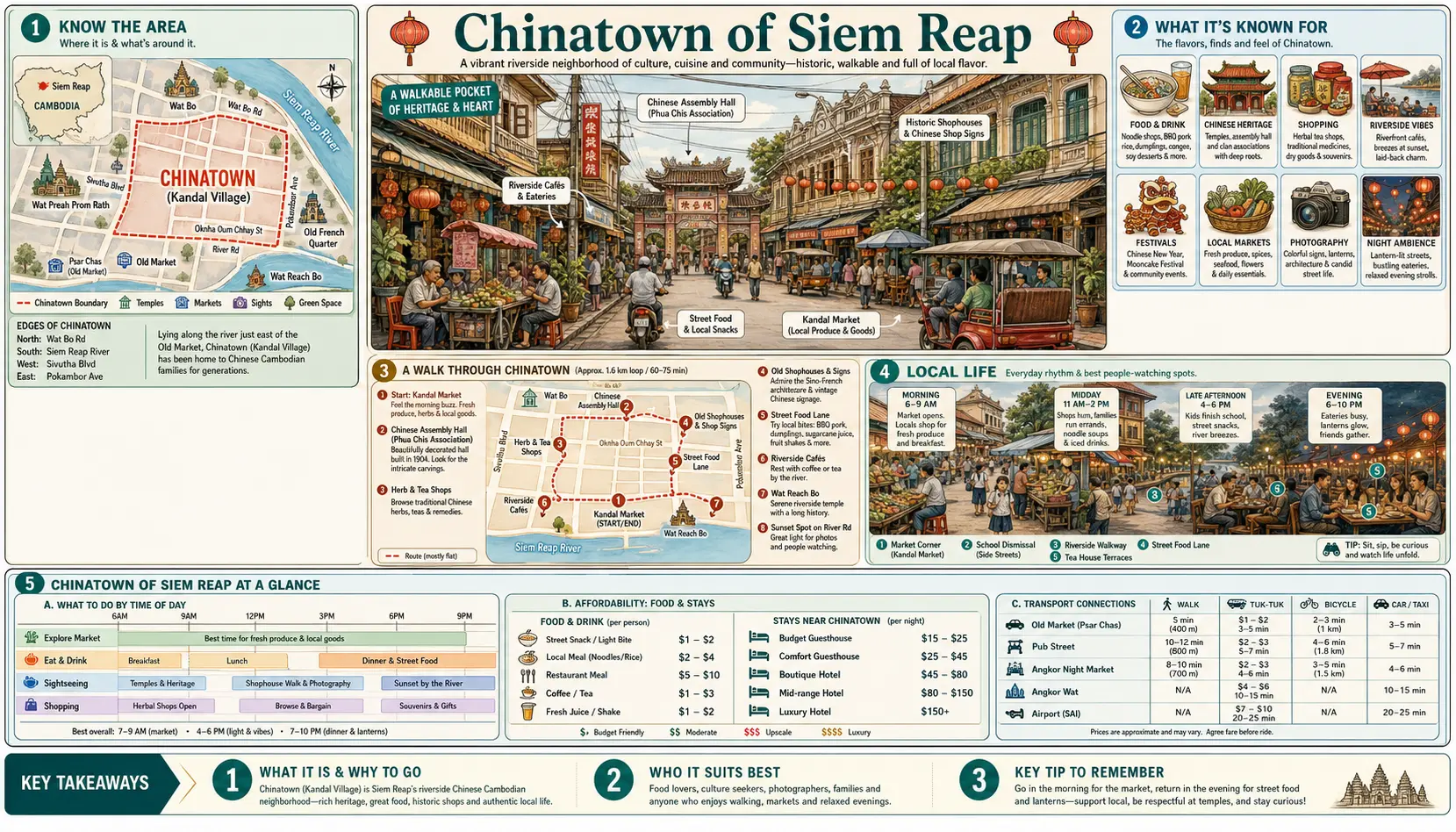
Siem Reap doesn't have a Chinatown in the classic sense & but wander the streets around the Old Market and you'll find its closest cousin: a compact grid of early-1900s Chinese-Cambodian shophouses, their shuttered facades and covered arcades built by traders who once dealt in rice, silk, and river goods. Today those same buildings house some of the city's liveliest bars, boutique cafés, and night markets, making this pocket of town a genuine cross-section of old and new Siem Reap.
Shophouse Architecture Around the Old Market
The blocks radiating from Psar Chas, the Old Market, are lined with narrow two-story shophouses in the French-colonial-meets-Chinese trading style found across Southeast Asia's river towns: shuttered windows, pastel plaster, and ground-floor arcades once used by Chinese-Cambodian merchant families. Many facades survive largely intact, even as the interiors have been converted into restaurants, tailor shops, and design-forward guesthouses. It's a compact, walkable district, and one of the few parts of Siem Reap where the town's early-20th-century commercial history is still visible at street level rather than tucked into a museum.
Pub Street After Dark
By night, the same quarter transforms into Pub Street, Siem Reap's neon-lit hub of bars, rooftop lounges, and live-music venues packed into those old trading-house shells. DJs, cover bands, and craft-cocktail bars spill onto pedestrian lanes alongside noodle stalls and fruit-shake carts, drawing a mix of backpackers, expats, and locals. It's unapologetically touristy, but the energy is real & a modern nightlife scene layered directly on top of the city's oldest commercial footprint, and one of the most walkable, photogenic ways to spend an evening in town.
Night Markets and Riverside Food
Just off the main strip, covered night markets sell silk scarves, lacquerware, and street food beneath strings of lights, echoing the trading-post roots of the neighborhood without feeling like a relic. A short stroll east, the Siem Reap River is lined with a growing run of stylish cafés, cocktail bars, and boutique hotels that have reused old shophouse shells or built in a complementary low-rise style. It's a good spot to eat well, shop for souvenirs, and watch the river before heading back into the bar district.
A Living Link to Trading-Town Roots
What makes this quarter worth seeking out isn't nostalgia & it's how naturally the old and new coexist. Chinese-Cambodian merchant families helped build Siem Reap's early economy long before Angkor Wat became a global tourism magnet, and their shophouses now anchor a district that feels thoroughly modern: bars, design shops, and food halls operating inside a genuinely historic frame. For visitors splitting time between temple mornings and lively evenings, it's the most walkable bridge between the two.