Best Time to Visit Siem Reap & Angkor Wat
A visual guide from the Siem Reap & Angkor Wat travel guide — see all posters in Visual Guides.
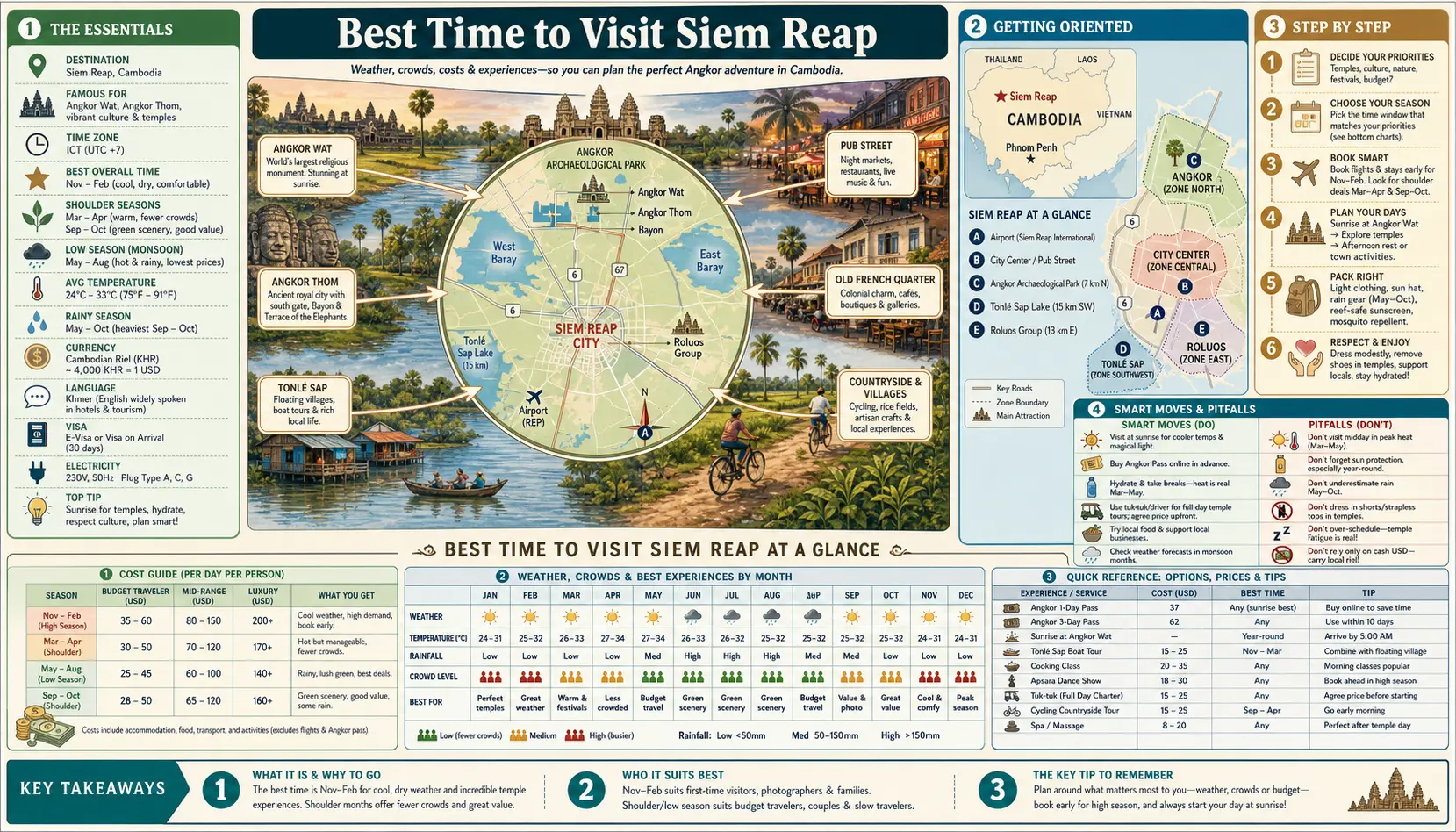
Siem Reap runs on a tropical monsoon clock, and the month you fly in changes everything from road conditions to sunset colors over Angkor's causeways. There's no single "correct" season — just trade-offs between crowds, comfort, and the kind of light you want in your photos. Late November through February is the classic pick, but savvy travelers increasingly chase the quieter, greener months on either side of it.
Cool, Dry Season (November–February)
This is peak travel time for good reason: humidity drops, skies stay mostly clear, and daytime temperatures settle into a comfortable range for exploring the vast Angkor Archaeological Park on foot, by bike, or by tuk-tuk. Evenings turn genuinely cool, a welcome contrast to the rest of the year, and Siem Reap's restaurant patios and rooftop bars fill up accordingly. The trade-off is obvious — this is also when flights, hotels, and guides are priced highest and the park's causeways see the most foot traffic, especially around sunrise.
Hot Season (March–May)
Temperatures climb steadily into the year's hottest stretch, with April typically the peak. It's demanding for midday sightseeing, but mornings and evenings remain workable, and this is when Siem Reap's air-conditioned malls, spas, and pool bars earn their keep between outdoor excursions. Crowds thin noticeably compared to peak season, which means shorter queues at major sites and easier last-minute bookings. Pace yourself, hydrate aggressively, and shift outdoor plans toward the golden hours at either end of the day.
Green Season (June–October)
Monsoon rains arrive in bursts rather than nonstop downpours — typically a heavy shower followed by clearing skies — and the payoff is dramatic scenery: the surrounding countryside turns lush, moats fill up, and reflection shots around the temple complexes get noticeably better. Tourist numbers drop and rates soften, making this an appealing window for budget-conscious travelers and photographers alike. Just build flexibility into your itinerary, since occasional flooding on rural roads can affect access to outlying sites.
Choosing Your Window
If comfort and reliable weather top your list, anchor a trip to the cool season and book well ahead. If you'd rather skip the crowds and don't mind heat or rain, the shoulder months bracketing it — October-November or February-March — often deliver the best balance of decent weather, lower prices, and breathing room at popular viewpoints. Whichever window you choose, plan at least a couple of full days around Siem Reap itself, from its food scene to its lively night market strip, alongside time at Angkor.